

 English
 Français
 Español
See Details
- Residential Energy Storage

- C&I BESS

- Large-Scale Centralized Energy storage

- Solar Panel

- Power Inverters

- Vehicle Lithium Battery


Industry News
Home / News / Industry News / C&I BESS Applications: What Commercial & Industrial Battery Storage Can Do
C&I BESS Applications: What Commercial & Industrial Battery Storage Can Do
Content

A textile plant in Yangon keeps sensitive production lines running through unstable grid supply. A warehouse in Singapore uses battery storage to smooth power quality for automated handling equipment. A mining contractor pairs solar with a battery system to cut diesel use on an off-grid worksite. Each of these is a real commercial and industrial (C&I) energy storage deployment, and each one starts from a different economic problem. The technology inside the cabinet may be similar; the application that justifies it is not.
The conclusion comes first: a C&I battery energy storage system (BESS) creates value only when it is matched to a specific cost or reliability target on your site. Once that target is clear, the right capacity, configuration, and investment case follow naturally. This guide covers the main C&I BESS applications, the ones that tend to pay back fastest, and the sizing and procurement decisions that separate a profitable project from an expensive idle asset.
What Counts as a C&I BESS Application?
A C&I BESS is a battery system installed behind the commercial meter, usually sized from around 40 kWh to several megawatt-hours. It differs from residential storage in load size and from utility-scale storage in operating objective: the primary job is to improve the economics of the building, factory, or charging hub it serves, not just to support the grid, although it can do both.
The table below summarises the applications that appear most often in real C&I projects.
| Application | What the BESS does | Common setting | Primary economic driver |
|---|---|---|---|
| Peak shaving and demand charge reduction | Discharges during the site's highest demand window to cap grid draw | Factories, cold storage, EV chargers | Lower monthly demand charges |
| Load shifting and arbitrage | Charges at low-tariff periods and discharges at high-tariff periods | Facilities on time-of-use tariffs | Energy price spread |
| Solar self-consumption | Stores midday PV surplus for evening or night use | Sites with large rooftop PV arrays | Higher PV utilisation, avoided export loss |
| Back-up and power quality | Bridges grid outages and stabilises voltage and frequency | Textile lines, warehouses, data centres | Downtime and production loss avoidance |
| EV charging buffering | Cuts the demand spike of rapid chargers and adds capacity on an existing feeder | Charging stations, logistics depots | Infrastructure upgrade deferral, demand capping |
Rule of thumb: the application that solves your most expensive problem is the one that pays back first. Measure that problem before quoting a system.
Which C&I BESS Applications Pay Back Fastest?
For most C&I sites, three applications account for the bulk of the financial benefit: demand charge reduction, solar self-consumption, and back-up power. Energy arbitrage is usually a bonus, not the primary driver.
Demand charge reduction
A facility's grid bill often includes a demand charge based on the highest kilowatt draw in the month. That charge is applied to only a few hours of operation, which makes it expensive per kilowatt-hour. A BESS discharges during that window and recharges later, shaving the metered peak. At USD 8/kW of monthly demand tariff, a 500 kW peak costs USD 4,000 per month; shaving 150 kW saves USD 1,200 per month.
Solar self-consumption
Facilities with large rooftop arrays routinely export midday surplus at wholesale prices and buy it back at retail rates in the evening. A BESS shifts that surplus into the high-tariff window, improving the return on both the solar array and the storage system.
Back-up power with a clear price tag
If one hour of unplanned downtime costs more than the entire daily energy bill, the BESS should be sized as back-up first. In textile lines, cold storage, and continuous-process industries, production loss usually dwarfs the electricity saving and justifies larger autonomy.
PEAK CAPPING
150 kW shaved
Saves about USD 1,200 per month at a USD 8/kW demand tariff.
PV SHIFTING
30-50%
Value recovered when midday solar surplus would otherwise be exported at wholesale prices.
DOWNTIME COST
> daily energy bill
When one production stop costs more than a day of electricity, back-up comes first.
Application Patterns by Facility Type
The same BESS hardware behaves differently depending on the load pattern and the tariff structure at each site. Matching the operating pattern to the tariff is the core design task.
| Facility type | Primary BESS role | Typical capacity range | Key selection criterion |
|---|---|---|---|
| Textile and garment factory | Back-up power plus peak shaving | 100 kWh - 1 MWh | Restart cost of production lines |
| Warehouse and cold logistics | Power quality and peak shaving | 50 kWh - 300 kWh | Voltage stability, generator runtime |
| Mining and off-grid worksite | PV plus BESS microgrid | 200 kWh - 2 MWh | Fuel cost per kWh, fuel logistics |
| EV charging station | Demand buffering, charger expansion | 80 kWh - 300 kWh | Charger power, existing feeder limit |
| Telecom base station | Long-duration back-up | 5 kWh - 40 kWh per site | Autonomy hours, temperature range |
Honle's published project record follows the same spread: textile factories in Yangon and Mandalay, a warehouse-stability project in Singapore, a mining-factory BESS, an energy-storage-and-charging station in Taizhou, and ZTE/Huawei base-station deployments. In every case, the evaluation question was the same: what is the load, and what happens when the grid fails or the bill spikes?
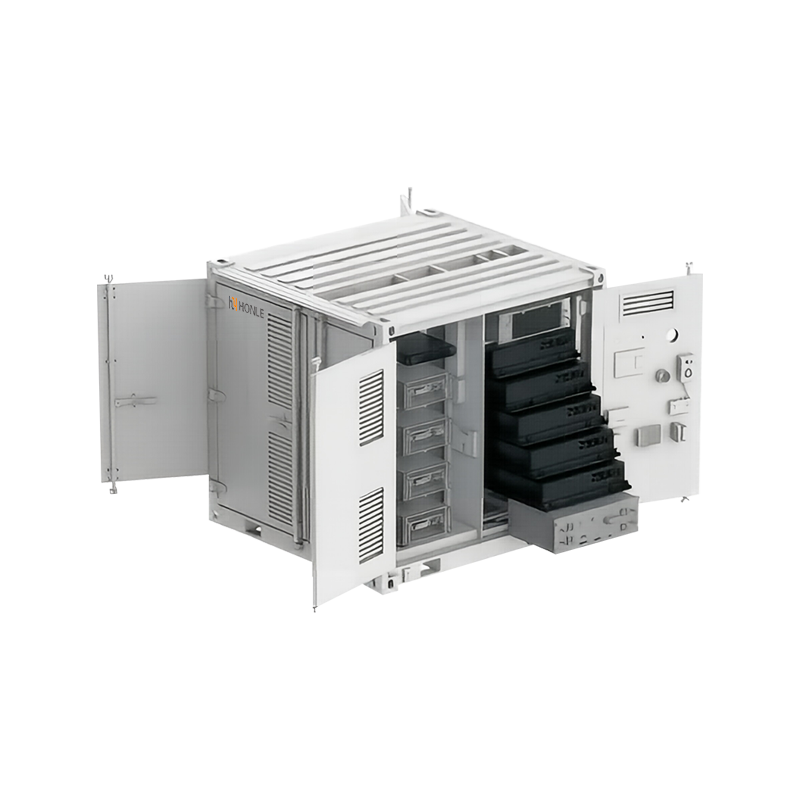
 PowerCube Industrial Energy Storage & Power Stabilization System 230–460 kWhThis high-power industrial system handles heavy loads with fast response, supporting five times rated power startup and zero-millisecond source switching, making it a strong fit for continuous-process facilities discussed here.View Product →
For heavier industrial loads, the C&I storage product range moves from floor-standing cabinets to the PowerCube industrial series, designed for continuous-process and high-bay installations where power stability is the dominant concern.
Sizing and Configuration: Where C&I BESS Projects Go Wrong
The most common failure in a C&I BESS project is not battery quality but size. An undersized system cannot cut the demand peak, so the bill does not move; an oversized system sits partially idle and stretches the payback period.
kW and kWh are two separate decisions
Power rating (kW) determines how much load the BESS can cover at once. Energy capacity (kWh) determines how long it can hold that coverage. Peak shaving needs enough power to flatten the spike and enough energy to last through the entire demand window. A common starting point is a 2-hour system selected from 15-minute interval load data.
Capacity steps that scale with the site
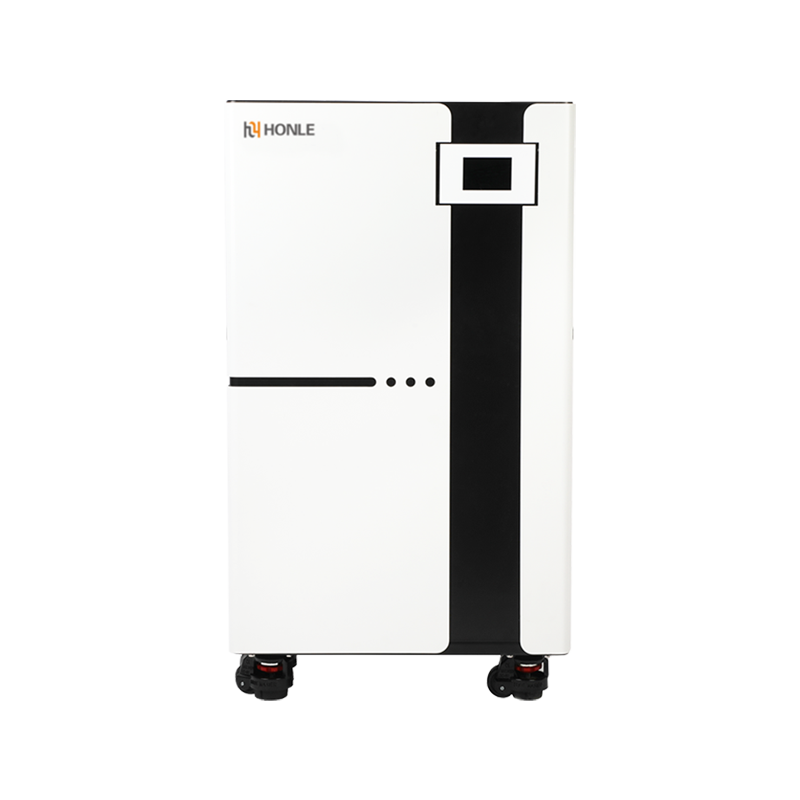
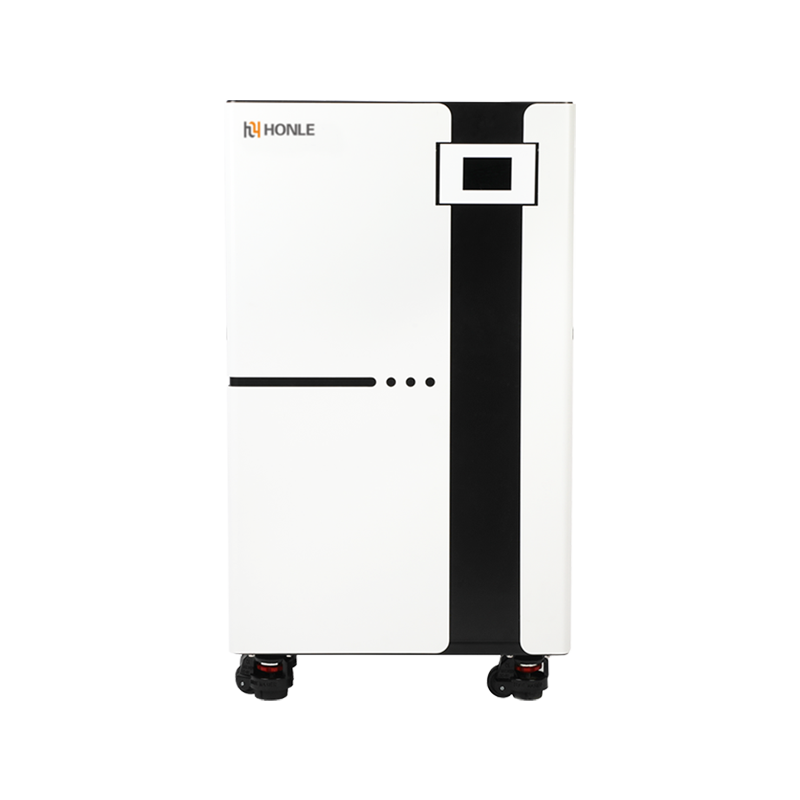
For smaller commercial loads, an integrated low-voltage cabinet is the typical entry point.
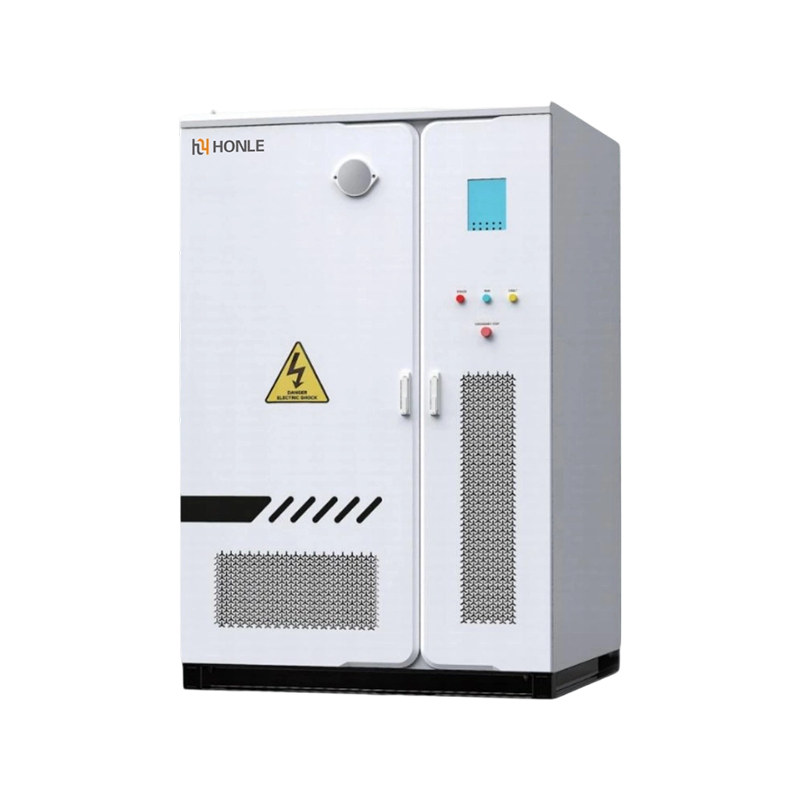
 All-in-One Low Voltage Energy Storage Cabinet 40.96–81.92 kWh for C&IAs the entry-level commercial solution mentioned before the cabinet, this compact integrated system offers on-grid and off-grid operation with BMS protection, suited for smaller factories needing flexible solar storage.View Product →
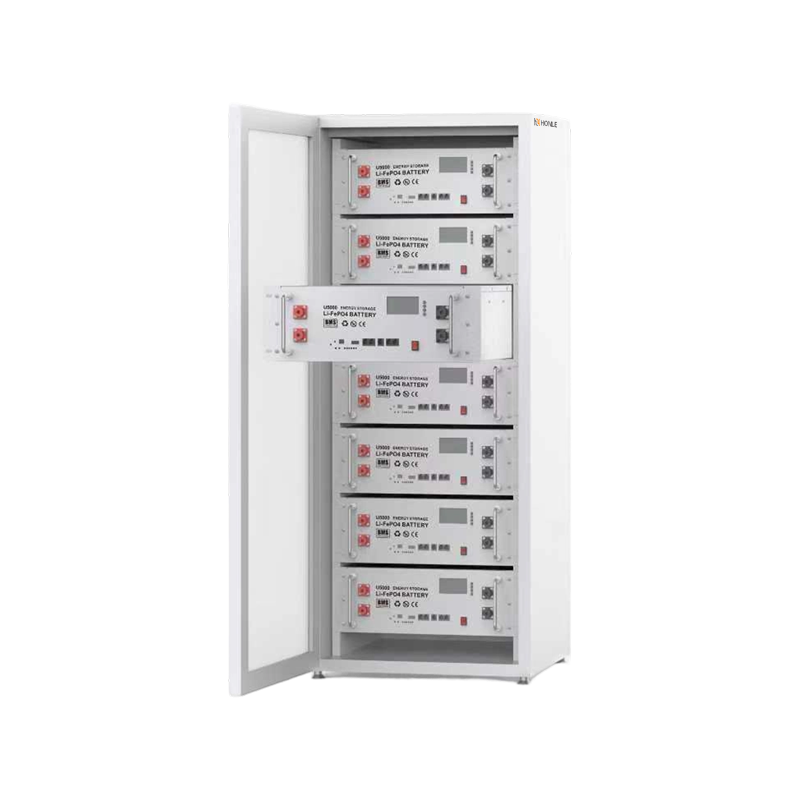
Medium-size factories and multi-tenant facilities usually step up to a modular system that can be paralleled as load grows.
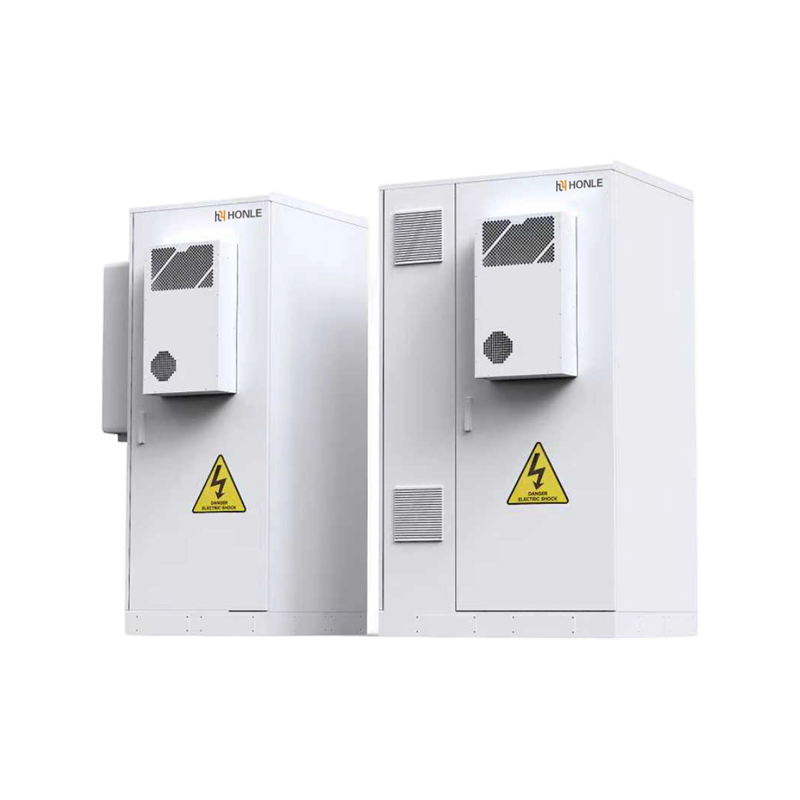
 High-Capacity LiFePO4 Energy Storage Cabinet 112–261 kWh for Commercial UseFor medium-to-large facilities scaling beyond entry cabinets, this professional BESS integrates EMS and BMS for intelligent monitoring and safety, providing a practical step before moving to containerised blocks.View Product →
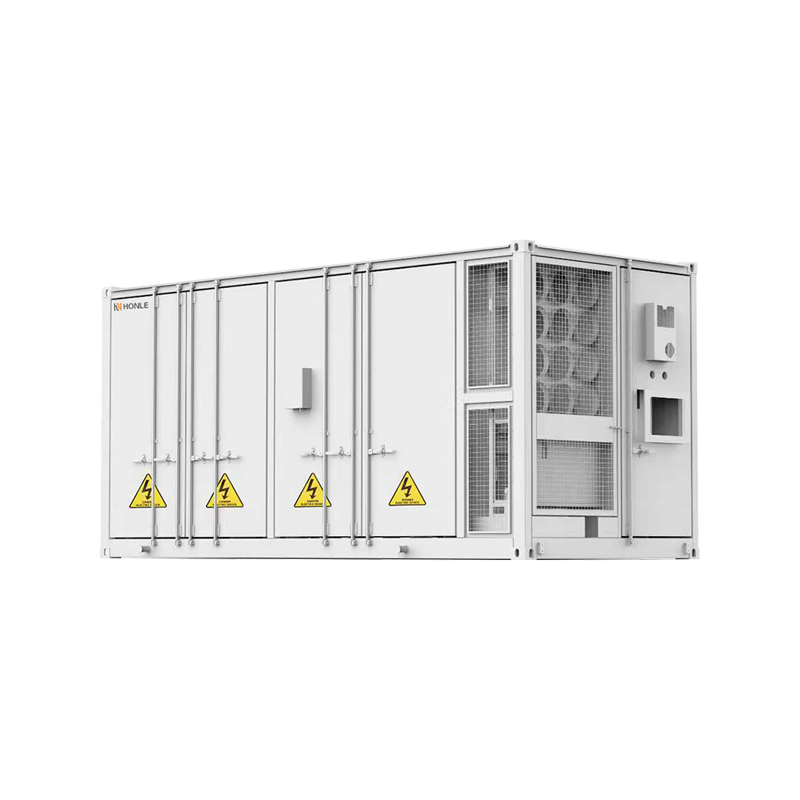
Beyond roughly 300 kWh, the practical choice moves to high-capacity cabinet platforms or containerised blocks, and the decision shifts from product selection to system engineering.
Solar pairing and inverter architecture
When the BESS is combined with rooftop PV, the control strategy matters as much as the hardware. A hybrid or coupled inverter architecture lets the system charge from solar surplus, discharge at peak-tariff times, and switch to grid or generator back-up automatically. The tariff structure decides whether the priority is self-consumption, peak shaving, or both.
Procurement Risks and How to Manage Them
Buying a C&I BESS involves less technology risk than it did a few years ago, but the commercial structure of the purchase still has traps.
- Thermal management. Confirm whether the system uses air or liquid cooling and how the battery behaves at the site's ambient temperature range. Higher temperatures accelerate ageing and reduce throughput.
- Cycle life and warranty terms. LFP cells commonly deliver 6,000 cycles or more, but the warranty may start from manufacture rather than installation and may exclude certain depth-of-discharge patterns. Ask for the capacity-fade threshold in writing.
- EMS and inverter compatibility. The energy management system has to read the meter, control the inverter, and respond to tariff signals. A battery that cannot communicate with the site's existing controls is only a partial solution.
- Installation and grid connection. Check what the supplier includes: transport, lifting, cabling, commissioning, and grid-connection paperwork. These costs can add 20-30% to a project budget when treated as afterthoughts.
- Supplier track record. Ask for installations of the same voltage level and application type, not just the same product family. Delivered projects are the strongest evidence of delivery ability.
Ask each shortlisted supplier for a one-page reference list: project location, capacity, application, and the measured result. If the list is empty, treat the proposal as unverified.
A Practical Pre-Procurement Checklist
- Collect 6-12 months of interval load data at 15-minute or hourly resolution.
- State the objective numerically, for example "cap monthly demand at 350 kW" or "cover the evening peak from solar".
- Read the utility tariff carefully: how the demand window is defined, when off-peak periods occur, and whether the BESS is allowed to export.
- Estimate solar production hourly if the BESS is paired with PV, and decide whether the priority is self-consumption or peak shaving.
- Select power (kW) and energy (kWh), then add 10-20% margin for load growth before the end of the payback period.
- Confirm floor space, door widths or access routes for delivery, ventilation, and fire-safety requirements.
- Define success metrics: monthly bill reduction, operational uptime, and the date by which savings should reach the committed level.
C&I BESS FAQ
Q1: What size BESS does a typical factory need?
It depends on the metered peak and the target reduction. Small and medium factories commonly use systems in the 40-260 kWh range; larger plants with heavy process loads move into the 300 kWh to 1 MWh class. Size from interval load data, not from the electricity bill alone.
Q2: How long does an industrial BESS last?
With LFP chemistry, a well-managed system is commonly rated for 6,000 cycles or more, which translates into 10-15 years of daily cycling at moderate depth of discharge. Thermal management and operating temperature have a direct influence on calendar ageing.
Q3: Can a C&I BESS work without solar panels?
Yes. Peak shaving and time-of-use arbitrage are independent of PV generation. Adding solar later can raise the utilisation of the same battery and shorten the combined payback.
Q4: How much space does a C&I BESS cabinet need?
An integrated 40-82 kWh cabinet typically needs around 1-2 square metres of floor space plus clearance for airflow. Modular systems are arranged in rows, and the layout must also leave room for commissioning access and maintenance.
C&I battery storage is not a one-size-fits-all purchase. The projects that work share the same logic: a measured load profile, one dominant economic target, and a supplier who can show installations of the same type. Start with the load data, then match the application, and only then compare prices. For business owners working through this decision, that sequence turns an abstract technology discussion into a concrete investment case.
Related products
News
-
Your commercial electricity bill may look like it is driven by total kWh, but an increasing portion is determined by how fast you use that ...
READ MORE -
A textile plant in Yangon keeps sensitive production lines running through unstable grid supply. A warehouse in Singapore uses battery stor...
READ MORE -
Honle New Energy Technology Participates in Industry Exhibition From September 8 to 10, 2026, Honle New Energy Technology Co., Ltd. partic...
READ MORE -
You have mounted solar panels, wired a battery bank, and installed an inverter. Yet your batteries never seem to reach full charge, or they...
READ MORE -
You have just received a higher electricity bill, and the sun is still shining outside. Can you actually use that free energy? Yes, but no...
READ MORE

PRODUCTS
LINKS
CONTACT
- Landline: +86-021-56981116
- TEL: +86-13795289200
- Email: [email protected]
- Address: 301-09, Building 6, Zhangjiang Microelectronics Port, No.690 Bibo Road, Pudong District, Shanghai
Copyright © Honle New Energy Technology Co., Ltd.
All Rights Reserved.
Wholesale Solar Energy Equipment Suppliers

This site uses cookies. By continuing to browse the site you are agreeing to our use of cookies. For more details about cookies and how to manage them see our 《Privacy Policy》
Accept