

 English
 Français
 Español
See Details
- Residential Energy Storage

- C&I BESS

- Large-Scale Centralized Energy storage

- Solar Panel

- Power Inverters

- Vehicle Lithium Battery


Industry News
Home / News / Industry News / Home Energy Storage Backup Power: How to Size a Battery and Choose an Inverter
Home Energy Storage Backup Power: How to Size a Battery and Choose an Inverter
Content
- 1 What a Battery Backup System Actually Does
- 2 Sizing: Kilowatts Decide What Runs, Kilowatt-Hours Decide for How Long
- 3 Wall-Mounted, Stacked, or Floor-Standing: Matching the Format to the Room
- 4 Inverters: Where Backup Systems Usually Succeed or Fail
- 5 Cost, Savings, and What Payback Looks Like
- 6 What to Verify Before You Sign
- 7 Frequently Asked Questions

A 20-minute outage in July is an annoyance. A 14-hour outage in February, with the furnace blower off, the well pump dead and the sump pit filling, is a different problem. That second scenario is what decides whether home energy storage backup power earns its price.
The short answer first: for most single-family homes, a battery paired with a hybrid inverter is the better default. Changeover happens in milliseconds, no fuel is burned, maintenance is minimal, and part of the cost comes back through daily load shifting. A standby generator still wins in narrower cases, such as outages that routinely run past 24 to 48 hours, or a house with a very large continuous load and no usable roof area for solar.
What separates a system that works from one that disappoints comes down to four things: sizing, hardware format, inverter architecture, and the numbers a supplier will put in writing.
What a Battery Backup System Actually Does
Start with the misunderstanding that causes the most disappointment: a grid-tied solar array on its own provides no backup power at all. Anti-islanding protection required under UL 1741 shuts the inverter down within seconds of grid loss, so the panels go quiet at exactly the moment you need them. Backup needs a battery plus an inverter that can create its own voltage and frequency reference.
With a battery in the circuit, the sequence is fast. The inverter watches grid voltage and frequency; when either drifts outside its window, it opens the grid connection and re-forms a local microgrid. On a properly commissioned hybrid system this takes under 20 milliseconds, fast enough that routers, desktop computers and appliance clocks do not reset. A standby generator works differently: the transfer switch must confirm the outage, crank the engine and wait for stable voltage, which takes 10 to 30 seconds.
| Attribute | Battery backup | Standby generator |
|---|---|---|
| Changeover time | Under 20 ms | 10 to 30 seconds |
| Runtime | 8 to 30 kWh usable, recharged by solar | Limited by fuel supply |
| Noise | None | 55 to 70 dB at 7 m |
| Routine maintenance | Firmware updates and inspection | Oil, filters, exercise cycle |
| Daily cost recovery | Time-of-use shifting, solar self-use | None |
| Best fit | Short, frequent outages with solar installed | Multi-day outages, large loads, no solar |
Sizing: Kilowatts Decide What Runs, Kilowatt-Hours Decide for How Long
Two numbers govern whether a system behaves the way the buyer pictured, and they are routinely confused. Continuous power in kilowatts sets the largest load the inverter can carry indefinitely. Usable energy in kilowatt-hours sets how many hours that load can run.
The loads people actually want to keep alive are smaller than they expect, with one exception:
- Refrigerator or freezer: 100 to 200 W running, 800 to 1,200 W at compressor start.
- Gas furnace blower: 300 to 800 W running, up to 1,500 W surge.
- Well pump, half horsepower: 800 to 1,000 W running, 2,000 to 3,000 W surge.
- Sump pump: about 800 W running, near 2,000 W surge.
- LED lighting, router, laptop, phone charging: 200 to 400 W combined.
- Three-ton central air conditioning: 3,000 to 3,500 W running, 7,000 to 9,000 W surge, which is why whole-house backup often excludes it.
A typical partial-home backup panel lands between 2.5 kW and 4 kW of running load with brief surges near 6 kW. Nominal capacity is not the number that matters. A 10 kWh lithium iron phosphate battery cycled to 80% depth of discharge delivers about 8 kWh usable, and after a 90% round-trip efficiency loss at the inverter roughly 7.2 kWh reaches the loads.
7.2 kWh
Delivered by a 10 kWh LFP battery at 80% depth of discharge and 90% round-trip efficiency
6 kW
Surge the inverter must ride through when a well pump and furnace blower start together
14 hours
Cover at a 500 W average draw on that same 7.2 kWh, enough for an overnight outage
If you want to build your own load list before an installer visits, this walkthrough on calculating solar power needs and battery bank size is a practical starting point.
Wall-Mounted, Stacked, or Floor-Standing: Matching the Format to the Room
Capacity is only half the decision. The physical format decides where the equipment can live, how it is serviced, and what it costs per kilowatt-hour.
Wall-mounted units
A wall-mounted battery holds cells and electronics in one sealed enclosure, typically 2.5 kWh to about 17 kWh per unit, and hangs in a garage, utility room or shaded exterior wall. It suits homes with limited floor space and short cable runs to the main panel. Check the wall itself: a unit near 100 kg needs proper blocking or a mounting frame, not drywall anchors.
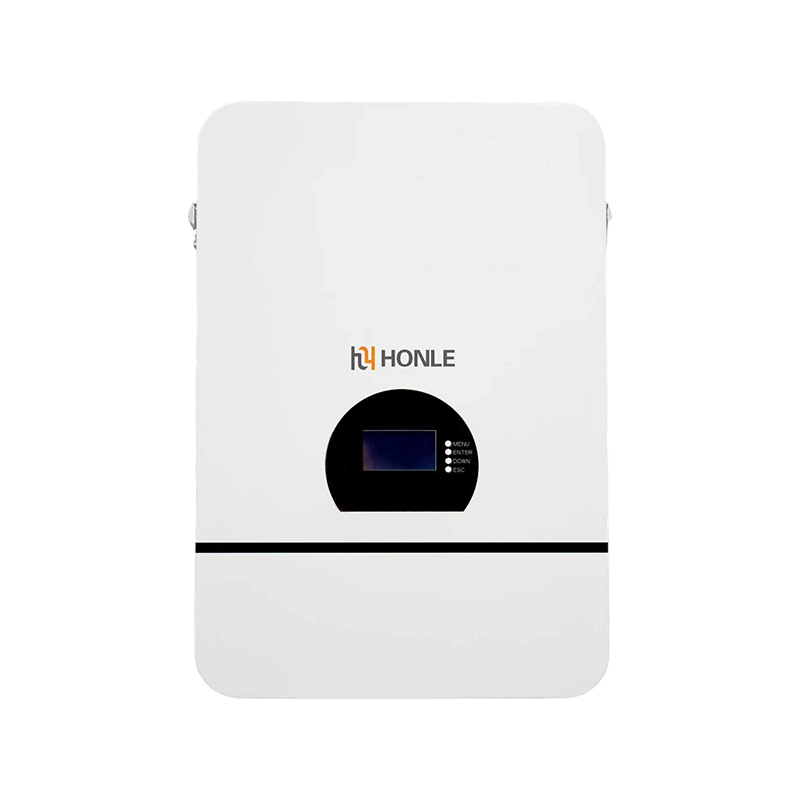 HLA Modular Wall-Mounted LiFePO4 Battery for Home StorageSpace-saving wall-mounted battery with scalable 2.56-17kWh capacity, Grade A LiFePO4 cells, and 6000 cycles, ideal for homes with limited floor space.View Product →
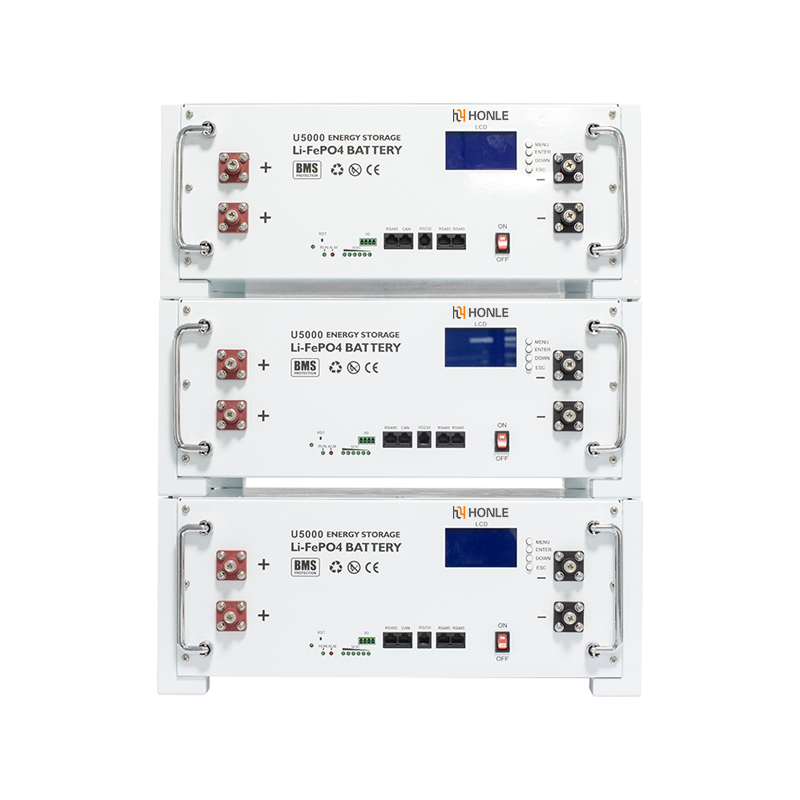
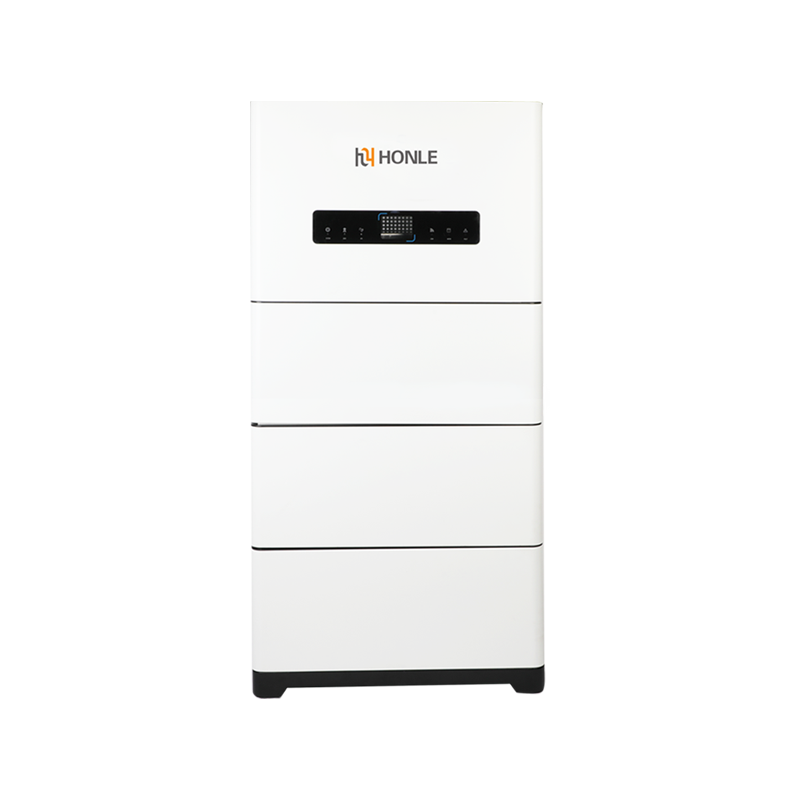
Stacked modules
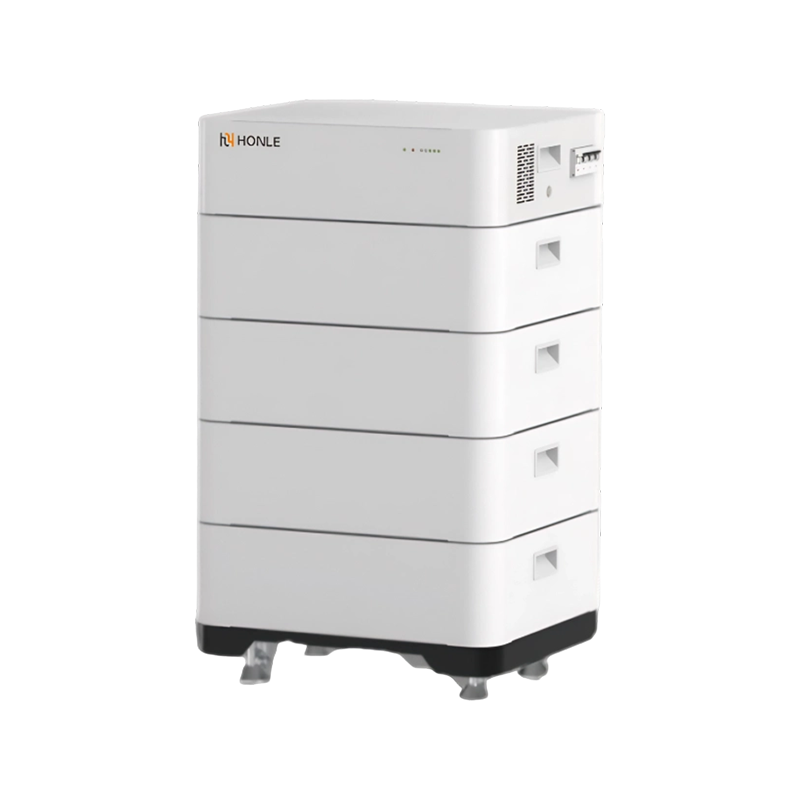
Low-voltage or high-voltage stacked modules grow capacity in 2.5 to 5 kWh steps, which keeps the first purchase small and the upgrade path open. They are the usual choice when a homeowner wants 10 kWh now and 20 kWh later, or when the inverter must sit close to the battery to keep DC cable losses low.
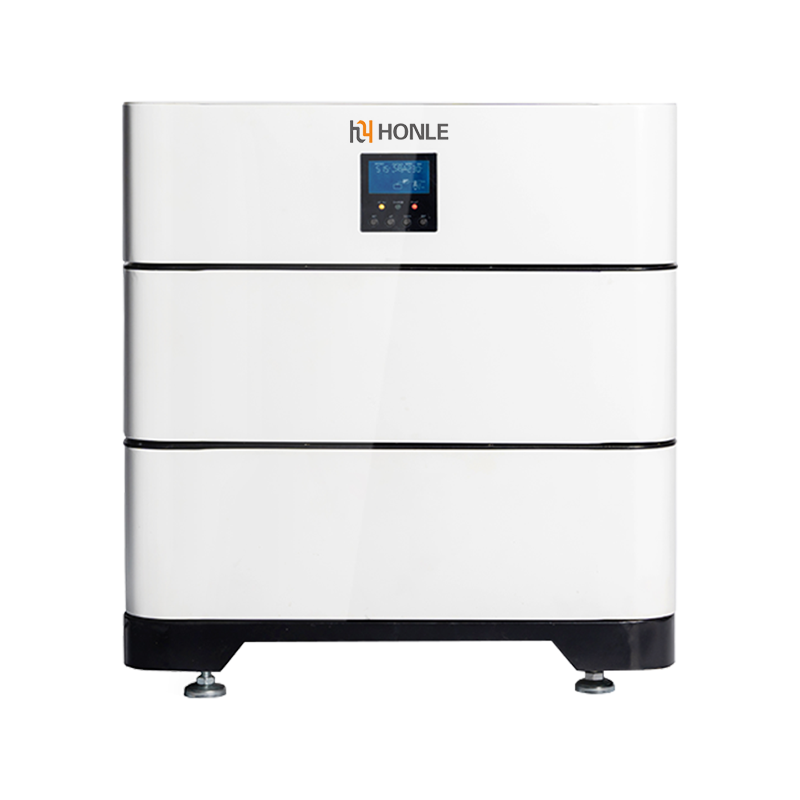 HLC Stacked LiFePO4 Battery with Integrated Hybrid InverterModular stacked battery with hybrid inverter, 48V low-voltage, LiFePO4 cells, enabling capacity expansion without rewiring for DIY energy systems.View Product →
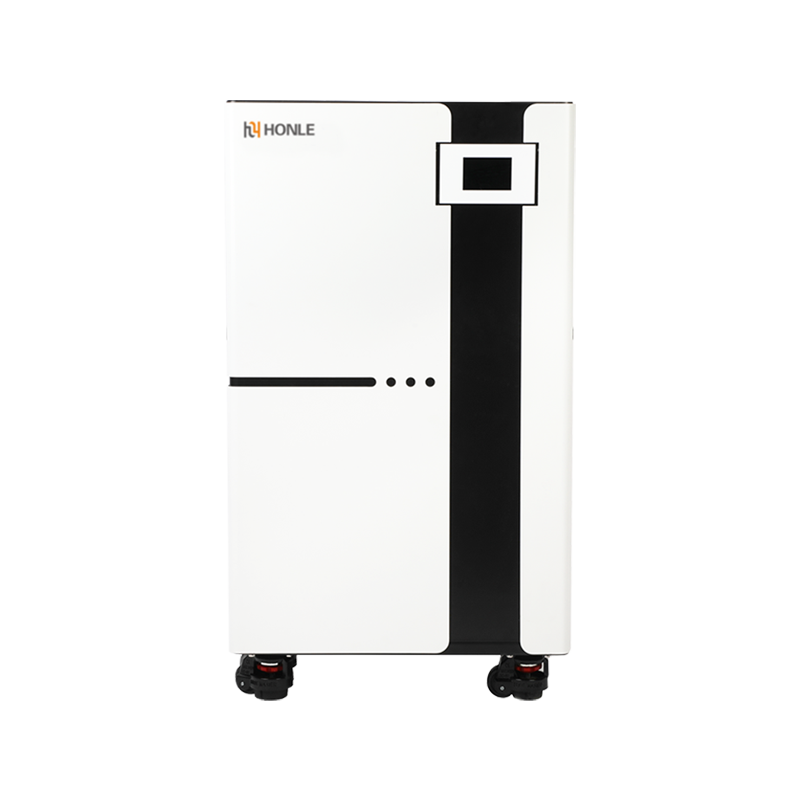
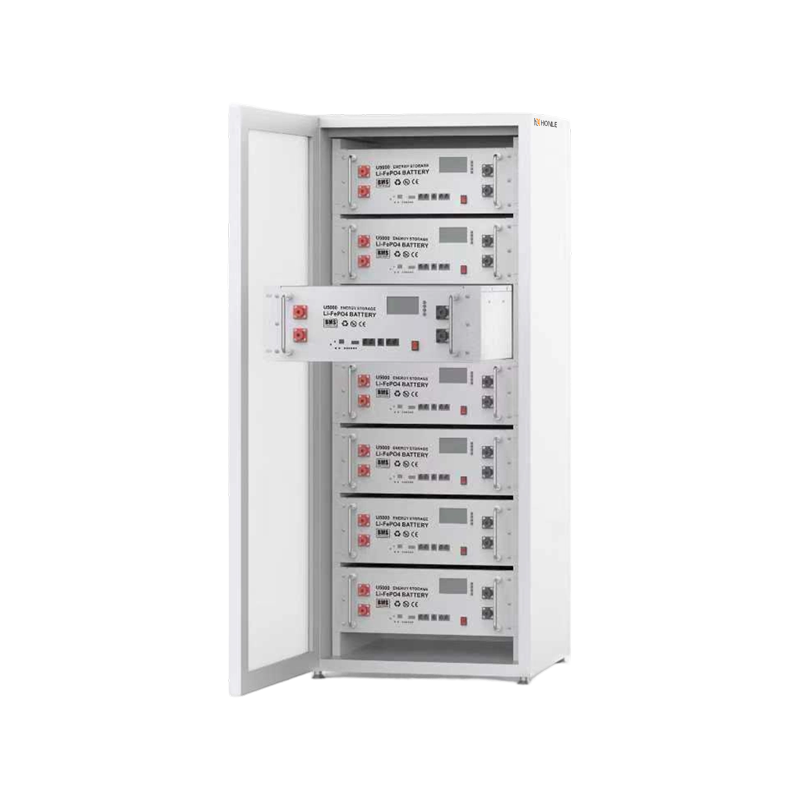
Floor-standing all-in-one cabinets
Floor-standing cabinets combine battery, inverter and controls in one chassis, which simplifies wiring and usually lowers cost per kilowatt-hour. They need a firm, level base, roughly 30 cm of clearance for airflow, and a location that stays above freezing. For outdoor or semi-exposed placement, check the IP rating and the temperature derating curve before trusting nameplate capacity.
Inverters: Where Backup Systems Usually Succeed or Fail
The battery stores the energy, but the inverter decides whether that energy is available when the grid is gone. This is the most common source of an unhappy outcome, because a standard grid-tied string inverter cannot form an island.
HybridAC-coupledDC-coupled
A hybrid inverter combines battery input, MPPT charge controller and island-forming capability in one chassis. A three-phase 12 kW unit can carry a whole-home backup panel, while single-phase 5 to 8 kW models suit a critical-load subpanel. An AC-coupled design keeps an existing solar inverter and adds a battery inverter downstream, which is useful when the array is already installed and re-permitting is not worth the delay.
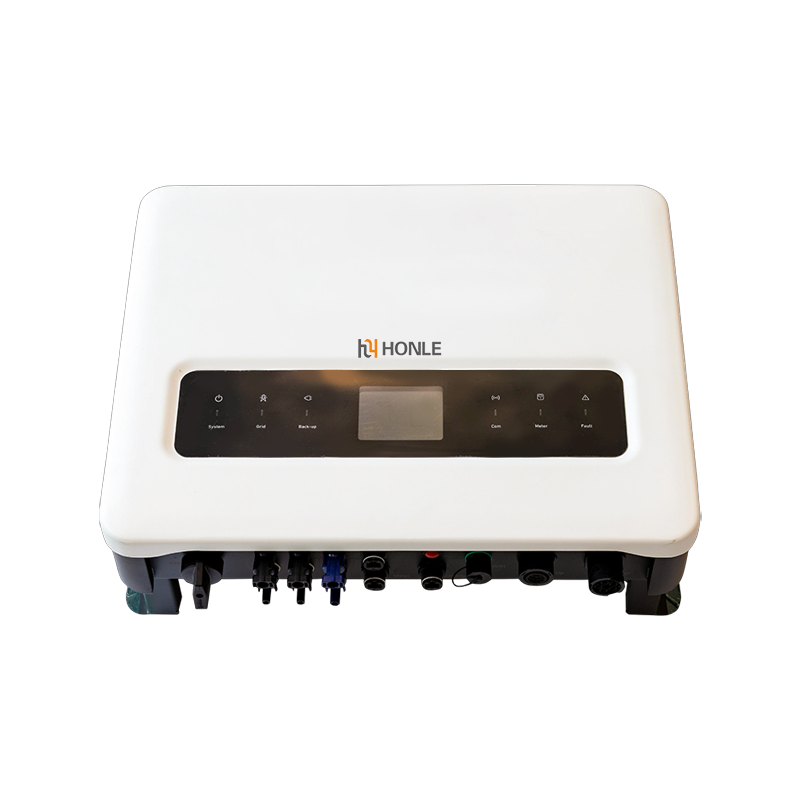 EPH12KTL 12kW Three-Phase Hybrid Solar InverterThree-phase 12kW hybrid inverter for high-capacity storage, with wide battery compatibility, anti-backflow control, and three-phase unbalanced output support.View Product →
Two specifications deserve a direct question to the supplier. Transfer time determines whether electronics reboot: under 20 ms means uninterrupted, while contactor-based designs can take 1 to 4 seconds. Surge rating sets whether a compressor or pump actually starts, and the inverter, not the battery, is usually the limiting factor. A 1.5x to 2x continuous rating held for 5 to 10 seconds is a reasonable target.
Cost, Savings, and What Payback Looks Like
Installed cost for a residential battery system generally falls between 700 and 1,200 USD per kilowatt-hour of usable capacity before local incentives, so a 10 kWh usable system sits in the 7,000 to 12,000 USD band with inverter, mounting, permits and commissioning included. The spread comes from format, backup panel work, and whether the main service needs upgrading.
Backup is what you buy. Load shifting is what pays for it.
Two mechanisms do the paying:
- Time-of-use arbitrage: charge during cheap hours, discharge during peak. A 5 kWh daily swing across a 0.20 USD per kWh peak-to-offpeak spread is worth roughly 365 USD a year before efficiency losses.
- Solar self-consumption: storing midday generation instead of exporting it at a low feed-in rate often beats arbitrage in markets with weak export tariffs.
Plan on 90 to 95% round-trip efficiency for LFP systems and 6,000 cycles to 80% state of health. Do not plan on that cycle figure without reading the warranty, since capacity warranties are usually written as a percentage of nominal capacity across a fixed number of years or megawatt-hours of throughput.
What to Verify Before You Sign
Supplier claims are cheap to write and expensive to test. These checks close most of the gap between a datasheet and a working system.
- Usable versus nominal capacity: ask for depth of discharge, end-of-life threshold, and the ambient temperature at which the rating holds.
- Surge behaviour at commissioning: start the largest motor in the backup panel while the grid is disconnected and watch for an inverter shutdown.
- Transfer time in writing: confirmed on the configured unit, not on the product family datasheet.
- Warranty structure: years, throughput limit, and who performs the replacement, the manufacturer or a local partner.
- Temperature derating: LFP capacity drops noticeably above 35 °C, and charge acceptance falls near freezing without heating.
- Commissioning records: firmware version, backup circuit list and measured changeover time.
Honle New Energy organises its residential products by customer type, and the homeowners section is a reasonable place to compare wall-mounted, stacked and floor-standing options side by side before committing to a format.
Frequently Asked Questions
Q1: Will solar panels keep working during a blackout?
Not on their own. Grid-tied inverters shut down within seconds of grid loss to protect line workers. Add a battery and an island-forming inverter, and the array keeps producing through a daylight outage.
Q2: How long will a home battery run during an outage?
Divide usable energy by average load. A 10 kWh LFP battery at 80% depth of discharge gives about 8 kWh usable, which is roughly 16 hours at a 500 W draw or about 8 hours at 1 kW.
Q3: Is battery storage better than a standby generator?
For outages measured in hours, yes: faster changeover, no fuel, no noise, and daily bill savings. Generators remain the better answer when outages routinely last several days or the backup load is too large for a practical battery bank.
Q4: Can I add backup to solar I already own?
Usually. An AC-coupled battery inverter can be added downstream of the existing solar inverter without reconfiguring the array, which shortens permitting and keeps the original equipment warranty intact.
The decision is more arithmetic than brand. Write down the loads you refuse to lose, add their running watts and starting surges, decide how many hours of cover you want, and let those three numbers drive capacity and inverter selection. If a quote comes in far from that arithmetic, ask what is being assumed about depth of discharge, ambient temperature and surge. Those assumptions are where backup systems quietly fall short of what the buyer pictured.
Related products
News
-
A 20-minute outage in July is an annoyance. A 14-hour outage in February, with the furnace blower off, the well pump dead and the sump pit ...
READ MORE -
Honle New Energy Debuts at 140th Canton Fair, Joining Hands with Global Clients to Expand the Renewable Energy Market In October 2026 (Octo...
READ MORE -
At 7 p.m. on a weekday, a typical 8 kW rooftop solar array is producing less than 1 kW. The dishwasher runs, the EV charges, and the househ...
READ MORE -
At 11 a.m. on a bright day, a 6 kW rooftop array can produce more electricity than the house is using. By 8 p.m. the same house is drawing ...
READ MORE -
Pull a floor standing battery out of a flooded utility room and the damage tells the story faster than any datasheet: watermarks a few cent...
READ MORE

PRODUCTS
LINKS
CONTACT
- Landline: +86-021-56981116
- TEL: +86-13795289200
- Email: [email protected]
- Address: 301-09, Building 6, Zhangjiang Microelectronics Port, No.690 Bibo Road, Pudong District, Shanghai
Copyright © Honle New Energy Technology Co., Ltd.
All Rights Reserved.
Wholesale Solar Energy Equipment Suppliers

This site uses cookies. By continuing to browse the site you are agreeing to our use of cookies. For more details about cookies and how to manage them see our 《Privacy Policy》
Accept