

 English
 Français
 Español
See Details
- Residential Energy Storage

- C&I BESS

- Large-Scale Centralized Energy storage

- Solar Panel

- Power Inverters

- Vehicle Lithium Battery


Industry News
Home / News / Industry News / Floor Standing Battery Storage Safety: Clearances, Flood Lines, and Thermal Limits
Floor Standing Battery Storage Safety: Clearances, Flood Lines, and Thermal Limits
Content
- 1 Floor Standing vs Wall Mounted: Where the Safety Risk Shifts
- 2 Clearance, Base Height and the Flood Line
- 3 Thermal Runaway: What Test Data Actually Says
- 4 Installation and Commissioning Details That Get Missed
- 5 Standby and Long-Term Idle Safety
- 6 Residential Floor Standing Units: What to Verify
- 7 Commercial and Cabinet-Scale Installations
- 8 Choosing a Floor Standing Unit: Questions to Ask
- 9 Frequently Asked Questions

Pull a floor standing battery out of a flooded utility room and the damage tells the story faster than any datasheet: watermarks a few centimetres up the enclosure, a corroded terminal, and a battery management system that will not wake up. Chemistry rarely causes the first failure. Height, drainage, clearance and ventilation do.
The short answer: a floor standing battery energy storage system is safe when four conditions hold at once. The enclosure stays dry and above the local flood line. Clearances match the manual and the local code. The BMS, cooling and venting path work and are monitored. The cells are LFP, with thermal runaway testing documented at unit level rather than cell level alone. Break any one of those and the installation becomes a long-term liability.
What follows is a practical look at where floor standing storage safety differs from wall-mounted hardware, what the standards actually test, and which installation details are missed on real sites.
Floor Standing vs Wall Mounted: Where the Safety Risk Shifts
Two variables move when a battery leaves a wall bracket and sits on a floor: weight distribution and water exposure.
A residential floor standing pack in the 5-20 kWh class typically weighs 60-160 kg. A commercial cabinet can pass 500 kg once modules and a power conversion system are fitted. That load usually lands fine on a garage slab, but it deserves a structural check on a suspended floor or an upper-level utility room. Ask for the point load, not just total weight.
Floor standing
High capacity per footprint, easier module service, cables routed at the base, a natural fit for cabinets from 40 kWh upward. Watch: it sits in the wettest part of the room, needs base elevation and anchoring, and takes impact from vehicles and wash-down water.
Wall mounted
Above flood level, clear of most impacts, no floor space lost. Watch: wall structure and shear load, limited capacity per unit, harder lifting during service, and warmer air near ceilings.
Water is the quieter problem. The bottom 150 mm of a room is where wash-down spray, condensation and slow leaks collect. A wall-mounted unit sits above most of it. A floor standing unit sits in the middle of it unless the base is raised.
If the room has ever had standing water, a floor drain, a sump or a garage door facing driven rain, elevate the unit or choose a wall mount. That single decision removes more risk than any monitoring feature you can buy.
Clearance, Base Height and the Flood Line
Clearance rules exist for two reasons: heat removal and emergency access. A floor standing cabinet boxed into a sealed cupboard with 20 mm of free air will run hot, derate and age faster. Most manuals ask for 150-300 mm at the sides and rear and 300 mm or more above the unit. Where the manual and a generic rule of thumb disagree, the manual wins.
- Base height: lift the unit 100-150 mm on a concrete curb or steel platform, clear of the slab and out of standing water.
- Distance from plant: site safety guidance for battery storage on construction sites recommends keeping units at least 3 metres from equipment and plant access ladders. Treat that as a floor, not a target.
- Heat and ignition sources: no direct sunlight, no radiant heaters, no solvents or fuels stacked against the enclosure.
- Drainage path: never in a pit, sump or the low corner of a room.
- Access: keep the DC isolator, door swing and exit route clear of the unit and its cabling.
Thermal Runaway: What Test Data Actually Says
LFP cells do not release oxygen from the cathode the way many NMC cells can, so propagation between neighbouring cells is slower and the onset temperature is higher, roughly 200-270 degrees Celsius against 150-210 for NMC. That is a real margin. It is not immunity.
Three standards are worth asking about by name:
- IEC 62619 and IEC 63056: cell and battery safety for industrial and energy storage applications up to 1,500 V DC.
- UL 9540A: thermal runaway fire propagation testing, evaluated at cell, module, unit and installation level.
- NFPA 855: installation rules, including separation distances and maximum stored energy per unit area.
When a supplier says "tested", ask which UL 9540A level was completed. A cell-level pass is not a unit-level pass, and it is the unit-level result that describes how the finished enclosure behaves when one cell goes into runaway.
Venting belongs in the same conversation. A venting LFP cell releases hydrogen fluoride, carbon monoxide and other gases. Enclosed basements and container rooms need gas detection wherever a risk assessment or local code calls for it, and nobody should enter a room while a battery is venting.
Installation and Commissioning Details That Get Missed
Most floor standing failures traced back to installation were not component failures. They were small omissions at handover.
- Anchoring. Bolt the base to the slab where seismic activity, vehicle impact or heavy trolley traffic is possible.
- Terminal torque. Torque DC terminals to the specified value, mark them, and log the reading for the first service visit.
- Gland sizing. An oversized cable gland is an open path for water and dust. Check the IP rating after every cable entry.
- Isolation and labeling. A labelled DC isolator within reach, plus arc-flash labeling on cabinet-scale units.
- Commissioning cycle. Run one full charge and discharge with cell voltages logged, so a weak module shows up in week one instead of year two.
- Monitoring. Connect the BMS to remote monitoring and set alerts for cell imbalance, temperature spread and insulation resistance.
Standby and Long-Term Idle Safety
Batteries that sit unused are not inert. A pack left at 100 percent state of charge ages faster, and a pack left near zero can be pushed into deep discharge by the BMS standby draw, which is often unrecoverable.
15-30 CPreferred storage temperature
40-60%Standby state of charge
3-6 moCheck and top-up interval
- Do not charge LFP below 0 degrees Celsius unless the unit has an active heating function.
- Quarantine any swollen, dented, wet or heat-damaged unit outdoors, on a non-combustible surface, away from buildings and vehicles. Do not attempt to charge it.
- Inspect monthly for swelling, discoloration, localised heat, unusual odour or new BMS error codes.
Residential Floor Standing Units: What to Verify
For a home installation the safety question is mostly about the room, not the cell. Four items decide most of the outcome.
Flood lineBase elevationIP ratingVent clearance
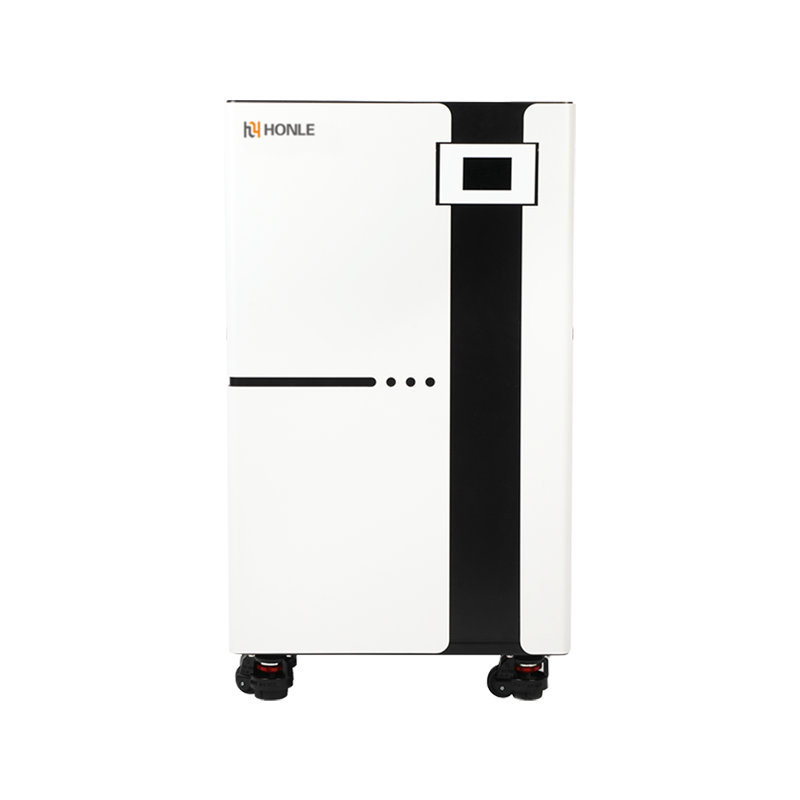
Also check whether the unit combines PCS and battery in one enclosure or expects a separate wall-mounted inverter with cabling running at floor level. An all-in-one floor standing system simplifies this: one enclosure, one set of thermal and electrical protections, one monitored interface for the household.
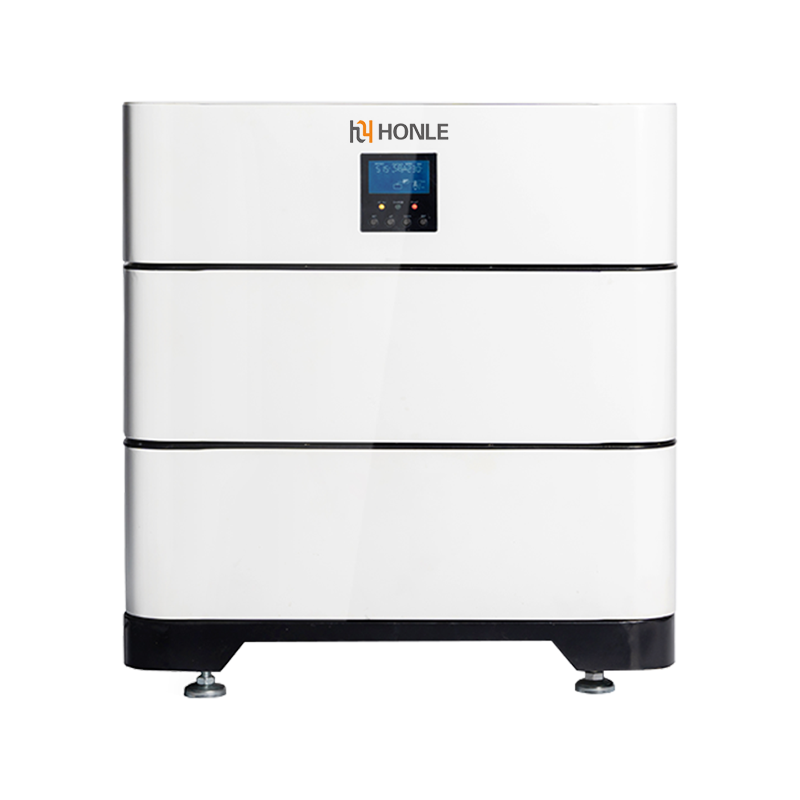
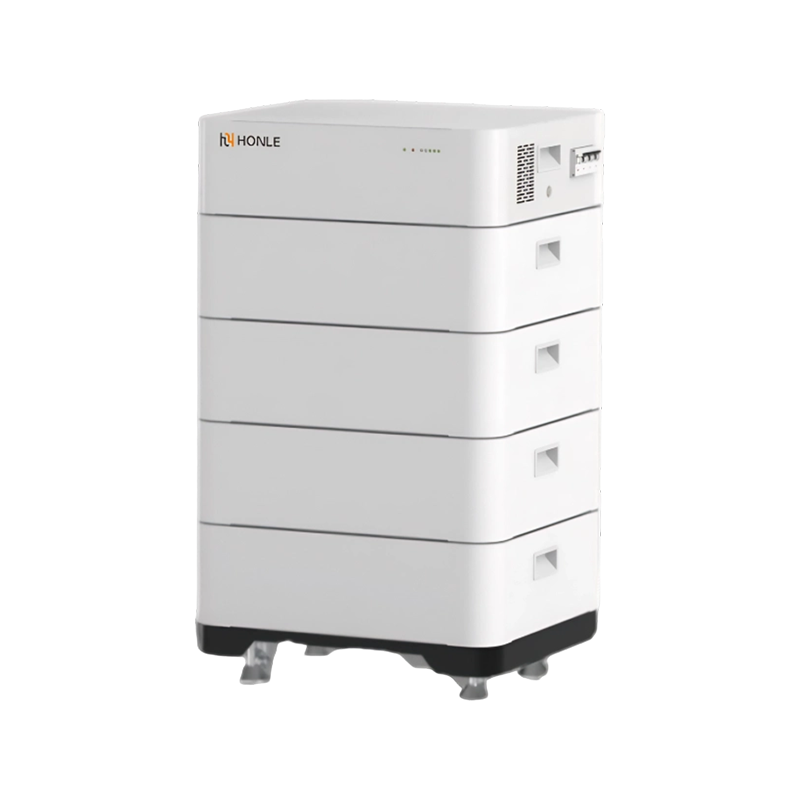
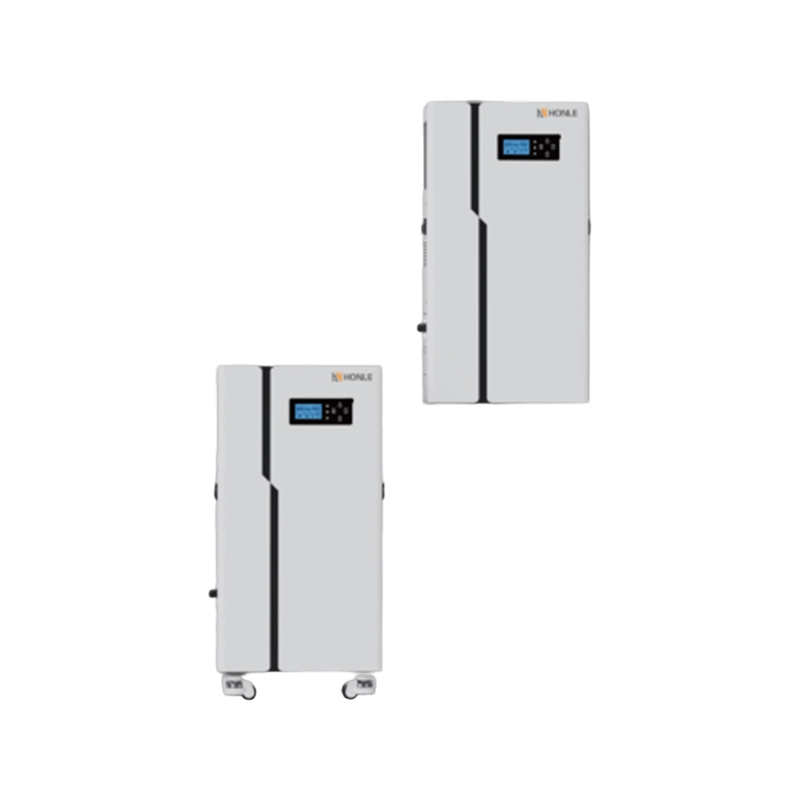 HLX All-in-One Floor-Standing LiFePO4 Home Energy StorageCombines PCS and LiFePO4 battery in one slim floor-standing cabinet, simplifying indoor residential installation and scalable backup power.View Product →
Typical residential scopes and backup behaviour are outlined on the home storage page.
Commercial and Cabinet-Scale Installations
Above roughly 40 kWh, floor standing storage becomes a room-planning exercise. Cabinet weight runs into hundreds of kilograms, so floor loading is measured in kilograms per square metre and verified against the structural drawing rather than assumed from slab thickness.
- Keep service aisles and egress paths clear; an anchored, cabled cabinet cannot be moved quickly.
- Confirm how the cabinet interacts with sprinklers, gas detection and fire service access.
- Set separation distances and stored energy limits from NFPA 855 or the applicable local code.
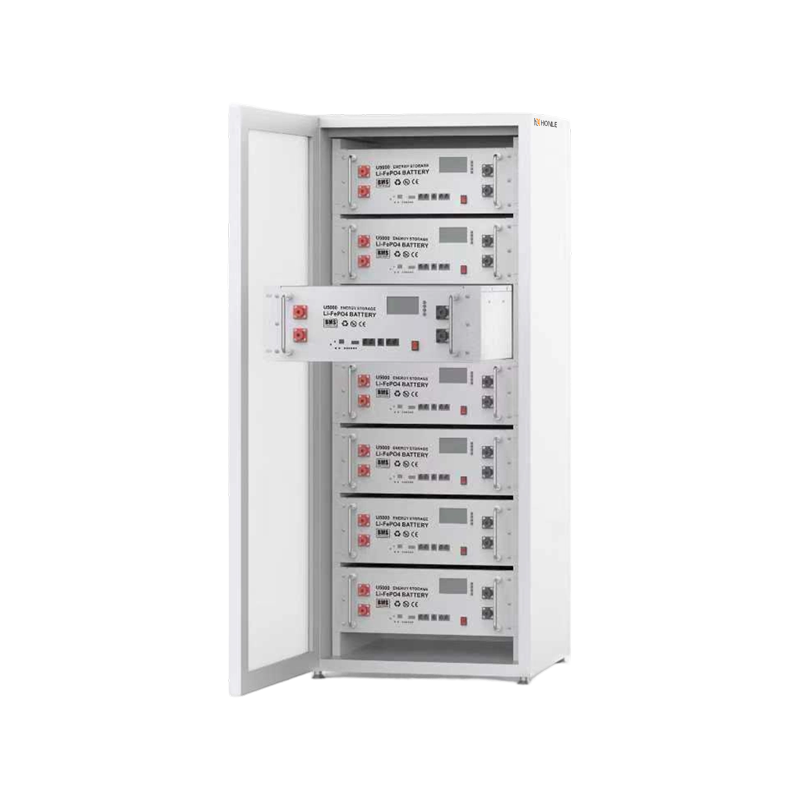
- Label arc-flash boundaries and provide remote emergency stop for off-site monitoring.
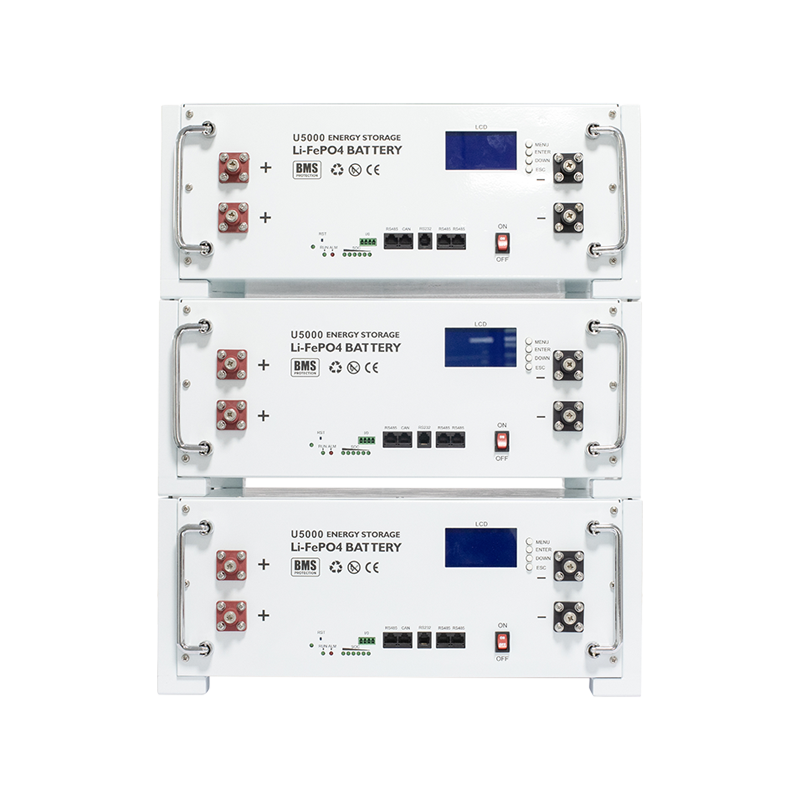
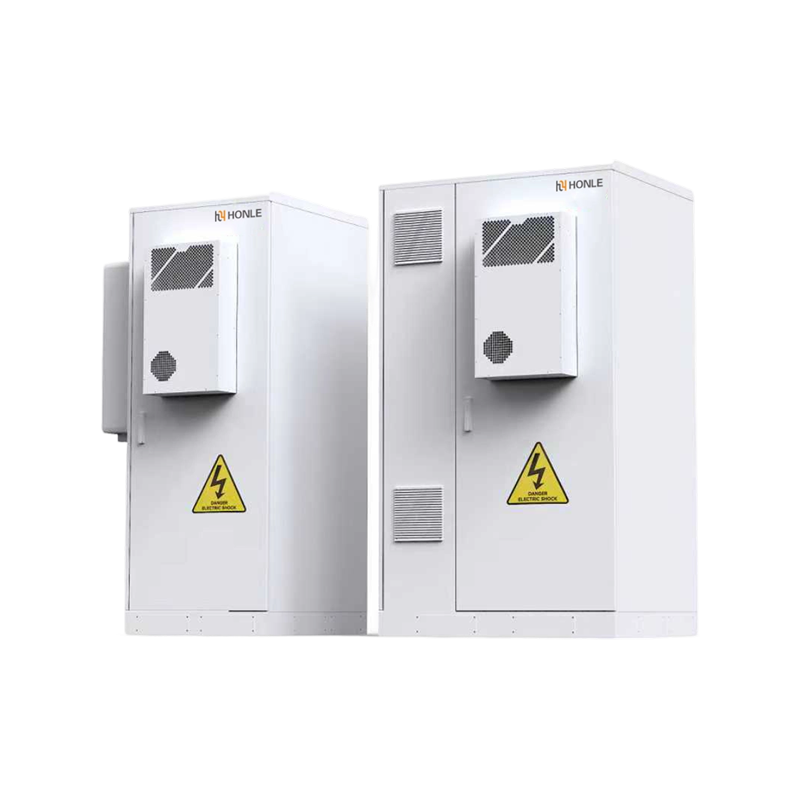 HLH All-in-One Low-Voltage C&I Battery Storage CabinetIntegrated 40.96–81.92 kWh LFP cabinet for commercial and industrial sites, supporting stable power supply and indoor load-focused planning.View Product →
In practice this usually means an indoor installation where load stability, not peak shaving, drives the design. The warehouse stabilisation case study shows the layout and scope of that kind of project.
Choosing a Floor Standing Unit: Questions to Ask
Safety specifications are easier to compare when you ask every supplier the same questions.
- Which UL 9540A level has been completed for this enclosure?
- What is the IP rating, and does it still hold after cable entry?
- What does the unit weigh, and what point load does the base create?
- What charge and discharge temperature limits does the BMS enforce?
- Can a technician reach the terminals and service points without dismantling the enclosure?
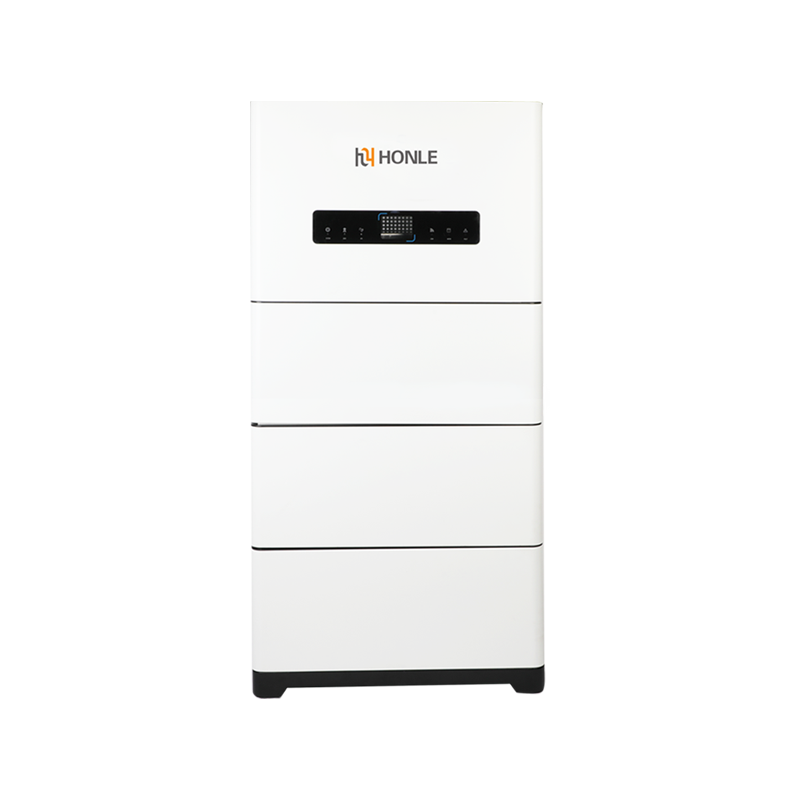
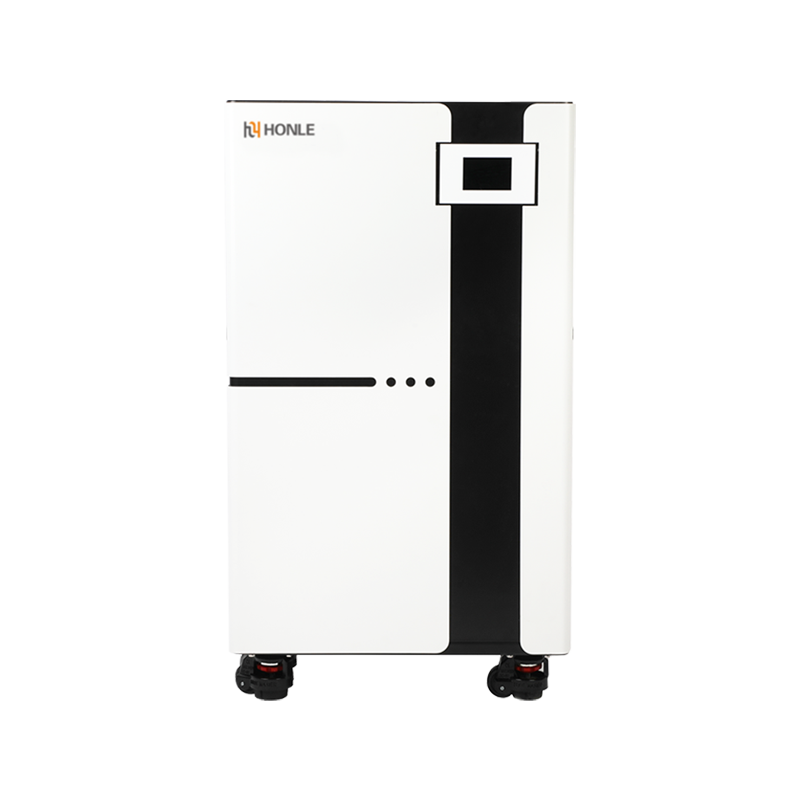 HLD Floor-Mount Lithium Battery for Residential Solar BackupFloor-standing LFP battery for indoor residential solar backup, available all-in-one and suitable for garages where flooding and impact are addressed.View Product →
Frequently Asked Questions
Q1: Can a floor standing battery be installed in a garage?
Yes, if the base is raised 100-150 mm, the enclosure is rated for the humidity, and the unit is shielded from vehicle impact. Check the flood history of the garage first; if water has ever pooled there, choose a wall mount or relocate the battery.
Q2: What state of charge should a floor standing battery be left at?
Between 40 and 60 percent for standby or seasonal storage, checked every three to six months. Staying at 100 percent accelerates calendar ageing, while sitting near zero risks an unrecoverable deep discharge.
Q3: How far should a battery cabinet be from equipment and access routes?
Construction site guidance for battery storage recommends at least 3 metres from equipment and plant access ladders, adjusted for weather and the routes people actually use. Indoors, follow the manual clearances and any separation distance set by the local fire code.
Q4: Does LFP chemistry mean there is no fire risk?
No. LFP has a higher thermal runaway onset temperature and slower propagation than many NMC chemistries, but a short circuit, mechanical damage or sustained overcharge can still start a failure. Unit-level testing and correct installation are what convert a safer chemistry into a safer installation.
Floor standing storage safety comes down to unglamorous details: how high the base sits, how much air moves around the enclosure, how the terminals are torqued, and what test evidence sits behind the word "tested". Honle New Energy Technology Co., Ltd. supplies floor standing residential batteries, commercial and industrial cabinets, and container-scale systems built on LFP cells, supported by installation guidance and remote monitoring through its cloud platform. If you are specifying storage for a garage, a warehouse or a substation, start with the room conditions and work backwards to the product.
Related products
News
-
At 11 a.m. on a bright day, a 6 kW rooftop array can produce more electricity than the house is using. By 8 p.m. the same house is drawing ...
READ MORE -
Pull a floor standing battery out of a flooded utility room and the damage tells the story faster than any datasheet: watermarks a few cent...
READ MORE -
You picked a flexible solar panel because it is light, bends over a curved RV roof or boat deck, and does not need a bulky rack. Then the b...
READ MORE -
Your commercial electricity bill may look like it is driven by total kWh, but an increasing portion is determined by how fast you use that ...
READ MORE -
A textile plant in Yangon keeps sensitive production lines running through unstable grid supply. A warehouse in Singapore uses battery stor...
READ MORE

PRODUCTS
LINKS
CONTACT
- Landline: +86-021-56981116
- TEL: +86-13795289200
- Email: [email protected]
- Address: 301-09, Building 6, Zhangjiang Microelectronics Port, No.690 Bibo Road, Pudong District, Shanghai
Copyright © Honle New Energy Technology Co., Ltd.
All Rights Reserved.
Wholesale Solar Energy Equipment Suppliers

This site uses cookies. By continuing to browse the site you are agreeing to our use of cookies. For more details about cookies and how to manage them see our 《Privacy Policy》
Accept