

 English
 Français
 Español
See Details
- Residential Energy Storage

- C&I BESS

- Large-Scale Centralized Energy storage

- Solar Panel

- Power Inverters

- Vehicle Lithium Battery


Industry News
Home / News / Industry News / How Residential Energy Storage Works: Battery, Inverter and EMS Explained
How Residential Energy Storage Works: Battery, Inverter and EMS Explained
Content
- 1 What a Home Storage System Actually Does
- 2 The Four Core Components and What Each One Handles
- 3 The Energy Path, Step by Step
- 4 DC-Coupled, AC-Coupled and Hybrid: Choose by Build Type
- 5 The Numbers That Quietly Set Performance
- 6 Sizing Storage for a Real House
- 7 Mounting Formats and How They Change the Installation
- 8 Safety, Grid Rules and Warranty Terms Worth Confirming
- 9 Frequently Asked Questions

At 11 a.m. on a bright day, a 6 kW rooftop array can produce more electricity than the house is using. By 8 p.m. the same house is drawing the shortfall back from the grid. A residential energy storage system closes that gap: the panels make direct current (DC), the battery stores that DC, an inverter converts it to alternating current (AC) for the appliances, and a controller decides when each step happens.
That is the whole mechanism. Everything else is detail layered onto the same loop, and most buying questions come down to arithmetic: usable kilowatt-hours, power ratings, and how many conversions the energy passes through before it reaches a socket.
What a Home Storage System Actually Does
A battery does not generate electricity. It buys time, and the same hardware can be asked to do three quite different jobs.
- Self-consumption: shift midday generation to the evening peak so solar serves your own loads instead of being exported at a low rate.
- Backup: keep selected circuits alive when the grid fails, with the inverter disconnecting and forming its own AC output.
- Bill management: charge in cheap hours and discharge in expensive ones where the tariff allows it.
Which job you prioritise changes the sizing rules. A backup-first system is sized on peak load in kilowatts and the number of hours you want to ride through; a self-consumption system is sized on evening energy in kilowatt-hours. Reversing those two is the usual reason a newly installed battery feels underwhelming.
The Four Core Components and What Each One Handles
Strip away the enclosure and a residential system is four functional blocks. Undersize any one of them and it limits the whole installation.
| Component | What it does | Specification to check |
|---|---|---|
| Battery pack | Stores energy chemically in LFP or NMC cells grouped into modules | Usable kWh, chemistry, cycle life, IP rating |
| Battery management system | Monitors cell voltage and temperature, balances the string, enforces limits | Balancing current, temperature cut-offs, communication protocol |
| Inverter or power conversion system | Converts battery DC to household AC, and AC back to DC for charging | Continuous kW, surge rating, efficiency, pure sine wave output |
| Energy management system | Decides charge and discharge timing from load, PV output, state of charge and tariffs | Operating modes, scheduling, export control, monitoring |
In practice the inverter is the limiting block. A 5 kW inverter paired with a 20 kWh battery still will not run a 7 kW shower from the battery alone, however much energy is sitting in the cells.
The Energy Path, Step by Step
Follow one kilowatt-hour from the roof to a kettle and the sequence is fixed.
- Generation. Panels output DC at a voltage that shifts with irradiance, so a maximum power point tracker continuously adjusts the operating point to harvest the most available power.
- Conversion. A DC-to-DC stage matches the array voltage to the battery or the DC bus, losing a few percent on the way.
- Storage. Current flows into the cells while the battery management system balances the string and throttles charge current when cells are cold or already close to full.
- Discharge decision. The energy management system compares house load, PV output and state of charge, then sets a discharge power. This control decision, more than the hardware, decides whether you actually save money.
- Inversion. Battery DC becomes 230 V AC at 50 Hz, shaped as a pure sine wave so motors and electronics behave normally.
- Grid interaction. Surplus exports, shortfall imports, and during an outage the inverter opens its grid relay and runs the backup circuits in island mode.
Every conversion costs energy. A DC-coupled system with a single conversion typically returns 90 to 95 percent of what it stores; an AC-coupled retrofit with two conversions usually gives up a few points more.
DC-Coupled, AC-Coupled and Hybrid: Choose by Build Type
Coupling describes where the battery connects relative to the solar inverter, and it is largely decided for you by whether the house already has solar.
| Topology | Best suited to | Conversions per cycle | Trade-off |
|---|---|---|---|
| DC-coupled | New installations with a hybrid inverter | One | Highest round-trip efficiency, but array voltage must fit the inverter window |
| AC-coupled | Adding storage to an existing PV system | Two | Simplest retrofit, keeps the existing inverter, slightly lower efficiency |
| Hybrid | New builds wanting one integrated unit | One | Tighter PV and battery coordination, more involved commissioning |
For an existing 5 kW string system, AC coupling is normally the faster and less disruptive route because the PV side stays untouched. For a new roof, DC coupling or a hybrid inverter usually wins on efficiency and on the number of boxes mounted on the wall.
The Numbers That Quietly Set Performance
Datasheets quote nameplate figures. What you experience is decided by four of them, and they multiply together.
85-95% Typical round-trip efficiency for lithium storage
80-90% Usable depth of discharge on LFP cells
6,000+ Cycles to roughly 80 percent capacity, LFP
5-15 kWh Usable capacity that covers a typical evening load
A 10 kWh nameplate battery at 90 percent depth of discharge gives about 9 kWh, and after round-trip losses roughly 8 kWh reaches your appliances. Standby draw runs the other way: a 30 W idle load is 0.72 kWh a day, spent doing nothing at all.
Read the warranty in the units that are actually written down. A term expressed only in years hides the real limit, which is cycles or throughput; ten years at one cycle a day is about 3,650 cycles, comfortably inside a 6,000-cycle rating.
Sizing Storage for a Real House
Size on the evening, not on the array. A household using 30 kWh a day might use 8 to 12 kWh between 5 p.m. and 11 p.m., and that evening block is what a battery is usually asked to cover. A 4 to 6 kW array with 10 to 15 kWh of usable storage matches that pattern without buying capacity that never gets cycled.
If you want a reference point rather than a rule of thumb, a delivered 10 kW PV and 30 kWh residential storage system shows how a larger home combines daytime generation with an evening and backup buffer. Running the load list through a structured sizing calculation for panels and battery bank before signing a quote is what prevents the familiar outcome of a system that is full by noon or flat by 9 p.m.
Two checks before you commit: confirm that peak load in kW sits below the inverter's continuous rating, and confirm the battery can still deliver rated power at the coldest temperature the site sees.
Mounting Formats and How They Change the Installation
Cell chemistry is largely settled for residential use. The visible difference between one home system and another is the physical format, and that decides where the equipment goes and who can install it.
Wall-mounted low-voltage units
A flat wall-mounted pack fits in a garage or utility room at chest height, takes up no floor area, and is the easiest format to add to a finished house. Capacities in this format run from 2.56 kWh up to around 17 kWh, which covers evening loads for most single-family homes.
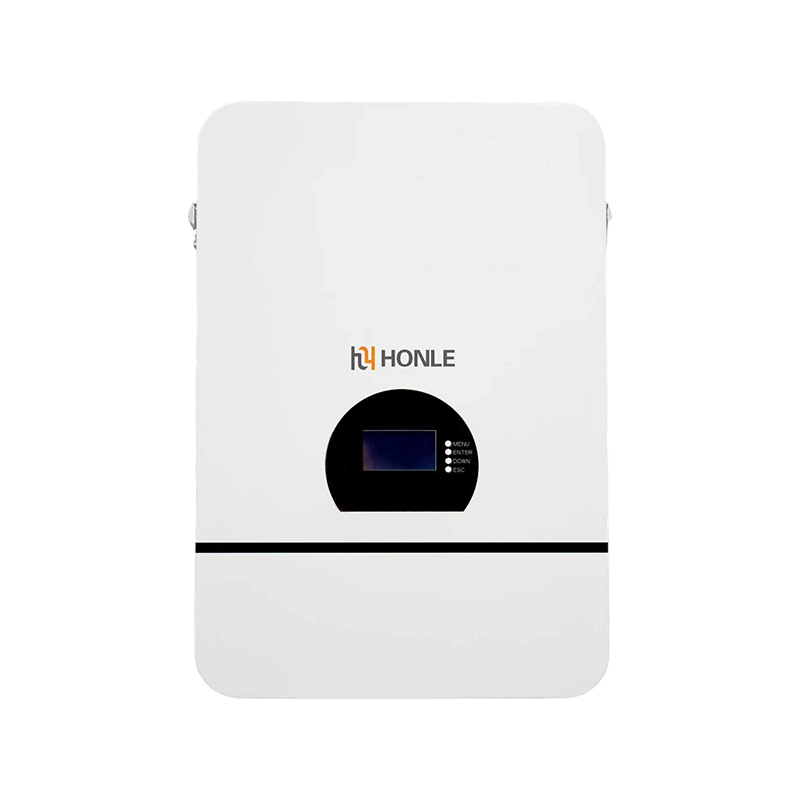 HLA Modular Wall-Mounted LiFePO4 Residential Battery SeriesWall-mounted LiFePO4 storage from 2.56 to 17 kWh with smart BMS and parallel support, suited to garage or utility-room backup and evening loads.View Product →
Stacked high-voltage modules
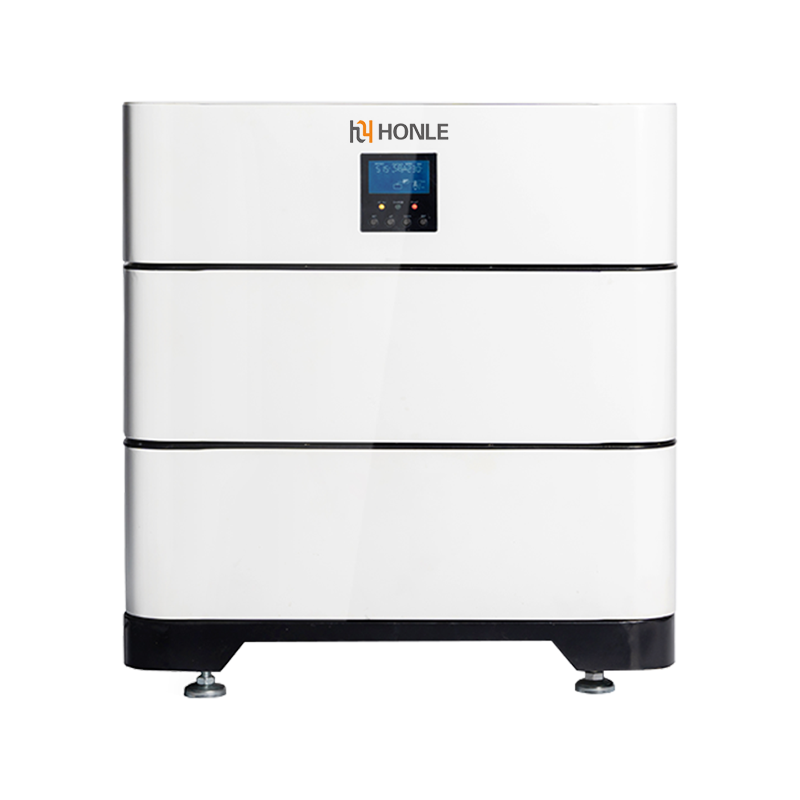
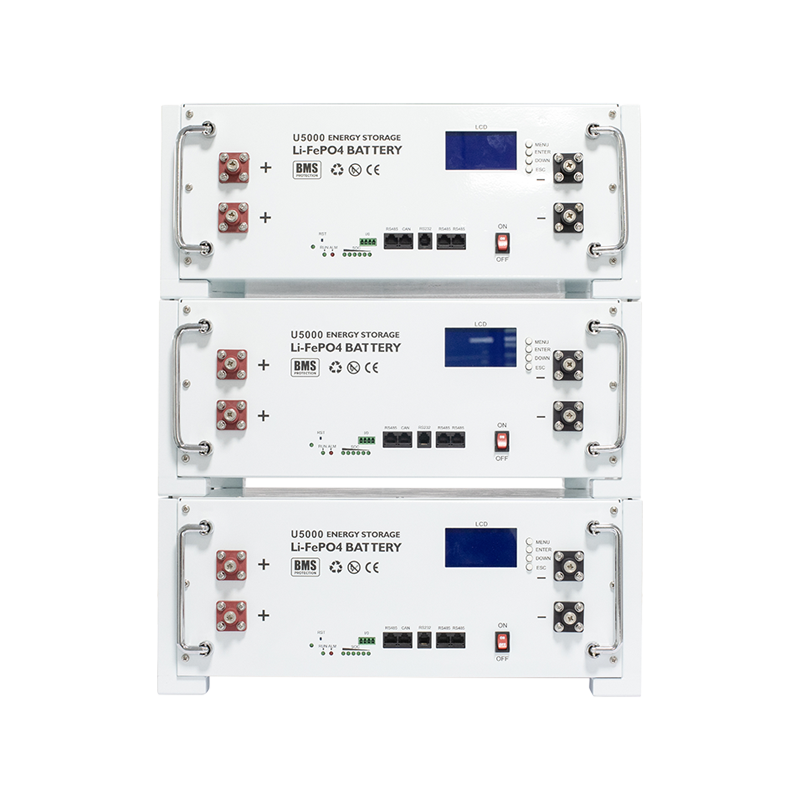
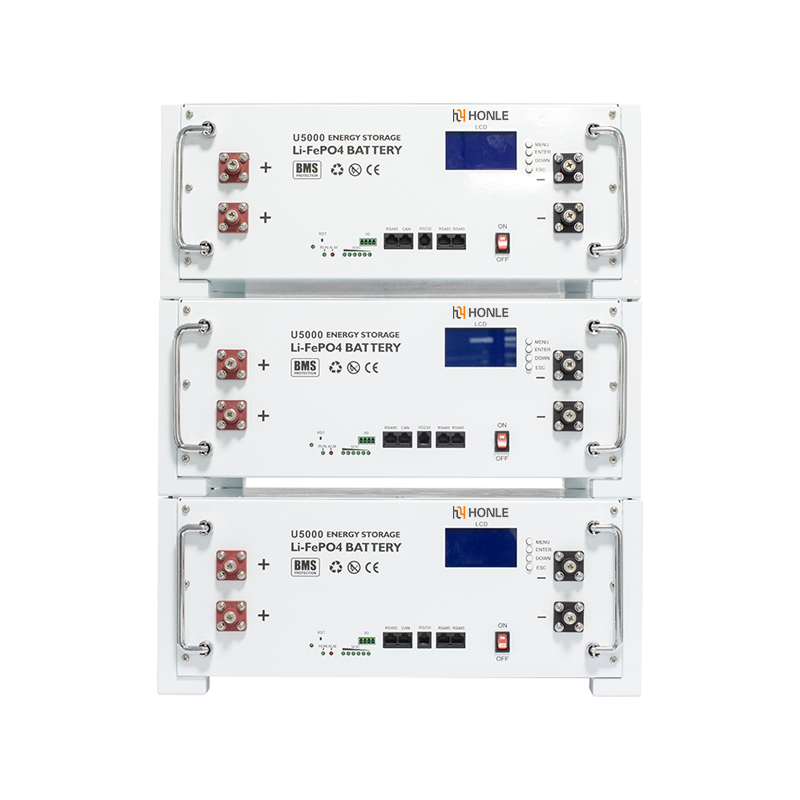
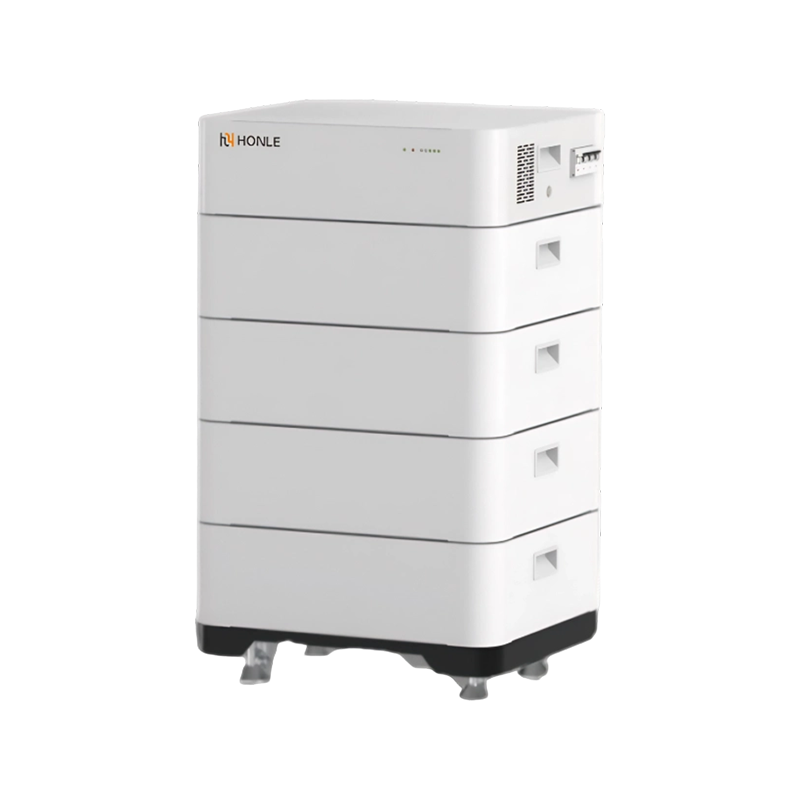
Stacked modules build capacity upward in fixed increments, so expansion later means adding a module and keeping the same footprint. Higher stack voltage lowers current for a given power, which means thinner cables and smaller conversion losses. The trade-off is vertical clearance and a wall or frame that can carry the weight.
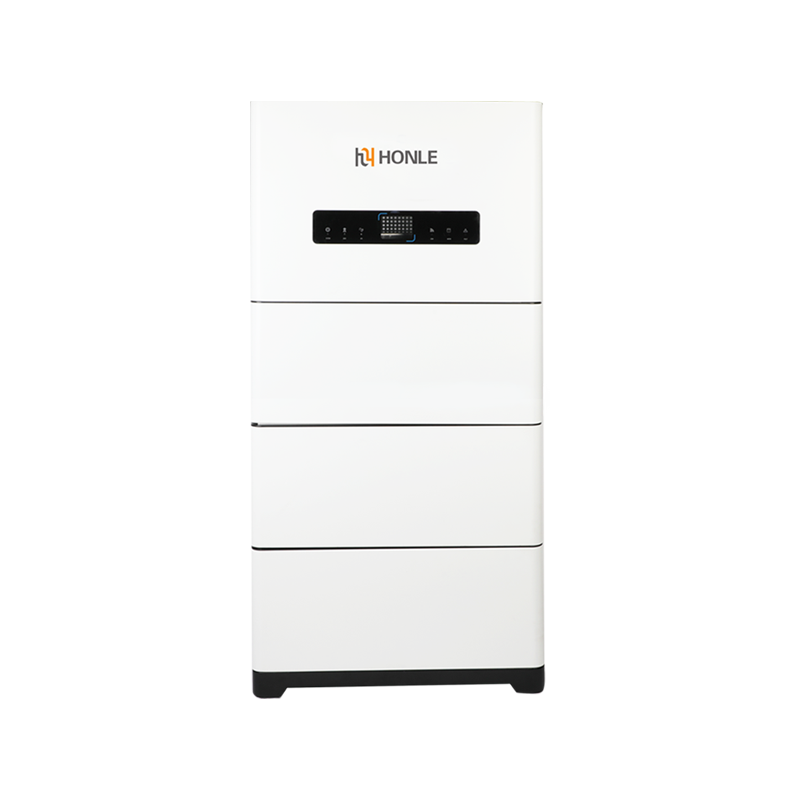 HLH High-Voltage Stacked Residential Battery with Hybrid InverterStacked modular high-voltage storage with 5.12 kWh modules and hybrid inverter, scalable from 10.24 to 20.48 kWh for residential solar backup.View Product →
Floor-standing all-in-one cabinets
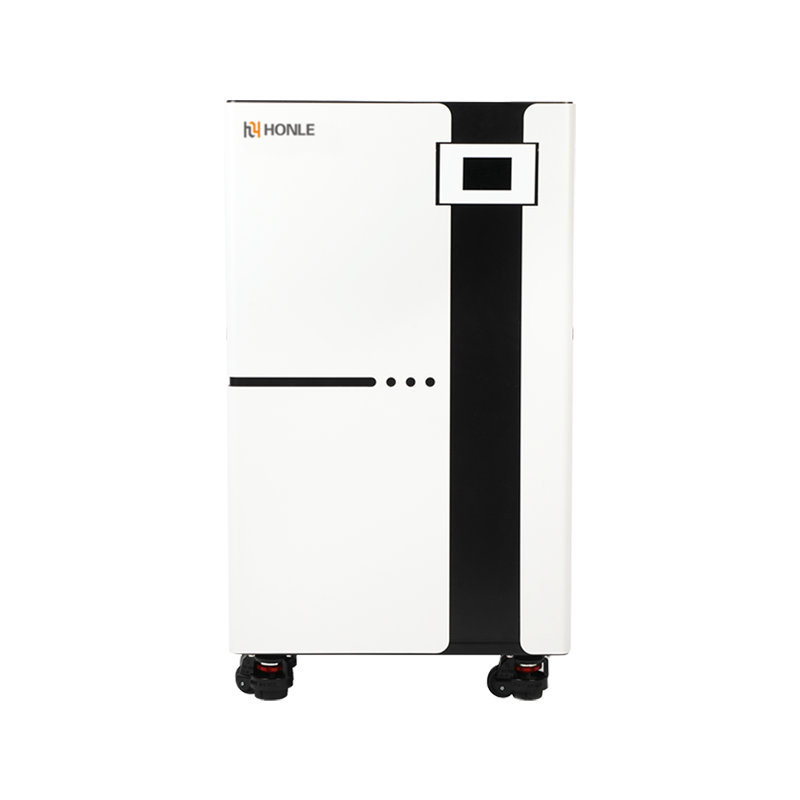
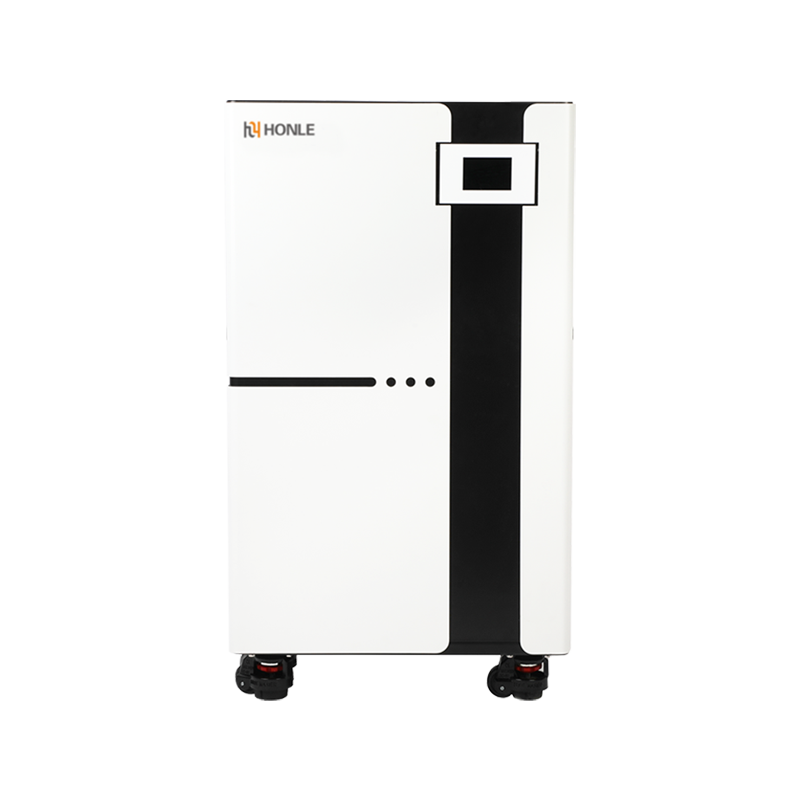
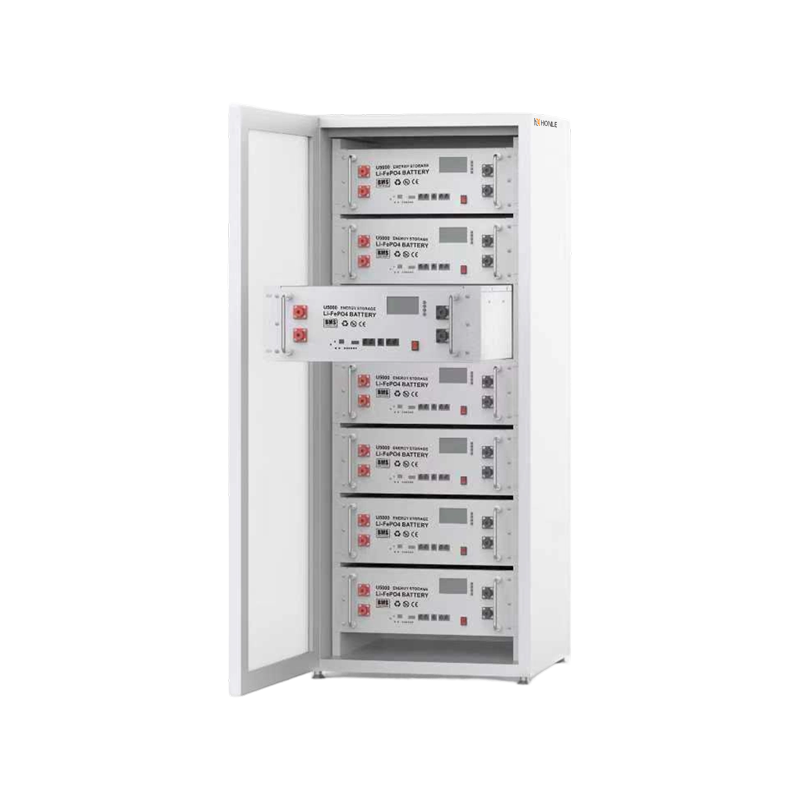
Floor-standing cabinets place the battery, and often the power conversion and controls, in a single enclosure. Installation is faster because the internal DC wiring is already done, and servicing one cabinet is simpler than reaching components spread across a wall. The cost is floor area and weight, which matters in a small utility room.
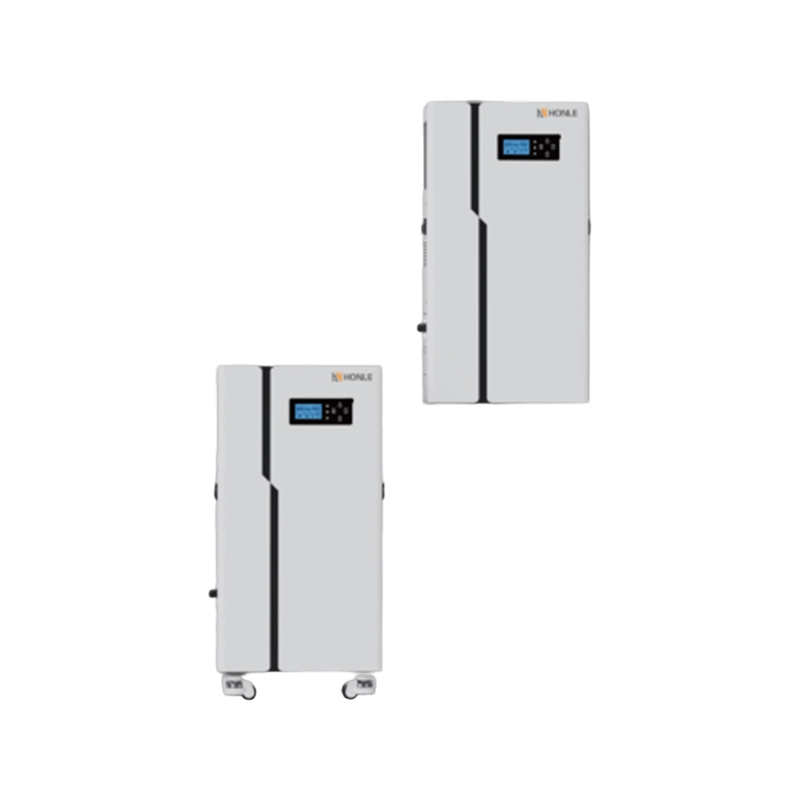 HLX Floor-Standing All-in-One LiFePO4 Home BatterySlim indoor cabinet combines inverter and LiFePO4 battery, with up to 15 parallel units for backup, self-consumption, and load shifting.View Product →
Safety, Grid Rules and Warranty Terms Worth Confirming
- Chemistry and location: lithium iron phosphate cells are the usual residential choice for cycle life and thermal stability, but confirm the enclosure rating matches the location and that the room stays inside the stated operating temperature range.
- Grid approval: the inverter must be approved by your network operator, and export limiting or zero-export settings may be required. It is paperwork, and it delays commissioning if it is missed.
- Backup wiring: only circuits on the backup board keep running during an outage. Deciding which circuits those are before installation is far cheaper than rewiring afterwards.
- Warranty structure: compare years, cycles and throughput in megawatt-hours, and check whether the workmanship warranty covers labour or parts only.
Frequently Asked Questions
Q1: Does residential energy storage work without solar panels?
Yes. The battery charges from the grid, usually on an off-peak tariff, and discharges during expensive hours or during an outage. Savings are smaller than with solar because you buy all the energy, but the backup function is identical.
Q2: What happens when the battery is full?
The charge controller stops accepting current, and the surplus either feeds household loads directly, exports to the grid, or is curtailed by the inverter. Nothing is damaged, but a large array with a small battery will export more than it stores.
Q3: How long does a home battery last?
Most lithium packs are specified for ten years or roughly 6,000 cycles to 80 percent capacity, whichever comes first. Calendar ageing and heat shorten that, so a shaded, ventilated location extends service life more than any control setting.
Q4: Can storage be added to an existing solar system?
Yes. AC coupling lets a battery work alongside the existing PV inverter, which is normally the least disruptive route. The main check is whether the existing inverter and metering support the control signals needed for export limiting.
A residential energy storage system is a short energy path with a handful of decision points. Once you can trace DC from the array into the cells, back out through the inverter and into a chosen set of circuits, the buying questions become straightforward: how many usable kilowatt-hours does the evening need, how much power must the inverter deliver at once, and what should happen to the house when the grid stops. Get those three answers right and the hardware choice reduces to format, space and warranty terms.
Related products
News
-
At 11 a.m. on a bright day, a 6 kW rooftop array can produce more electricity than the house is using. By 8 p.m. the same house is drawing ...
READ MORE -
Pull a floor standing battery out of a flooded utility room and the damage tells the story faster than any datasheet: watermarks a few cent...
READ MORE -
You picked a flexible solar panel because it is light, bends over a curved RV roof or boat deck, and does not need a bulky rack. Then the b...
READ MORE -
Your commercial electricity bill may look like it is driven by total kWh, but an increasing portion is determined by how fast you use that ...
READ MORE -
A textile plant in Yangon keeps sensitive production lines running through unstable grid supply. A warehouse in Singapore uses battery stor...
READ MORE

PRODUCTS
LINKS
CONTACT
- Landline: +86-021-56981116
- TEL: +86-13795289200
- Email: [email protected]
- Address: 301-09, Building 6, Zhangjiang Microelectronics Port, No.690 Bibo Road, Pudong District, Shanghai
Copyright © Honle New Energy Technology Co., Ltd.
All Rights Reserved.
Wholesale Solar Energy Equipment Suppliers

This site uses cookies. By continuing to browse the site you are agreeing to our use of cookies. For more details about cookies and how to manage them see our 《Privacy Policy》
Accept