

 English
 Français
 Español
See Details
- Residential Energy Storage

- C&I BESS

- Large-Scale Centralized Energy storage

- Solar Panel

- Power Inverters

- Vehicle Lithium Battery


Industry News
Home / News / Industry News / How Portable Power Stations Work: Battery, Inverter and Solar Input Explained
How Portable Power Stations Work: Battery, Inverter and Solar Input Explained
Content
- 1 What Is Inside a Portable Power Station?
- 2 How Energy Moves Through the Unit, Step by Step
- 3 Watts vs Watt-Hours: The Sizing Math That Matters
- 4 Solar Recharging: The Input Rating Is the Real Limit
- 5 What Separates a Capable Unit From a Disappointing One
- 6 Where Portable Power Stations Fit Alongside Home Storage
- 7 Frequently Asked Questions

A homeowner charges a 1,200W portable power station for two hours before a storm, then runs a refrigerator, a Wi-Fi router and two laptops through the night. A camper tops up a 600W unit from a foldable solar panel and boils water for coffee at sunrise. Neither result depends on anything exotic: the same four internal parts do the same four jobs in both units.
The short answer comes first. A lithium battery pack stores DC energy, a charge controller governs whatever flows in from the wall socket or a solar panel, an inverter converts stored DC into AC power that ordinary appliances can use, and a battery management system keeps voltage, current and temperature inside safe limits. Ports, screens, apps and casing are convenience built on top of that core.
The specification most buyers misread is not the inverter rating. It is the gap between watts, which measure how fast power is drawn, and watt-hours, which measure how much energy the battery holds. That gap decides whether a station runs a fridge all night or a space heater for forty minutes.
What Is Inside a Portable Power Station?
Strip away the housing and a portable power station is four subsystems working in sequence:
- Battery pack — usually LiFePO4, grouped in series and parallel to reach a nominal 12.8V, 25.6V or 51.2V bus.
- Charge controller — regulates incoming power, steps voltage up or down, and applies the correct charging profile to the pack.
- Inverter — converts DC to AC, normally with a pure sine wave output, and absorbs short surge loads at motor startup.
- Battery management system — watches each cell group for over-voltage, under-voltage, over-current and temperature, and balances cells so capacity does not drift.
Every conversion costs energy. A well-built inverter runs at roughly 85 to 90 percent efficiency, and the battery returns slightly less than it absorbs. A 1,024Wh station therefore delivers about 870 to 920Wh to AC appliances, which is why runtime calculations should start from usable watt-hours rather than the figure printed on the box.
How Energy Moves Through the Unit, Step by Step
Step 1: Charging From the Wall, the Sun or a Car
Three inputs cover almost every model. The wall socket feeds an internal AC-to-DC charger, and recharge time follows that charger's wattage: a 1,000Wh unit charged at 200W needs roughly five to six hours, while a 500W input brings that down to about two. Solar input runs through the charge controller, and its ceiling is often lower than the panel array can deliver. A 12V car socket adds a slow trickle option for road trips.
Step 2: Storage, Where Cell Chemistry Shows
LiFePO4 cells tolerate deep discharge and high ambient heat better than older NMC packs and are typically rated for 3,000 to 6,000 cycles before capacity falls to 80 percent. NMC packs are lighter for the same energy but usually rated nearer 500 to 1,000 cycles. For a unit that sits in a garage and cycles a few hundred times a year, cycle life matters more than the weight saved.
Step 3: Output, Inverter Behaviour and Ports
Continuous rating is what the station can supply indefinitely; the peak, or surge, rating is usually about double and lasts only a few seconds. A 2,000W unit with a 4,000W surge can start a refrigerator compressor but will not run a 3,000W heater. Expect 10 to 20W of idle draw whenever the inverter is switched on, plus 10 to 15 percent conversion loss at the AC sockets. USB-C PD and 12V DC ports bypass the inverter and skip most of that loss.
Step 4: Protection, the BMS and Thermal Control
The BMS clamps charge and discharge current, disconnects on over-temperature, and balances cell groups so capacity does not drift between them. Fans and heatsinks manage heat, and most units derate output once internal temperature passes roughly 45 degrees Celsius. A weak BMS shows up as premature shutdowns under heavy load, or a pack that loses capacity within a couple of years.
Watts vs Watt-Hours: The Sizing Math That Matters
Runtime comes from one division: usable watt-hours divided by load watts. A 1,500Wh LiFePO4 station with 90 percent usable capacity and an 85 percent efficient inverter offers roughly 1,150Wh at its AC outlets. Appliances with motors and compressors are the tricky part, because they draw a surge at startup and then cycle on and off rather than running flat out.
Runtime in hours = rated Wh x 0.9 usable capacity x 0.85 inverter efficiency / load watts
| Appliance | Running watts | Typical surge watts |
|---|---|---|
| LED lamp | 10 | 10 |
| Wi-Fi router | 10 | 20 |
| Laptop charger | 60 | 90 |
| CPAP without humidifier | 40 | 60 |
| Refrigerator, energy efficient | 150 | 1,000 |
| Microwave | 1,000 | 1,600 |
| Electric kettle | 1,500 | 1,500 |
| Space heater | 1,500 | 1,500 |
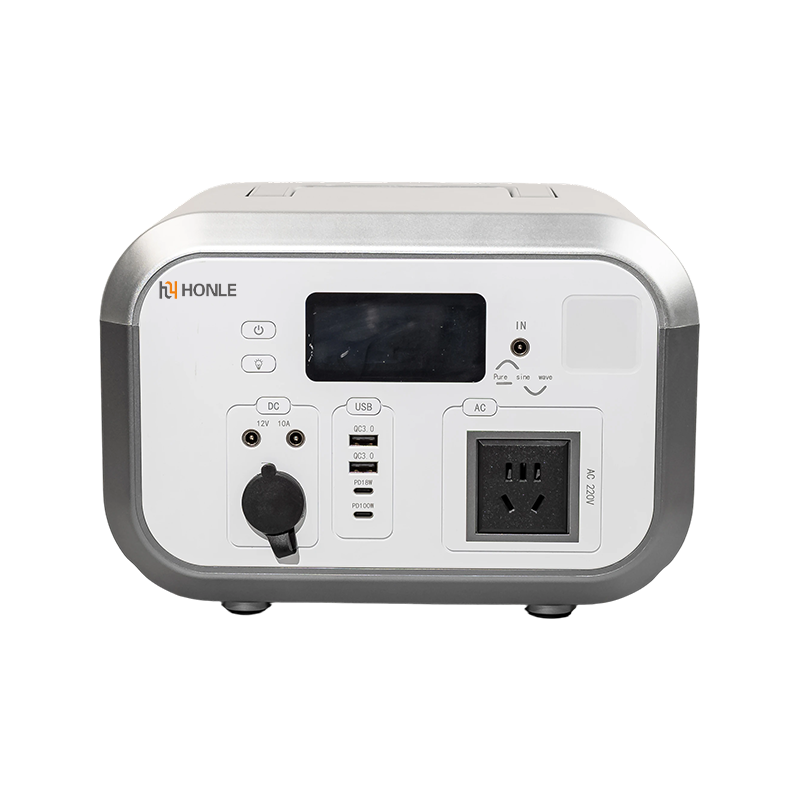
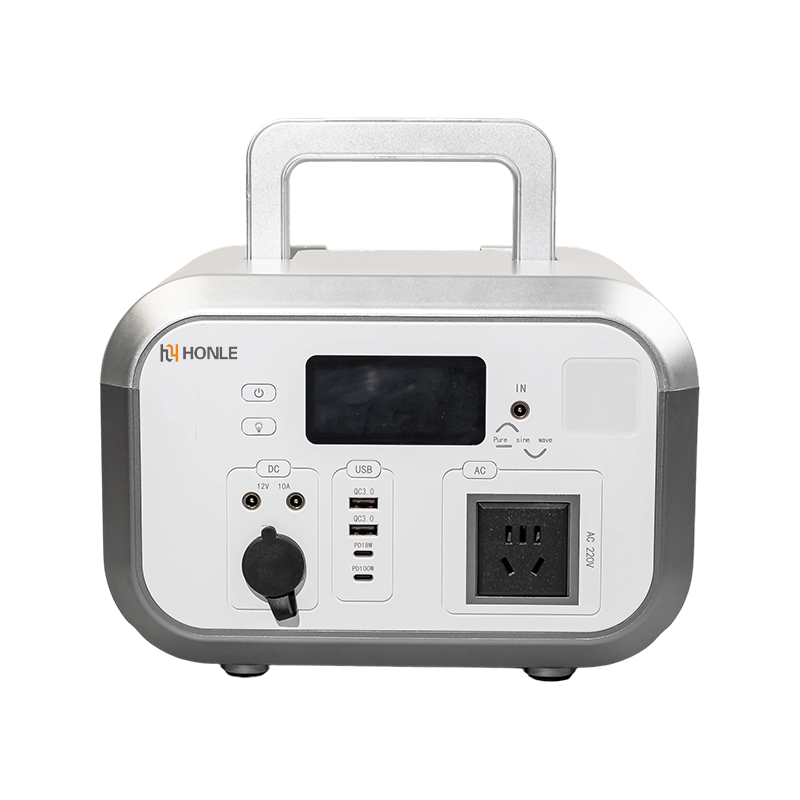
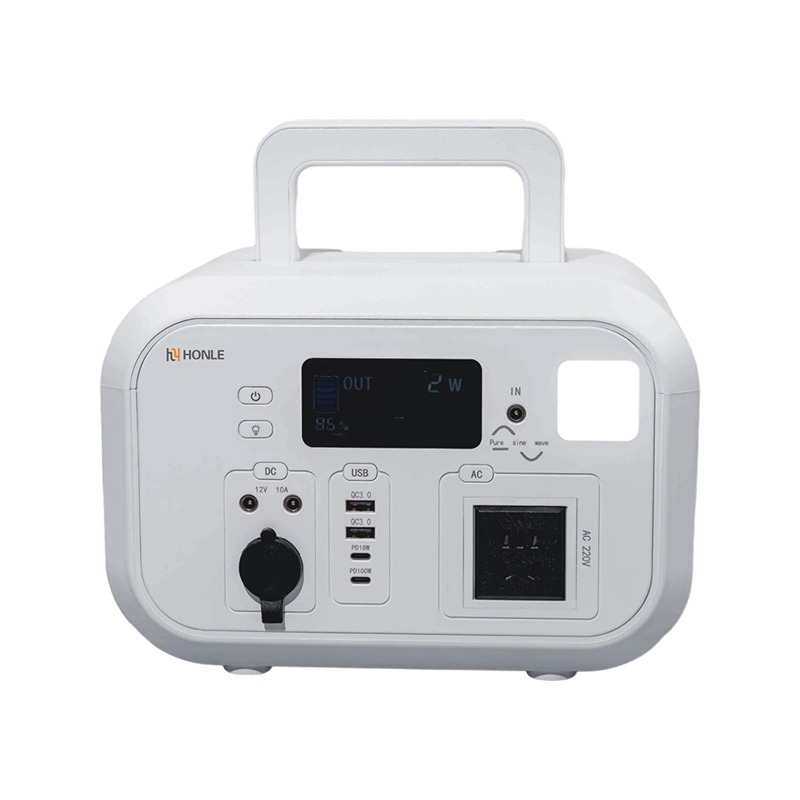
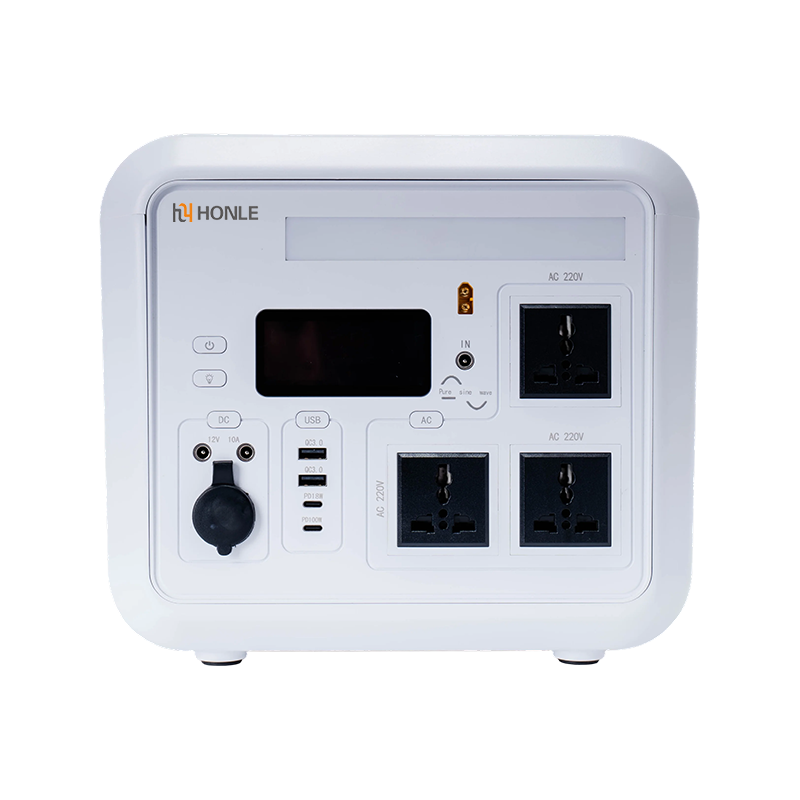 CY-HL 1200W Portable Power Station for Home and TravelA 1152Wh LiFePO4 station with 1200W pure sine wave output, solar charging, and runtime display for camping, travel, and backup.View Product →
Solar Recharging: The Input Rating Is the Real Limit
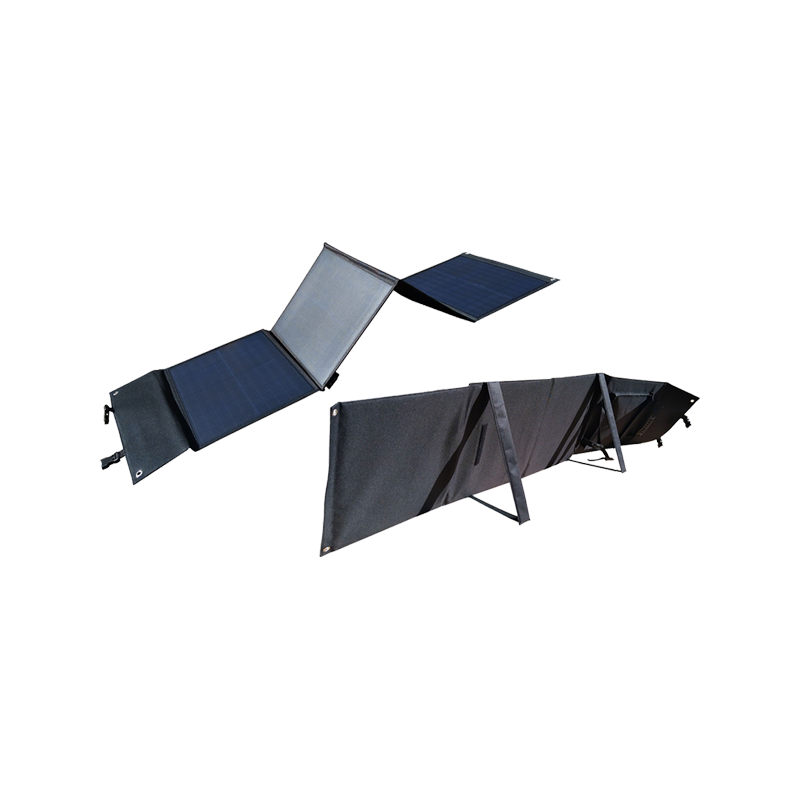
Panels are often sold with bigger numbers than a station can accept. If solar input is capped at 200W, a 400W folding array will not charge any faster, because the extra capacity simply goes unused. Three specifications matter before buying panels: maximum solar input in watts, the acceptable voltage window, for example 12 to 30V, and whether the tracker is MPPT or the cheaper PWM circuit.
Series wiring raises voltage and parallel wiring raises current, and both must stay inside that window. Shade on a single panel in a series string drags down the whole array, so portable setups with two or three identical panels are usually wired in parallel. A foldable 400W panel rated near 25V pairs well with a station that accepts 20A at 12 to 30V; below that ceiling, a 200W panel is the honest match.
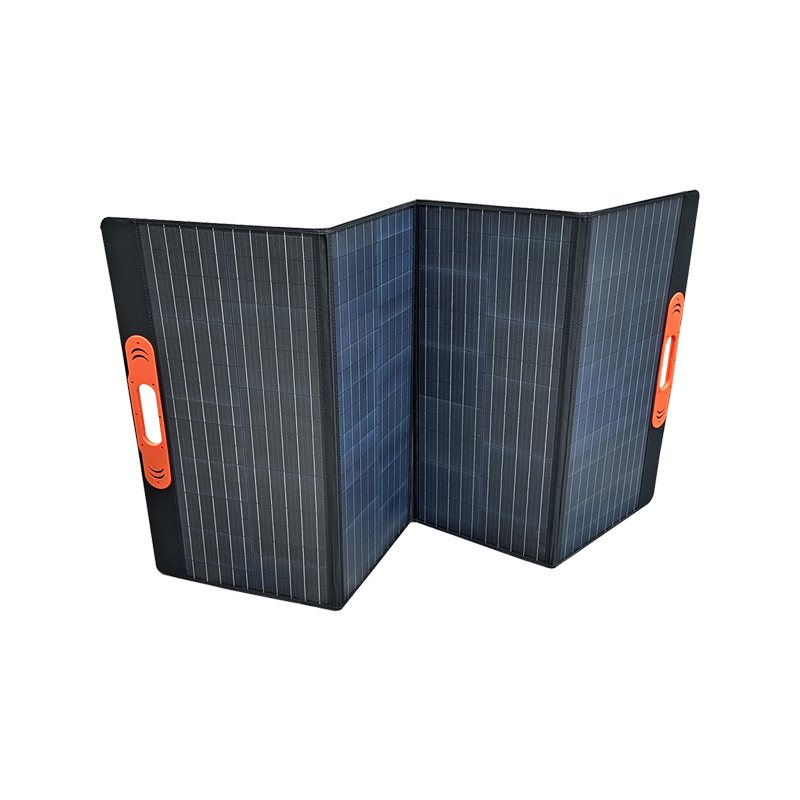
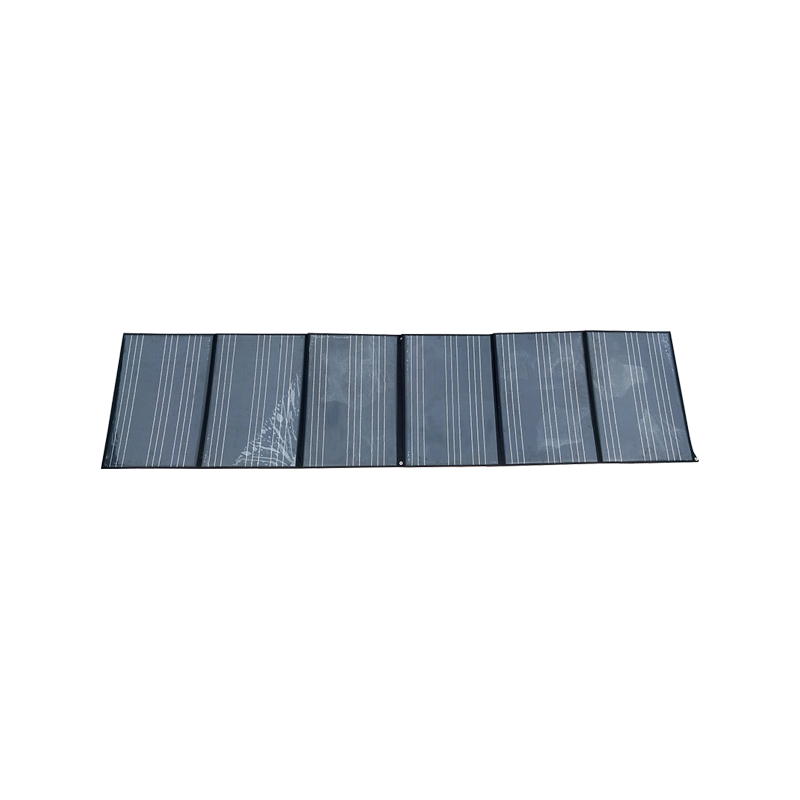 HLFS 400W Foldable Monocrystalline Solar Panel for Off-Grid UseA 400W foldable panel with monocrystalline cells, Anderson connector, and weather-resistant surface for RV, camping, and portable station charging.View Product →
What Separates a Capable Unit From a Disappointing One
Two stations with identical watt-hour ratings can behave very differently. The differences that matter in daily use:
- A LiFePO4 pack with a stated cycle life, not a vague "lithium battery" claim.
- Both continuous and peak watts printed on the label, along with surge duration.
- UPS-style transfer time under 20 milliseconds if the unit will protect a desktop computer or a router.
- Pass-through charging that keeps working while the station discharges, since some cheaper models throttle or stop.
- An expansion route, such as a 48V DC input, so capacity can grow later.
- Sensible weight per watt-hour: a 2,000Wh station at 25kg is genuinely portable, and at 40kg it stays in the garage.
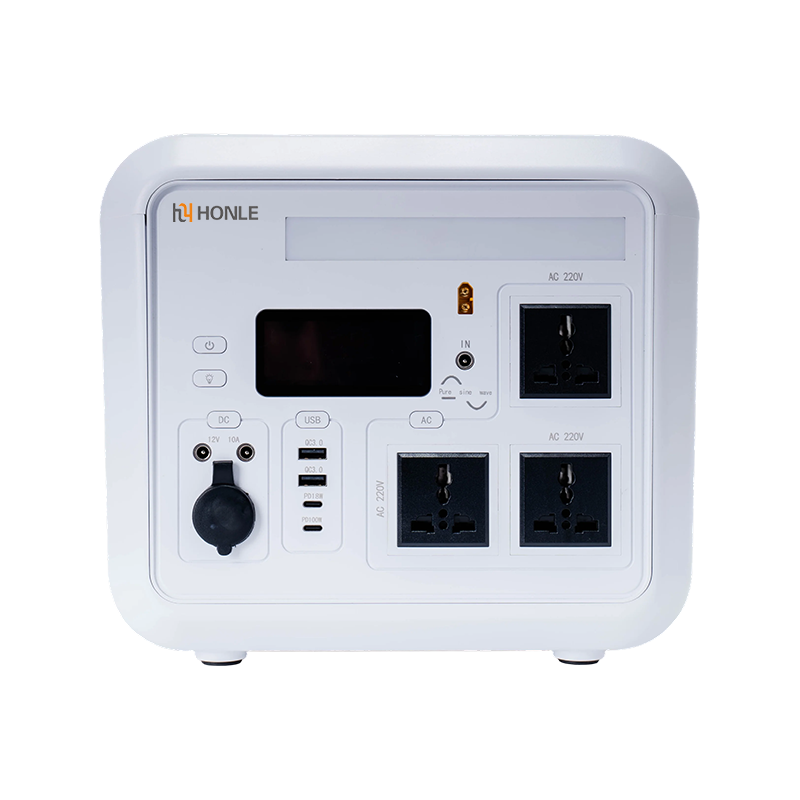
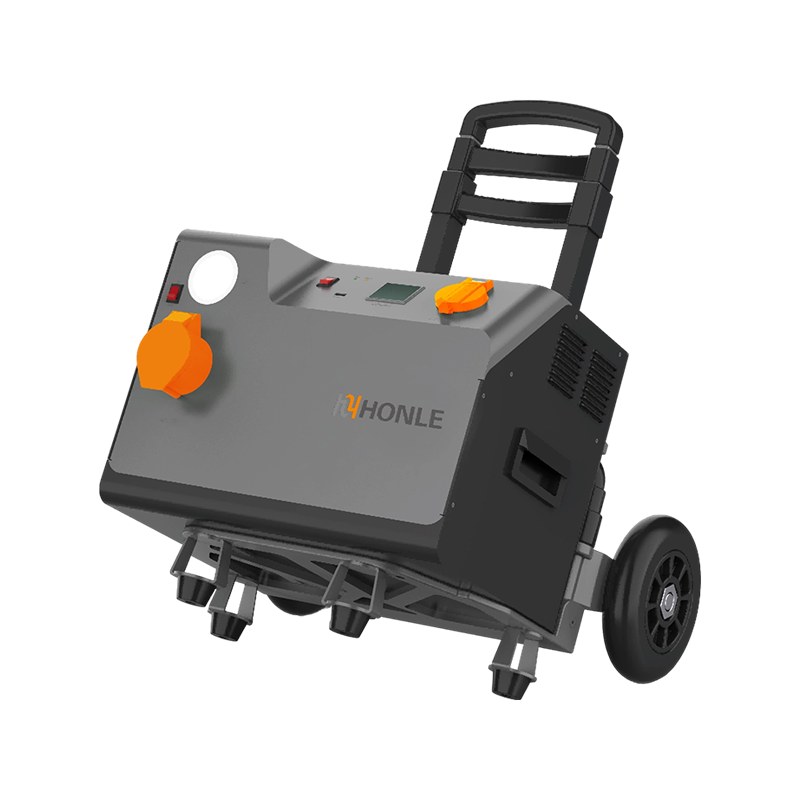 XM-HL Outdoor 3kW Portable Power Station with 2.56kWh LiFePO4A 2.56kWh LiFePO4 station with 3000W pure sine wave output and MPPT solar charging for RV, emergency, and off-grid power needs.View Product →
Where Portable Power Stations Fit Alongside Home Storage
Portable stations cover hours, not days. A 1,000Wh to 2,000Wh unit suits a single night of outage, a weekend at a campsite or a work site without grid power. Whole-home backup needs a different class of equipment: a wall-mounted or floor-standing battery wired into the distribution board, with an inverter sized to household loads and capacity counted in ten-kilowatt-hour steps. The two categories complement each other, and homeowners who start with a portable unit usually learn exactly which circuits they want covered on the larger system, which is the point at which our home backup options become relevant.
Whichever route you take, the sizing method stays the same: list the loads, add their running watts, then multiply by the hours you need. A short wattage reference makes that audit faster.
Read our practical guide to estimating appliance energy use and choosing the right power rating: appliance wattage calculator guide, and compare it with the home battery and backup solutions we assemble for residential users.
Frequently Asked Questions
Q1: Do portable power stations produce clean enough power for laptops and routers?
Yes, when the inverter uses a pure sine wave output, which is standard on current models. That waveform is close enough to grid power for chargers, power supplies and small motors. Older modified sine wave units can make motors hum and run warmer.
Q2: Is a portable power station the same thing as a UPS?
Not quite. A UPS switches to battery in under 10 milliseconds, fast enough that a desktop computer never restarts. A power station typically transfers in 10 to 30 milliseconds, sometimes more. For a refrigerator the difference is irrelevant; for a PC it is the whole point.
Q3: How long will a station actually run a refrigerator?
A 150W compressor fridge with a 30 percent duty cycle averages about 50W. With roughly 1,150Wh of usable energy from a 1,500Wh station, that is close to 20 hours in mild conditions. A hot garage, warm food and frequent door openings shorten it noticeably.
Q4: How many years of service should you expect?
Most LiFePO4 packs are rated for 3,000 to 6,000 cycles down to 80 percent of original capacity. One full cycle per day puts that at eight to fifteen years, though calendar ageing and storage temperature also count. Keeping the unit at 50 to 60 percent charge in a cool, dry place is the simplest protection.
The working principle is short enough to remember: energy in, energy stored, energy converted, energy protected. What decides whether a station is useful is the arithmetic around it, namely usable watt-hours, continuous and surge ratings, and the solar input ceiling. Match those three numbers to the loads you already own, and a portable power station behaves exactly like the tool it was bought to be.
Related products
News
-
Your factory has a 400V three-phase supply, the roof has space for 180kW of solar, and your average load sits around 120kW. In that situati...
READ MORE -
A homeowner charges a 1,200W portable power station for two hours before a storm, then runs a refrigerator, a Wi-Fi router and two laptops ...
READ MORE -
A 20-minute outage in July is an annoyance. A 14-hour outage in February, with the furnace blower off, the well pump dead and the sump pit ...
READ MORE -
Honle New Energy Debuts at 140th Canton Fair, Joining Hands with Global Clients to Expand the Renewable Energy Market In October 2026 (Octo...
READ MORE -
At 7 p.m. on a weekday, a typical 8 kW rooftop solar array is producing less than 1 kW. The dishwasher runs, the EV charges, and the househ...
READ MORE

PRODUCTS
LINKS
CONTACT
- Landline: +86-021-56981116
- TEL: +86-13795289200
- Email: [email protected]
- Address: 301-09, Building 6, Zhangjiang Microelectronics Port, No.690 Bibo Road, Pudong District, Shanghai
Copyright © Honle New Energy Technology Co., Ltd.
All Rights Reserved.
Wholesale Solar Energy Equipment Suppliers


This site uses cookies. By continuing to browse the site you are agreeing to our use of cookies. For more details about cookies and how to manage them see our 《Privacy Policy》
Accept