

 English
 Français
 Español
See Details
- Residential Energy Storage

- C&I BESS

- Large-Scale Centralized Energy storage

- Solar Panel

- Power Inverters

- Vehicle Lithium Battery


Industry News
Home / News / Industry News / How to Scale Commercial and Industrial BESS for Reliable, Cost-Effective Power
How to Scale Commercial and Industrial BESS for Reliable, Cost-Effective Power
Content
- 1 Why Scaling Energy Storage Has Become a Business Priority
- 2 What Defines a Modern C&I BESS Architecture
- 3 Why Containerized Design Has Become the Default for Scaling
- 4 Inside a Containerized Storage Unit
- 5 How to Approach Sizing for a Scaling Project
- 6 Grid-Tied Integration and Utility-Scale Coordination
- 7 Commercial BESS Installation Requirements to Plan For
- 8 The Economic Case for Scaling Storage Capacity
- 9 How to Evaluate a Commercial BESS Manufacturer
- 10 Where Industrial Power Backup Strategies Are Heading
- 11 Frequently Asked Questions
- 11.0.1 Q1: What size C&I BESS does a typical mid-sized commercial facility need?
- 11.0.2 Q2: How long does a commercial or industrial storage installation usually take?
- 11.0.3 Q3: Is a containerized ESS better than a custom-built system?
- 11.0.4 Q4: Can storage be added later to an existing solar installation?
- 11.0.5 Q5: What is the typical lifespan of a commercial battery storage system?
- 11.0.6 Q6: Do industrial facilities need backup power and demand charge management as separate systems?

Why Scaling Energy Storage Has Become a Business Priority
Electricity costs for commercial and industrial facilities are no longer predictable line items. Demand charges, time-of-use rate structures, and grid congestion in high-load regions have pushed operations teams to look beyond the meter for control over their energy profile. This is where C&I BESS systems have moved from pilot projects to core infrastructure decisions.
Unlike residential battery systems, commercial and industrial deployments must be engineered around variable load curves, multiple building circuits, on-site generation, and sometimes multi-site portfolios. Scaling a single container to a multi-megawatt campus deployment involves different engineering choices at every step, from power electronics sizing to permitting sequences.
This guide walks through the technical and operational considerations that matter most when scaling commercial and industrial energy storage, without focusing on any single manufacturer or product line.
What Defines a Modern C&I BESS Architecture
A commercial or industrial battery energy storage system is built from a small number of core subsystems, each of which affects how well the system scales. Understanding these building blocks is the first step in any sizing or vendor evaluation exercise.
| Subsystem | Function | Scaling Consideration |
|---|---|---|
| Battery Racks | Store electrical energy chemically | Modular racks allow capacity to be added in stages |
| Power Conversion System (PCS) | Converts DC battery power to AC and back | PCS rating caps instantaneous power output |
| Battery Management System (BMS) | Monitors cell health, balances charge | Must scale across racks without data bottlenecks |
| Energy Management System (EMS) | Optimizes dispatch, integrates with site loads | Determines how well storage adapts to changing tariffs |
| Thermal Management | Maintains safe operating temperature | Becomes more complex as enclosure count grows |
| Fire Detection and Suppression | Protects assets and personnel | Code requirements often scale with total energy on site |
The relationship between power (kW) and energy (kWh) is central to any scaling discussion. A system sized for high instantaneous discharge but limited energy capacity behaves very differently from one built for long-duration backup. Facilities pursuing Industrial Energy Storage Project Solutions typically need both dimensions modeled against real interval load data before any equipment is selected.
Why Containerized Design Has Become the Default for Scaling
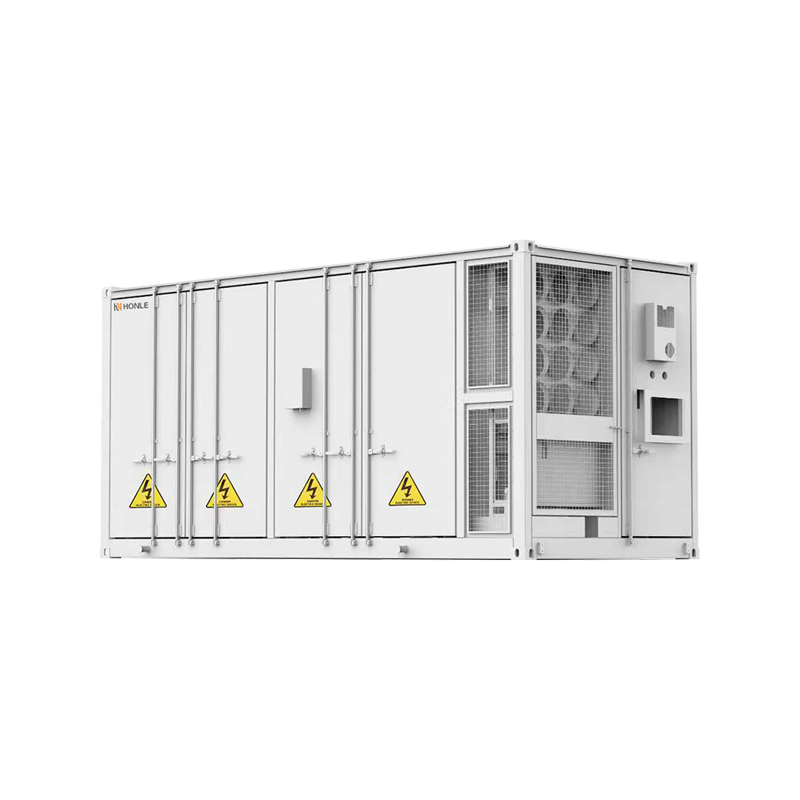
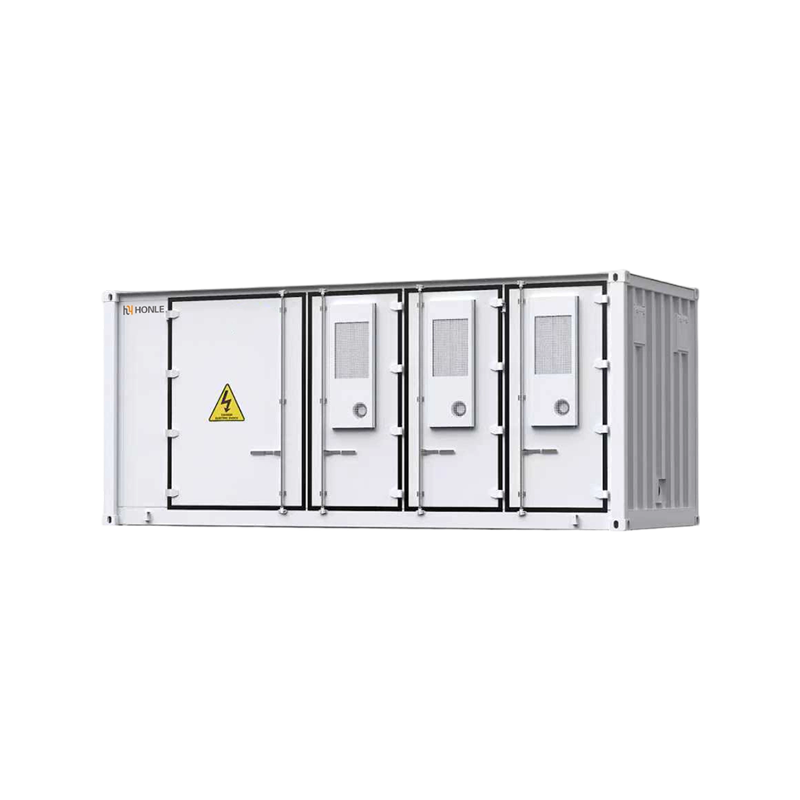
Standardized, factory-integrated enclosures have become the practical way to scale storage capacity without redesigning the system from scratch at every project. A Containerized ESS bundles battery racks, PCS, thermal management, and safety systems into a single tested unit, which simplifies transport, commissioning, and future expansion.
Adding capacity by placing additional standardized enclosures side by side is generally faster and lower-risk than custom-building a larger single system from the ground up.
Core Advantages of a Container-Based Approach
- Factory testing reduces on-site integration errors before commissioning
- Enclosures are rated for outdoor exposure, reducing the need for a dedicated building
- Capacity can be phased in over multiple project stages as load or budget grows
- Standardized footprints simplify site layout and civil work planning
- Replacement or servicing of one unit does not require shutting down the entire system
The tradeoff is site footprint. Facilities with constrained land availability need to weigh container count against available yard space early in the design process, since retrofitting additional units later can be harder if the initial layout did not reserve room for expansion.
Inside a Containerized Storage Unit
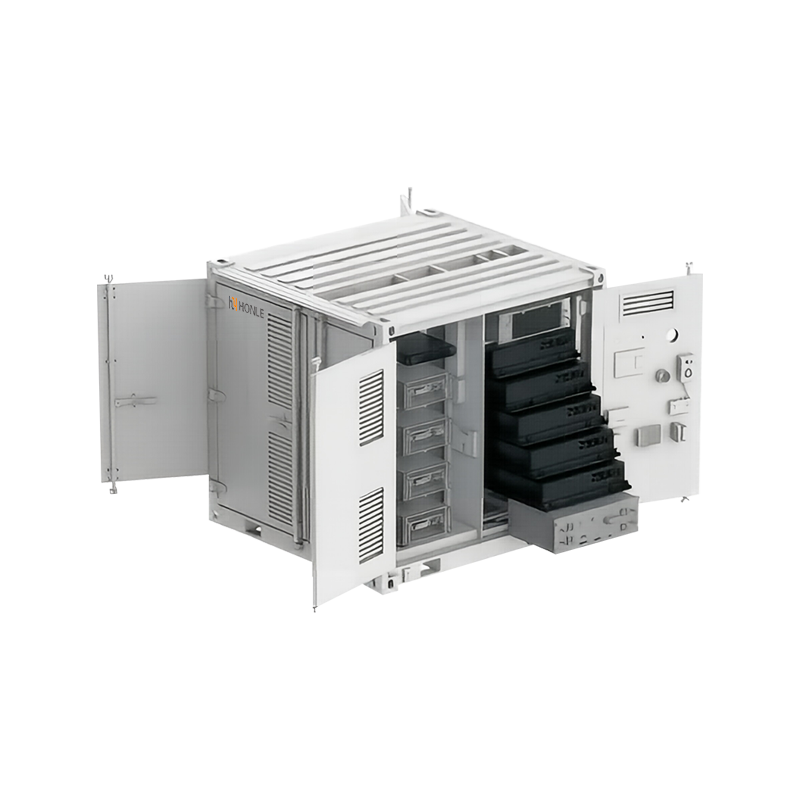
The diagram below illustrates how the major subsystems are typically arranged within a single containerized enclosure, separating the battery compartment from power electronics and safety systems.
How to Approach Sizing for a Scaling Project
Sizing a system correctly avoids two common mistakes: over-building, which wastes capital, and under-building, which limits the financial and operational benefits the project was meant to deliver. A structured sizing process typically follows these steps.
- Collect at least twelve months of interval load data, ideally at fifteen-minute resolution
- Identify the facility's peak demand periods and how consistently they recur
- Model the utility's demand charge structure and any time-of-use penalties
- Determine required backup duration for critical circuits, separate from economic dispatch goals
- Factor in planned load growth, such as electrified fleets or new production lines
- Size the power rating (kW) and energy rating (kWh) independently, then reconcile the two
| Facility Type | Typical Priority | Sizing Emphasis |
|---|---|---|
| Retail or office campus | Demand charge reduction | Moderate power, moderate duration |
| Manufacturing plant | Backup for critical processes | Higher power, duration matched to ride-through needs |
| Cold storage or logistics | Continuous reliability | Longer duration, steady discharge profile |
| Data center support | Short, high-reliability backup | High power, shorter duration, fast response |
Grid-Tied Integration and Utility-Scale Coordination
Most commercial and industrial storage projects are grid-tied rather than fully islanded, meaning the system operates alongside the utility connection rather than replacing it. Integration design determines how smoothly the battery system interacts with on-site generation, the building's electrical distribution, and the utility grid itself.
For sites already generating power on site, coordinating storage with a broader energy setup, including any commercial solar panels for sale or grid tied solar system already installed, requires the energy management software to prioritize dispatch logic correctly. Solar-plus-storage configurations, for instance, need rules for when the battery charges from excess generation versus when it discharges to offset peak grid draw.
Utility-scale energy storage integration at a portfolio level introduces additional coordination requirements, since multiple sites drawing from or exporting to the same substation can affect interconnection studies and approval timelines.
Commercial BESS Installation Requirements to Plan For
Installation timelines are frequently underestimated because permitting and interconnection review can take longer than the physical construction itself. Planning around these requirements early avoids costly project delays.
| Requirement Area | What It Typically Involves |
|---|---|
| Site civil work | Foundation pads, drainage, access roads for delivery vehicles |
| Electrical permitting | Local authority review of one-line diagrams and equipment specifications |
| Fire code compliance | Setback distances, suppression system approval, emergency access |
| Utility interconnection | Application, impact study, and agreement with the local utility |
| Grounding and protection | Coordination studies to confirm protective relay settings |
| Commissioning | Functional testing of PCS, BMS, EMS, and safety systems before energization |
Working with a solar distribution company or a solar permit services provider that already has local jurisdiction relationships can meaningfully shorten the permitting timeline for combined solar-plus-storage projects, since much of the paperwork overlaps.
The Economic Case for Scaling Storage Capacity
The financial return on a commercial or industrial storage project generally comes from a combination of the following mechanisms, rather than a single revenue stream.
Demand Charge Reduction
In many commercial rate structures, demand charges can represent a significant share of the total monthly bill. Discharging stored energy during peak demand windows lowers the billed peak, directly reducing this portion of the bill.
Time-of-Use Arbitrage
Charging during lower-cost off-peak periods and discharging during higher-cost peak periods captures the price spread between rate tiers.
Resilience Value
Avoiding production downtime during outages has a value that is often larger than the visible energy savings, particularly for facilities running continuous processes.
Layering these mechanisms together is generally what makes larger storage deployments financially attractive, since a system sized only for backup rarely pays back as quickly as one also dispatched for daily demand management.
How to Evaluate a Commercial BESS Manufacturer
Selecting a Commercial BESS Manufacturer for a scaling project is less about comparing headline specifications and more about verifying long-term operational support, since a storage system is expected to remain in service for well over a decade.
| Evaluation Area | Key Questions to Ask |
|---|---|
| Cell and pack quality | What testing standards are applied before shipment |
| Warranty structure | Is degradation covered, and under what usage assumptions |
| Software and controls | Can the EMS integrate with existing building management systems |
| Serviceability | Are replacement parts and technicians available regionally |
| Safety certification | Which independent safety standards has the system been tested against |
| Scalability path | Can additional capacity be added without replacing existing hardware |
A useful practice is requesting reference performance data from comparable facility types rather than relying solely on nameplate specifications, since real-world round-trip efficiency and cycle life can vary from lab conditions.
Where Industrial Power Backup Strategies Are Heading
Several shifts are shaping how facilities approach industrial power backup strategies over the next planning cycle.
- Software-driven dispatch optimization is becoming as important as hardware selection, since automated bidding into demand response programs adds incremental revenue
- Modular, container-based scaling is reducing the gap between small pilot projects and full utility-scale energy storage integration
- Combined solar, storage, and backup generation designs are replacing single-technology approaches for facilities with critical uptime requirements
- Fire safety and thermal management standards continue to tighten, influencing enclosure spacing and site layout requirements
- Energy management for businesses is increasingly handled through cloud-based platforms that allow multi-site portfolios to be monitored centrally
Facilities that treat storage as a flexible, expandable asset rather than a one-time installation tend to capture more value over the system's operating life, since tariff structures and load profiles both change over a ten-to-twenty-year horizon.
Frequently Asked Questions
Q1: What size C&I BESS does a typical mid-sized commercial facility need?
There is no fixed answer, since sizing depends on peak demand, load shape, and the rate structure in place. A proper sizing exercise starts with at least twelve months of interval load data before any capacity figure is proposed.
Q2: How long does a commercial or industrial storage installation usually take?
Permitting and utility interconnection review often take longer than physical construction. Total project timelines commonly range from several months to over a year, depending on jurisdiction and grid capacity in the area.
Q3: Is a containerized ESS better than a custom-built system?
Containerized systems generally offer faster deployment, lower integration risk, and easier future expansion. Custom-built systems may suit sites with highly unusual space constraints, but they typically involve longer engineering and commissioning timelines.
Q4: Can storage be added later to an existing solar installation?
In most cases yes, provided the existing grid tied solar system has the electrical capacity and space to accommodate additional equipment. An interconnection review is usually required to confirm compatibility.
Q5: What is the typical lifespan of a commercial battery storage system?
Most systems are designed for a service life in the range of ten to twenty years, though actual lifespan depends on cycling frequency, thermal management quality, and maintenance practices.
Q6: Do industrial facilities need backup power and demand charge management as separate systems?
No. A properly sized system can typically serve both functions, since the same battery capacity used for backup during an outage can also be dispatched daily for demand charge reduction.
Related products
News
-
Honle New Energy Technology Participates in Industry Exhibition From September 8 to 10, 2026, Honle New Energy Technology Co., Ltd. partic...
READ MORE -
You have mounted solar panels, wired a battery bank, and installed an inverter. Yet your batteries never seem to reach full charge, or they...
READ MORE -
You have just received a higher electricity bill, and the sun is still shining outside. Can you actually use that free energy? Yes, but no...
READ MORE -
Allan just installed a 6 kW solar array on his workshop roof. The quote offered two choices: save $120 by accepting a modified sine wave i...
READ MORE -
The Wattage Number That Decides Everything Before you choose a portable power station, an inverter, or a solar array, the only number you r...
READ MORE

PRODUCTS
LINKS
CONTACT
- Landline: +86-021-56981116
- TEL: +86-13795289200
- Email: [email protected]
- Address: 301-09, Building 6, Zhangjiang Microelectronics Port, No.690 Bibo Road, Pudong District, Shanghai
Copyright © Honle New Energy Technology Co., Ltd.
All Rights Reserved.
Wholesale Solar Energy Equipment Suppliers

This site uses cookies. By continuing to browse the site you are agreeing to our use of cookies. For more details about cookies and how to manage them see our 《Privacy Policy》
Accept