

 English
 Français
 Español
See Details
- Residential Energy Storage

- C&I BESS

- Large-Scale Centralized Energy storage

- Solar Panel

- Power Inverters

- Vehicle Lithium Battery


Industry News
Home / News / Industry News / How Microinverters, String Inverters, and Panel Technology Shape Solar System Output
How Microinverters, String Inverters, and Panel Technology Shape Solar System Output
Content
- 1 Rethinking Power Conversion Architecture in Distributed Solar Arrays
- 2 How Micro Inverter Technology Redefines Module-Level Performance
- 3 String Inverters vs Distributed Conversion: A Technical Comparison
- 4 Hybrid Inverter Systems: Bridging Grid and Storage Flexibility
- 5 N-Type TOPCon and PERC Panel Efficiency: Why Panel Choice Matters
- 6 Racking, Mounting, and Peak Sun Hours: Site-Level Considerations
- 7 Matching Inverter Architecture to Project Requirements
- 8 Frequently Asked Questions
- 8.0.1 Q1: Do microinverters produce more total energy than string inverters?
- 8.0.2 Q2: Is a hybrid inverter necessary if a battery is not being installed right away?
- 8.0.3 Q3: How does N-Type TOPCon compare to PERC in high-temperature climates?
- 8.0.4 Q4: What role does the racking system play in inverter performance?
- 8.0.5 Q5: Can microinverters and string inverters be combined on the same site?

Rethinking Power Conversion Architecture in Distributed Solar Arrays
Every photovoltaic system produces direct current at the module, but the point where that current is converted into usable alternating current has a measurable effect on total energy harvest. The decision between module-level conversion and centralized conversion is no longer a minor spec sheet detail; it is one of the largest variables in a system's lifetime yield, second only to panel efficiency and site irradiance.
Two architectures dominate residential and commercial installations today: distributed conversion using a micro inverter at each panel, and centralized conversion using a single string inverter for a series of panels. A third category, the hybrid inverter, adds battery charge and discharge management into the equation. Layered on top of inverter choice are panel technology (N-Type TOPCon versus PERC), the mechanical racking system, and the site's available peak sun hours. None of these variables operate in isolation, and the strongest-performing systems are the ones where all four are matched deliberately rather than defaulted to.
This guide breaks down the technical trade-offs between these architectures, with attention to mismatch loss, monitoring granularity, storage compatibility, and site-level factors that determine whether a given configuration will actually deliver on its rated output.
How Micro Inverter Technology Redefines Module-Level Performance
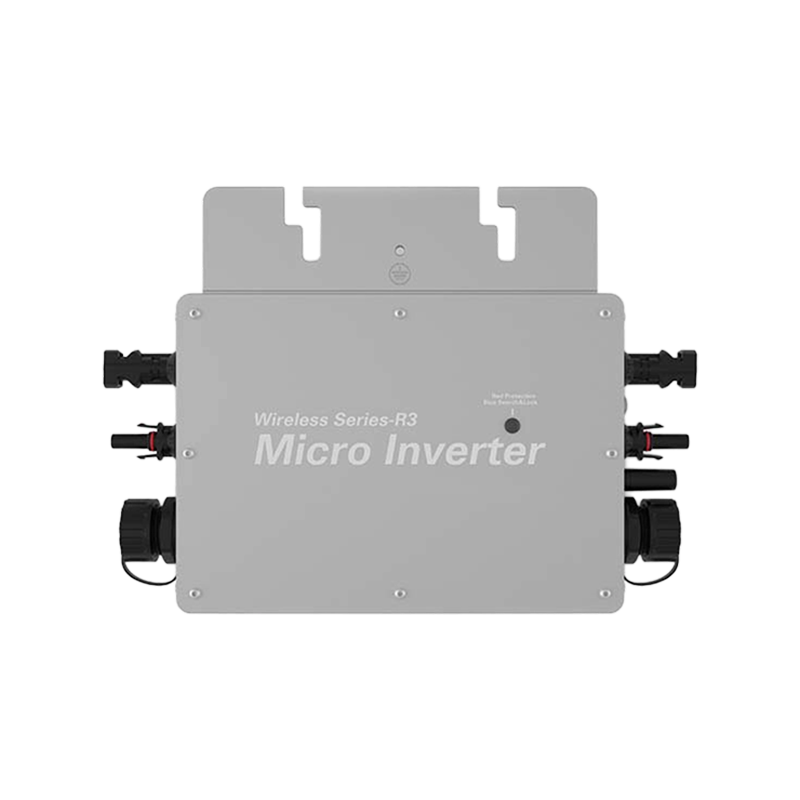
A micro inverter is mounted directly behind or beside an individual solar panel and performs DC-to-AC conversion at the module itself, rather than sending raw DC down to a central unit. Because each panel operates its own maximum power point tracking loop, the output of one panel is never constrained by the weakest panel in a series string.
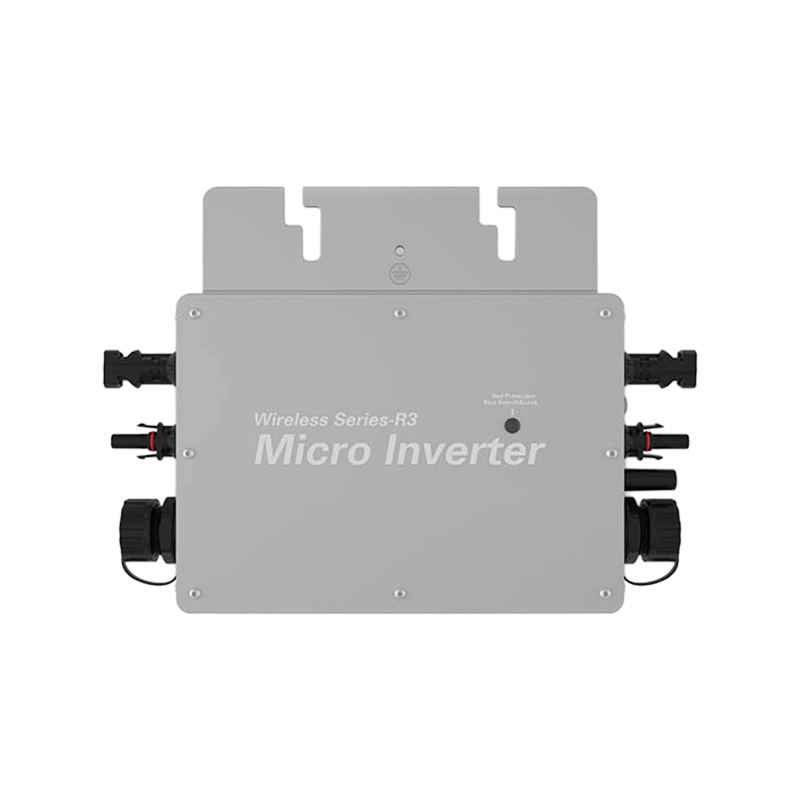
Module-level conversion places power electronics at each panel rather than in a single centralized unit.
Where Module-Level Conversion Adds Measurable Value
- Partial shading, tree cover, or a chimney shadow on one panel no longer drags down the output of every panel connected in the same string.
- Panel-by-panel monitoring makes it possible to identify an underperforming or soiled panel without dispatching a technician to trace an entire string.
- Because each unit converts to low-voltage AC at the panel, rooftop DC wiring carries far lower voltage, which is a meaningful safety consideration for rapid-shutdown compliance.
- Mixed orientations on a single roof, such as east and west-facing sections, can be combined on one circuit without the orientation mismatch losses typical of a shared string inverter.
Field data from partially shaded residential arrays commonly shows an energy harvest improvement in the range of 5 to 25 percent when module-level conversion replaces a single shared string inverter, with the largest gains occurring on roofs with recurring shade patterns or multiple orientations.
The trade-off is that module-level electronics carry a higher upfront hardware cost per watt and place more electronic components on the roof, which slightly increases the number of potential service points over a twenty-five-year system life. For simple, unshaded, single-orientation roofs, this added cost may not translate into a proportional yield gain.
String Inverters vs Distributed Conversion: A Technical Comparison
String inverters remain the dominant choice for large, uniformly oriented arrays where shading is minimal and cost per watt is the primary driver. The diagram below illustrates the structural difference between the two topologies before the comparison table breaks down the operational trade-offs.
| Factor | Micro Inverter | String Inverter |
|---|---|---|
| Conversion point | At each panel | Centralized for the array or sub-array |
| MPPT granularity | Per panel | Per string, sometimes multiple MPPT channels |
| Shading tolerance | High | Low to moderate |
| Rooftop DC voltage | Low, AC at panel level | High voltage DC across the string |
| Monitoring detail | Individual panel level | Whole-string or array level |
| Typical best fit | Complex roofs, mixed orientation, partial shade | Open, uniform, unshaded arrays |
| Relative hardware cost per watt | Higher | Lower |
Neither topology is universally superior. The correct choice depends on how uniform the array's sun exposure is, how much monitoring granularity a project owner values, and whether the site's layout forces panels into partial shade for any part of the day.
Hybrid Inverter Systems: Bridging Grid and Storage Flexibility
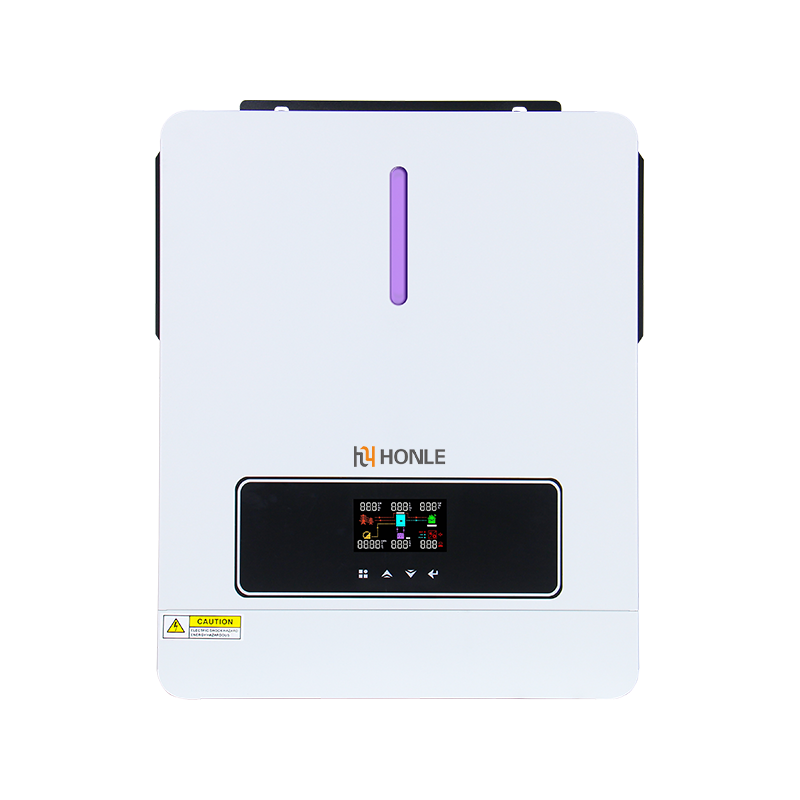
A hybrid inverter manages three power flows in a single unit: incoming DC from the solar array, DC charge and discharge cycles to a connected battery, and AC exchange with the grid. Rather than requiring a separate charge controller, battery inverter, and PV inverter, the hybrid architecture consolidates conversion stages, which reduces total conversion losses and simplifies wiring.
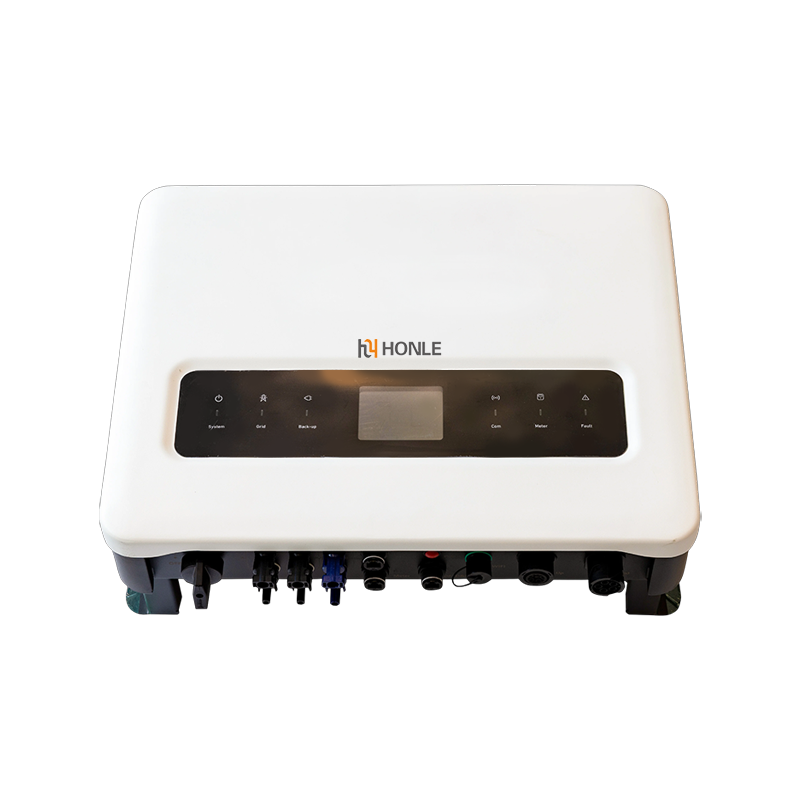
A hybrid inverter coordinates solar input, battery storage, and grid exchange from one enclosure.
Operational Advantages of Consolidated Conversion
| Capability | What It Enables |
|---|---|
| Self-consumption optimization | Prioritizes on-site solar use before drawing from or exporting to the grid |
| Time-of-use load shifting | Charges the battery during low-rate periods and discharges during peak-rate periods |
| Backup power management | Automatically islands the home or facility circuit during a grid outage |
| Reduced conversion stages | Fewer DC-AC-DC handoffs than a separate PV inverter plus battery inverter setup |
Hybrid inverters are most valuable in projects where battery storage is planned from the outset, or where utility rate structures reward shifting consumption away from peak demand windows. For arrays with significant shading, pairing a hybrid inverter with module-level power electronics on the DC input side can combine the mismatch-tolerance benefits described earlier with centralized storage management.
N-Type TOPCon and PERC Panel Efficiency: Why Panel Choice Matters
Inverter architecture determines how efficiently the system converts available DC power, but the panel itself determines how much DC power is generated in the first place. The comparison between N-Type TOPCon and PERC cell technology has become one of the more consequential decisions in N-TOPCON/PERC solar panel selection, particularly for projects sourcing panels through PV module wholesale channels where price and long-term degradation both factor into total cost of ownership.
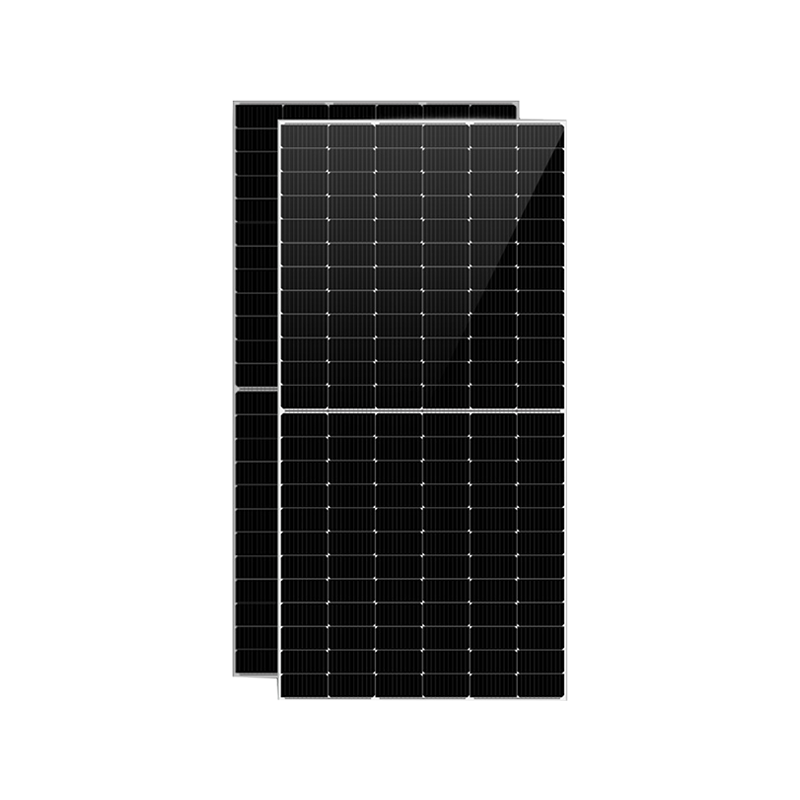
N-Type TOPCon cells use a tunnel oxide passivated contact layer to reduce electron recombination losses.
| Attribute | N-Type TOPCon | P-Type PERC |
|---|---|---|
| Typical module efficiency | Approximately 22 to 23 percent | Approximately 20 to 21.5 percent |
| Temperature coefficient | Lower, less output loss in high heat | Moderate |
| Light and elevated temperature induced degradation | Substantially reduced | More susceptible |
| Bifacial gain potential | Generally higher | Lower to moderate |
| Relative manufacturing cost | Higher, narrowing over time | Lower, mature production base |
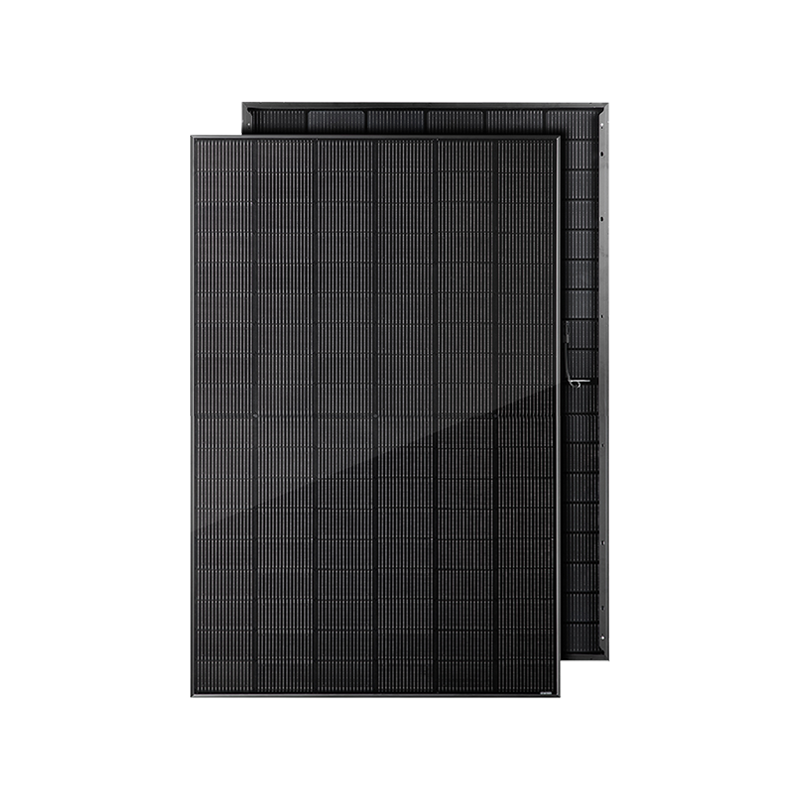
Higher-wattage N-Type TOPCon modules reduce the panel count needed to reach a given system size.
PERC technology remains a reasonable choice for budget-constrained projects with ample roof or ground space, since its lower per-watt cost can offset a slightly lower efficiency rating. N-Type TOPCon becomes the stronger choice when roof area is limited, when the site experiences consistently high ambient temperatures, or when the project's financial model depends on minimizing long-term degradation over a twenty-five to thirty-year service life.
Racking, Mounting, and Peak Sun Hours: Site-Level Considerations
Inverter and panel selection only realize their theoretical performance when the physical mounting system and site irradiance profile are accounted for. A solar racking system determines tilt angle, row spacing, and structural resilience, all of which directly influence how many peak sun hours a given array actually captures.
Racking Configuration Factors
- Fixed-tilt racking is simpler and lower cost but locks in a single optimal angle, which can leave morning and afternoon generation on the table.
- Adjustable or tracking racking increases captured irradiance across the day but adds mechanical complexity and maintenance requirements.
- Row spacing on ground-mount racking must account for inter-row shading during low sun angles, particularly at higher latitudes with fewer peak sun hours in winter months.
- Roof-mount racking must accommodate structural load limits, penetration sealing, and, on complex roofs, the multiple orientations that make module-level conversion more valuable.
Peak Sun Hours and Architecture Selection
Peak sun hours, the equivalent number of hours per day at which solar irradiance averages 1,000 watts per square meter, vary significantly by latitude and climate, often ranging from roughly 3 to 4 hours in cloudier northern climates to 6 hours or more in arid, low-latitude regions. Sites with high peak sun hours and open, unobstructed layouts tend to see string inverters perform close to their rated capacity with minimal mismatch loss. Sites with lower or more variable peak sun hours, particularly where cloud cover or shading patterns are inconsistent throughout the day, benefit more from the per-panel optimization that module-level conversion provides, since every incremental hour of usable irradiance carries more weight in the system's total annual output.
Matching Inverter Architecture to Project Requirements
The strongest system designs work backward from site conditions rather than defaulting to a single inverter category. The flow below outlines a practical sequence for narrowing down architecture based on shading exposure and storage plans.
Practical Selection Checklist
- Map shading sources across all four seasons, not just a single site visit.
- Confirm whether the roof or ground layout requires more than one array orientation.
- Decide whether battery storage or backup power is part of the current or future project scope.
- Compare projected peak sun hours against panel efficiency to size the array to the target load.
- Factor racking type and structural constraints into both cost and long-term maintenance planning.
Projects sourcing components through PV module wholesale suppliers should evaluate panel efficiency, inverter compatibility, and racking specifications together as a single system rather than procuring each component in isolation, since mismatched voltage windows or racking load ratings can erode the performance gains that careful component selection is meant to deliver.
Frequently Asked Questions
Q1: Do microinverters produce more total energy than string inverters?
On arrays with shading, multiple orientations, or panel-to-panel mismatch, microinverters typically produce more usable energy because each panel operates independently. On fully unshaded, uniformly oriented arrays, the difference narrows considerably.
Q2: Is a hybrid inverter necessary if a battery is not being installed right away?
Not necessarily. A hybrid inverter is most valuable when storage is part of the design. Some hybrid units support future battery addition, so it can be worth confirming compatibility even if storage is deferred to a later phase.
Q3: How does N-Type TOPCon compare to PERC in high-temperature climates?
N-Type TOPCon generally has a lower temperature coefficient, meaning it retains more of its rated output as panel temperature rises, which makes it a stronger candidate for hot climates with high peak sun hours.
Q4: What role does the racking system play in inverter performance?
Racking determines tilt, orientation, and row spacing, all of which affect how much irradiance reaches each panel. Inverter architecture cannot compensate for a racking layout that creates avoidable shading or suboptimal tilt.
Q5: Can microinverters and string inverters be combined on the same site?
Yes. Larger commercial or multi-orientation projects sometimes use string inverters for open, unshaded sections and module-level conversion for sections with shading or mixed orientation, optimizing each portion of the array independently.
Related products
News
-
You have just received a higher electricity bill, and the sun is still shining outside. Can you actually use that free energy? Yes, but no...
READ MORE -
Allan just installed a 6 kW solar array on his workshop roof. The quote offered two choices: save $120 by accepting a modified sine wave i...
READ MORE -
The Wattage Number That Decides Everything Before you choose a portable power station, an inverter, or a solar array, the only number you r...
READ MORE -
Roof Load Limits and Ground Clearance Change the Mounting Math Entirely Every solar installation eventually forces the same decision: does ...
READ MORE -
Why Accurate Load Calculation Comes Before Any Solar Purchase Most oversized or undersized solar setups trace back to one mistake: skipping...
READ MORE

PRODUCTS
LINKS
CONTACT
- Landline: +86-021-56981116
- TEL: +86-13795289200
- Email: [email protected]
- Address: 301-09, Building 6, Zhangjiang Microelectronics Port, No.690 Bibo Road, Pudong District, Shanghai
Copyright © Honle New Energy Technology Co., Ltd.
All Rights Reserved.
Wholesale Solar Energy Equipment Suppliers

This site uses cookies. By continuing to browse the site you are agreeing to our use of cookies. For more details about cookies and how to manage them see our 《Privacy Policy》
Accept