

 English
 Français
 Español
See Details
- Residential Energy Storage

- C&I BESS

- Large-Scale Centralized Energy storage

- Solar Panel

- Power Inverters

- Vehicle Lithium Battery


Industry News
Home / News / Industry News / How to Design a Complete Off-Grid Solar Power System for True Energy Independence
How to Design a Complete Off-Grid Solar Power System for True Energy Independence
Content
- 1 Why Energy Independence Starts With the Right Off-Grid Solar Design
- 2 Using an Off Grid Solar Power System Design Calculator
- 3 The Central Role of the Off-Grid Inverter
- 4 Off Grid Energy Storage: Depth, Cycling, and Longevity
- 5 How Energy Moves Through a Complete Off-Grid Solar System
- 6 All in One Portable Power Station Applications
- 7 What Defines the Best Solar Generator for Off-Grid Living
- 8 A Practical Sizing Scenario
- 9 Common Mistakes in Standalone Solar System Installation
- 10 Energy Storage for Remote Locations and Harsh Climates
- 11 Maintaining Off-Grid Power Autonomy Over Time
- 12 Frequently Asked Questions
- 12.0.1 Q1: How many days of battery autonomy should an off-grid home plan for?
- 12.0.2 Q2: Can an off-grid system be expanded after the initial installation?
- 12.0.3 Q3: What is the difference between an off-grid inverter and a hybrid inverter?
- 12.0.4 Q4: Is a portable power station a substitute for a full off-grid solar kit?
- 12.0.5 Q5: How much does shading affect an off-grid solar array's output?

Why Energy Independence Starts With the Right Off-Grid Solar Design
Building a home or facility that runs entirely on stored sunlight is no longer a niche experiment. Rural properties, remote cabins, agricultural operations, and disaster-resilient homes are turning to off grid solar kits because grid extension costs keep climbing while component reliability keeps improving. A properly sized system is not just panels on a roof; it is a coordinated set of decisions covering generation capacity, conversion equipment, storage depth, and load management.
This guide walks through the practical engineering logic behind a dependable standalone power system, using the kind of real-world numbers a site assessment would produce, without leaning on any specific brand or product line. Whether the goal is a weekend cabin or a full-time residence, the same fundamentals apply.
A well-balanced off-grid system typically allocates roughly 40 percent of budget to generation (panels), 30 percent to storage, and 30 percent to conversion and balance-of-system hardware including the inverter, charge controller, wiring, and protection devices.
Framing the project as a complete solar system for home use, rather than a collection of separately purchased parts, tends to produce better outcomes. When generation, storage, and conversion equipment are specified together against a single load profile, the entire chain is matched: the array will not overwhelm the charge controller, the battery bank will not starve the inverter during peak demand, and the inverter will not bottleneck the system during a sunny afternoon when the array is producing at full output.
Using an Off Grid Solar Power System Design Calculator
Before ordering equipment, every serious installer runs the numbers through an off grid solar power system design calculator or an equivalent manual worksheet. The process generally follows four steps.
- Tally daily energy consumption in kilowatt-hours by listing every appliance, its wattage, and hours of use.
- Determine the site's peak sun hours using historical irradiance data for the specific location and season.
- Divide daily consumption by peak sun hours and system losses to size the solar array.
- Multiply daily consumption by the desired autonomy period (commonly one to three days) to size the battery bank.
Consider a small homestead drawing 9 kilowatt-hours per day with a location averaging 4.5 peak sun hours. Accounting for a 20 percent derate from wiring resistance, temperature effects, and inverter conversion, the required array size lands near 2.6 kilowatts of panel capacity. For two days of autonomy at a 50 percent maximum depth of discharge, the battery bank would need roughly 36 kilowatt-hours of usable capacity, or 72 kilowatt-hours of nameplate capacity if using lead-acid chemistry, versus closer to 40 kilowatt-hours nameplate if using lithium iron phosphate cells that tolerate deeper discharge.
| Household Load Profile | Daily Energy Use | Recommended Array Size |
|---|---|---|
| Cabin, weekend use, lights and small electronics | 2 to 3 kWh | 0.8 to 1.2 kW |
| Small full-time home, efficient appliances | 8 to 10 kWh | 2.5 to 3 kW |
| Larger home with well pump and refrigeration | 15 to 20 kWh | 4.5 to 6 kW |
| Small farm or workshop with intermittent motor loads | 25 to 35 kWh | 7 to 10 kW |
An off grid solar calculator is only as accurate as the load data entered into it, so it is worth spending an extra hour measuring actual appliance draw with a plug-in meter rather than relying on nameplate ratings alone, which often overstate real-world consumption by a wide margin. Refrigerators, in particular, cycle on and off throughout the day, so their average draw is usually far lower than the wattage printed on the compressor label.
Seasonal variation deserves its own line item in the calculation. A location with 5.5 peak sun hours in summer might see that figure drop to 2.5 or 3 during winter months, which means a system sized only for summer averages will fall short exactly when heating loads and shorter days increase demand. The safest practice is to size the array against the lowest-production season the site will realistically experience, then treat summer surplus as a bonus rather than the baseline.
The Central Role of the Off-Grid Inverter
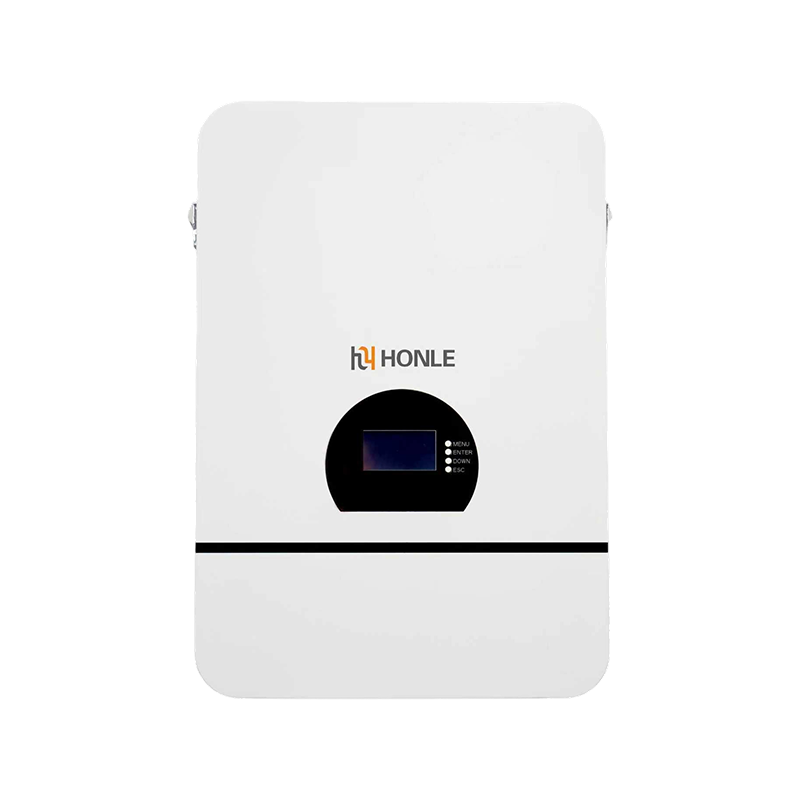
The off-grid inverter sits at the heart of the entire system, converting the direct current stored in batteries into the alternating current that household appliances require. Unlike grid-tied inverters, which synchronize with utility voltage and frequency, a standalone unit must generate its own clean sine wave from nothing, manage surge loads from motors and compressors, and coordinate charging from solar input at the same time.
Three technical characteristics separate a capable off-grid inverter from a marginal one:
- Continuous power rating versus surge rating, since a well pump or air conditioner compressor can draw three to seven times its running wattage for a fraction of a second at startup.
- Pure sine wave output, which prevents the humming, overheating, and premature failure that modified sine wave output can cause in motors and sensitive electronics.
- Integrated or pass-through charge control logic that allows the unit to prioritize solar input, manage battery state of charge, and fall back to a backup generator input when needed.
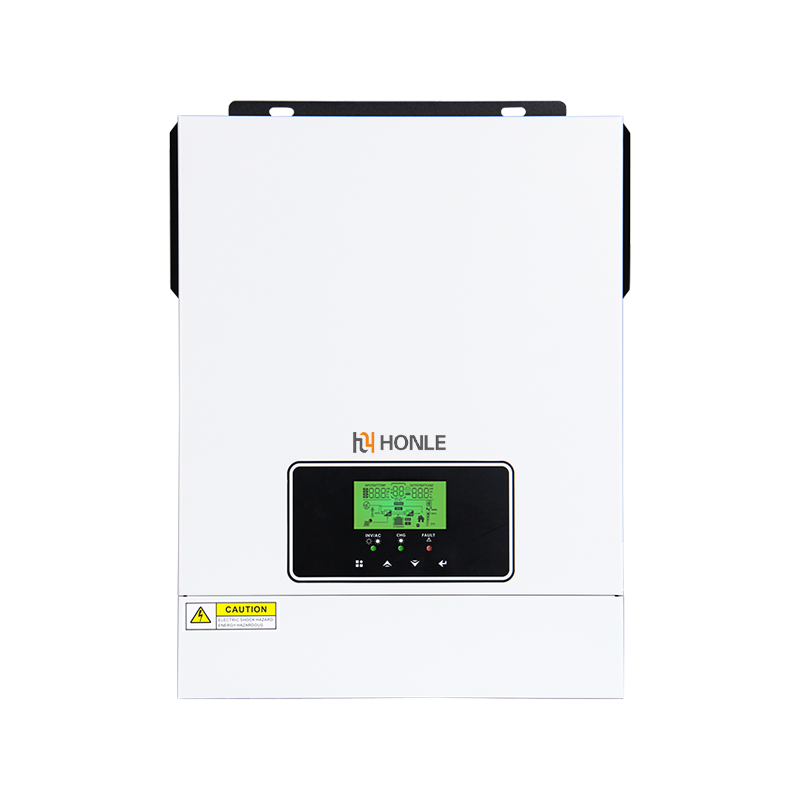
Efficiency matters here more than it might appear. An inverter operating at 94 percent efficiency versus one at 88 percent seems like a small gap, but across a year of continuous cycling that difference can represent several hundred kilowatt-hours of lost energy, which in an off-grid context means a larger array and battery bank are needed simply to compensate for conversion losses.
Off Grid Energy Storage: Depth, Cycling, and Longevity
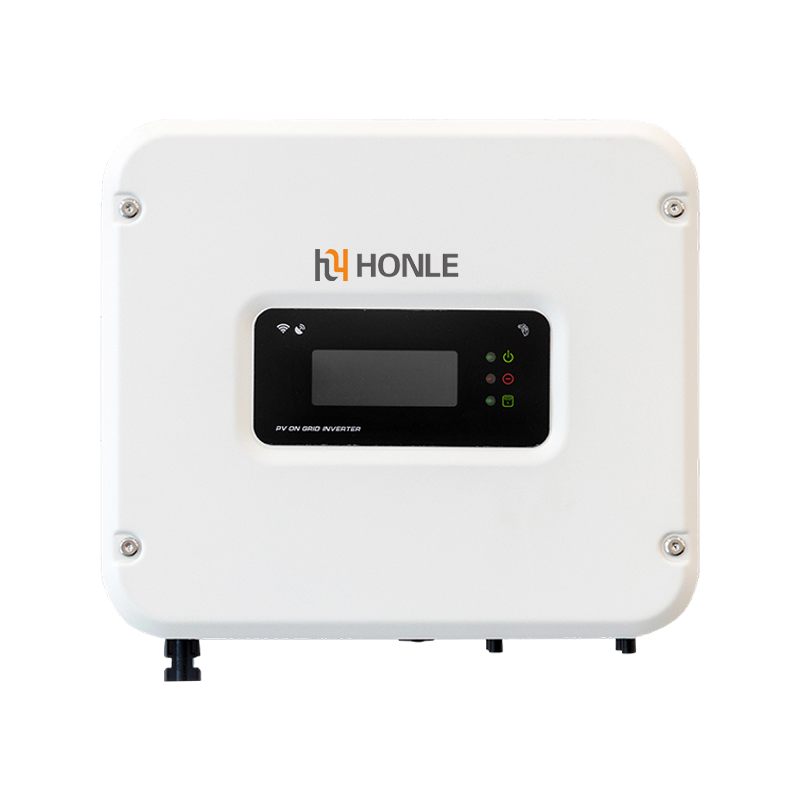
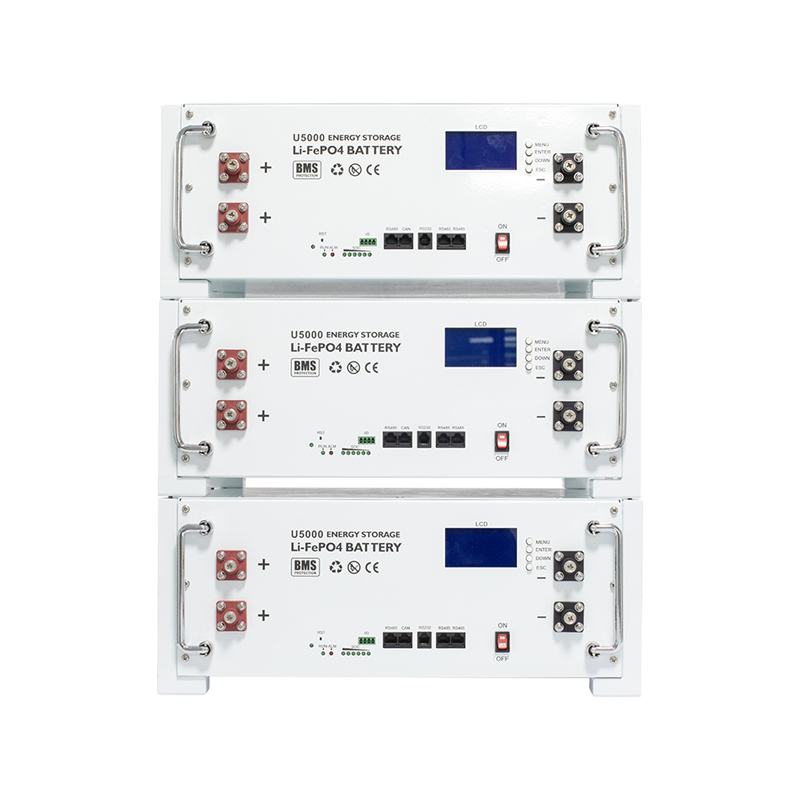
Storage is where most of the long-term cost of an off-grid system is decided. Off grid energy storage equipment is generally evaluated on four metrics: usable capacity, cycle life, depth of discharge tolerance, and round-trip efficiency.
Lithium iron phosphate chemistry has become the practical default for new installations because it tolerates roughly 3,500 to 6,000 cycles at 80 to 90 percent depth of discharge, compared with 300 to 500 cycles at only 50 percent depth of discharge for flooded lead-acid batteries. Over a fifteen-year system life, that difference alone can mean replacing a lead-acid bank three or four times while a lithium bank remains on its original installation.
Round-trip efficiency compounds the same way conversion efficiency does at the inverter stage. A storage bank that returns 96 percent of the energy put into it wastes far less over a year of daily cycling than one returning only 82 percent, and that gap widens further in climates with fewer sun hours, where every stored kilowatt-hour has to work harder to cover the household's needs.
| Storage Chemistry | Typical Cycle Life | Usable Depth of Discharge | Round-Trip Efficiency |
|---|---|---|---|
| Flooded lead-acid | 300 to 500 cycles | 50 percent | 80 to 85 percent |
| Sealed AGM lead-acid | 400 to 600 cycles | 50 percent | 85 percent |
| Lithium iron phosphate | 3,500 to 6,000 cycles | 80 to 90 percent | 95 to 98 percent |
Temperature management is often overlooked. Storage housed in an unconditioned shed that swings between freezing winter nights and hot summer afternoons will lose usable capacity and cycle life faster than storage kept in a stable, moderate environment. Where possible, batteries should be placed in a space that stays between 10 and 30 degrees Celsius.
How Energy Moves Through a Complete Off-Grid Solar System
The diagram below traces the path of energy from generation through to the household load, including the decision points that keep the system stable during cloudy stretches or high demand.
All in One Portable Power Station Applications
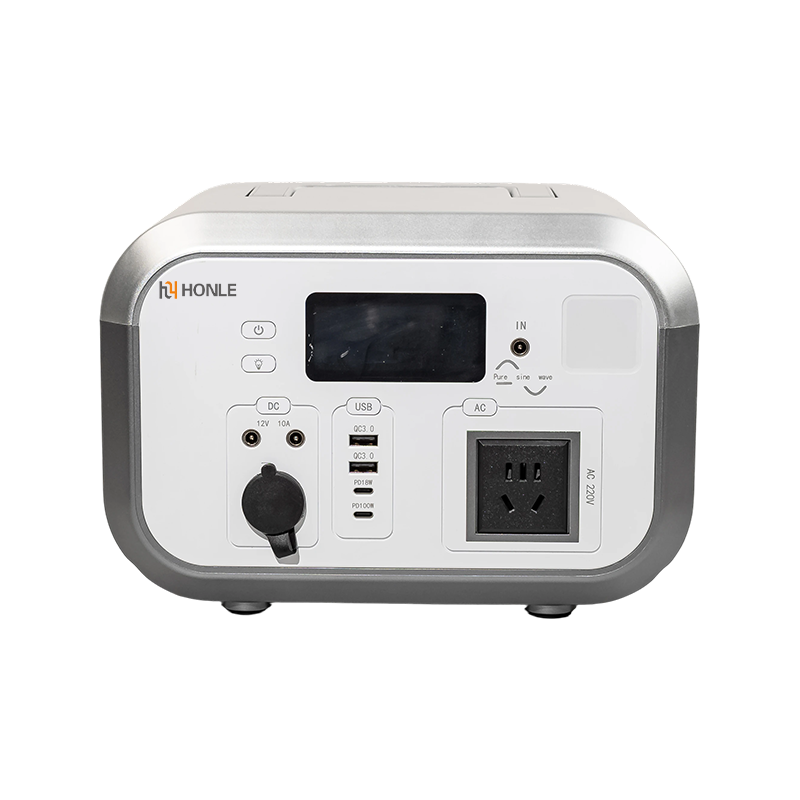
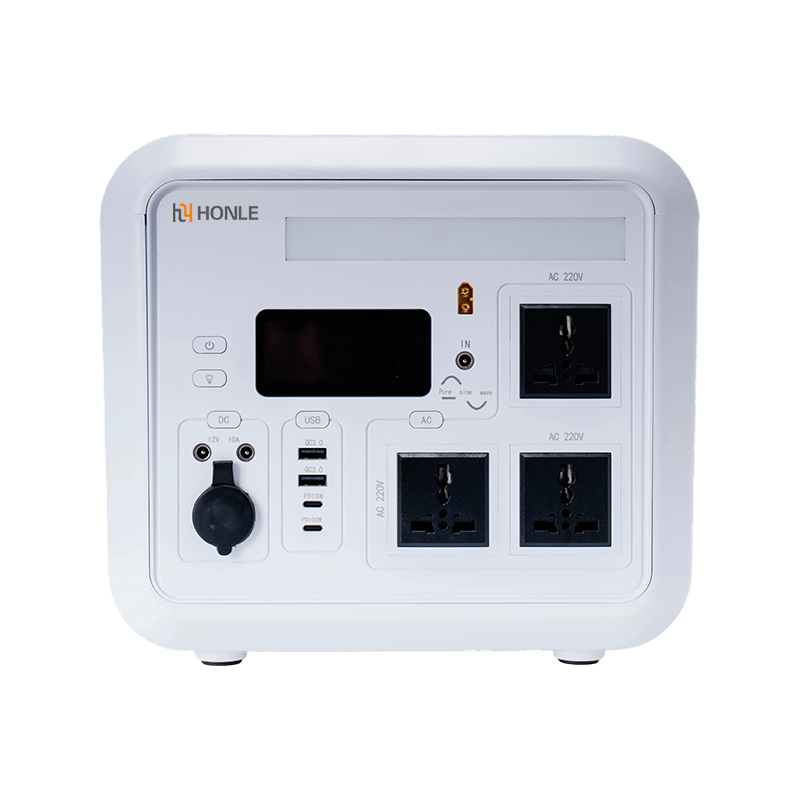
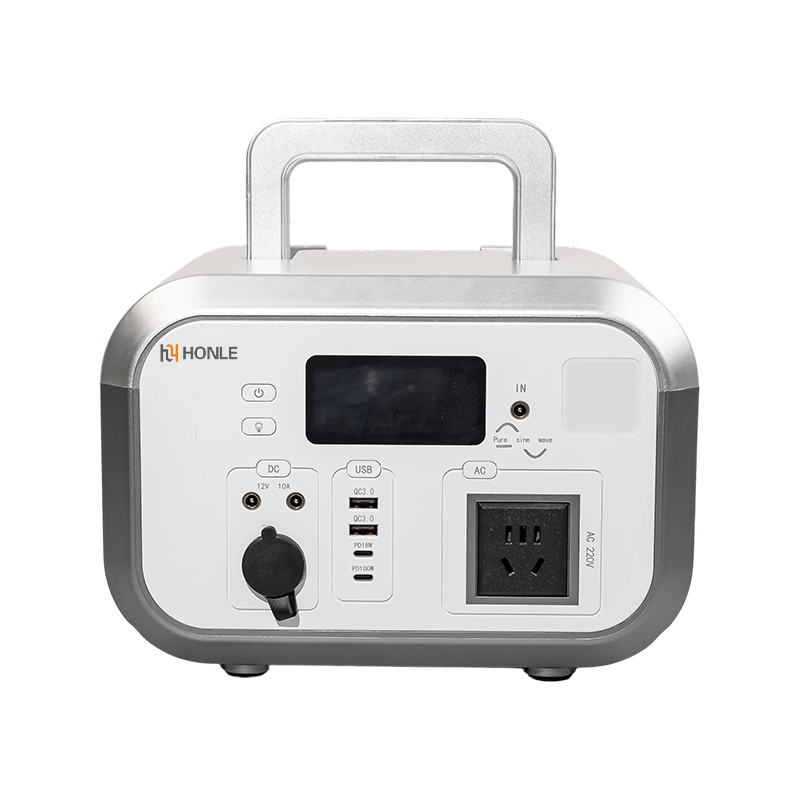
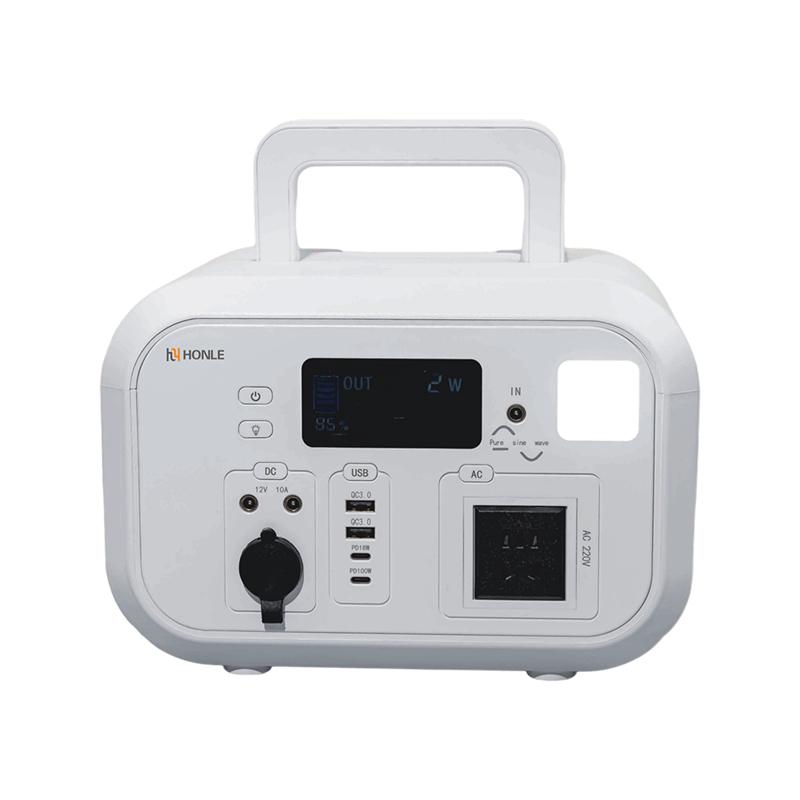
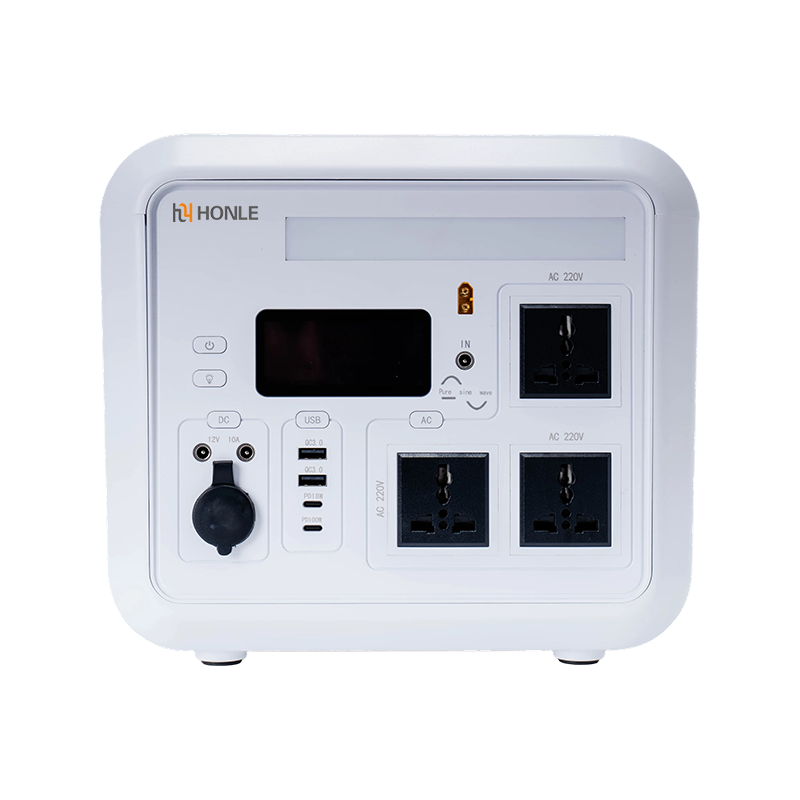
Not every off-grid need calls for a permanently wired installation. An all in one portable power station combines the solar charge controller, battery, inverter, and outlets into a single enclosure, which makes it suited to applications where mobility or simplicity matters more than maximum capacity.
Common use cases include:
- Emergency backup for refrigerators, medical devices, and communication equipment during utility outages.
- Job site power for tools where running a fuel generator is impractical or restricted.
- Recreational vehicle and van life setups where space and weight are limited.
- Supplemental power for a workshop or outbuilding that does not justify a full fixed installation.
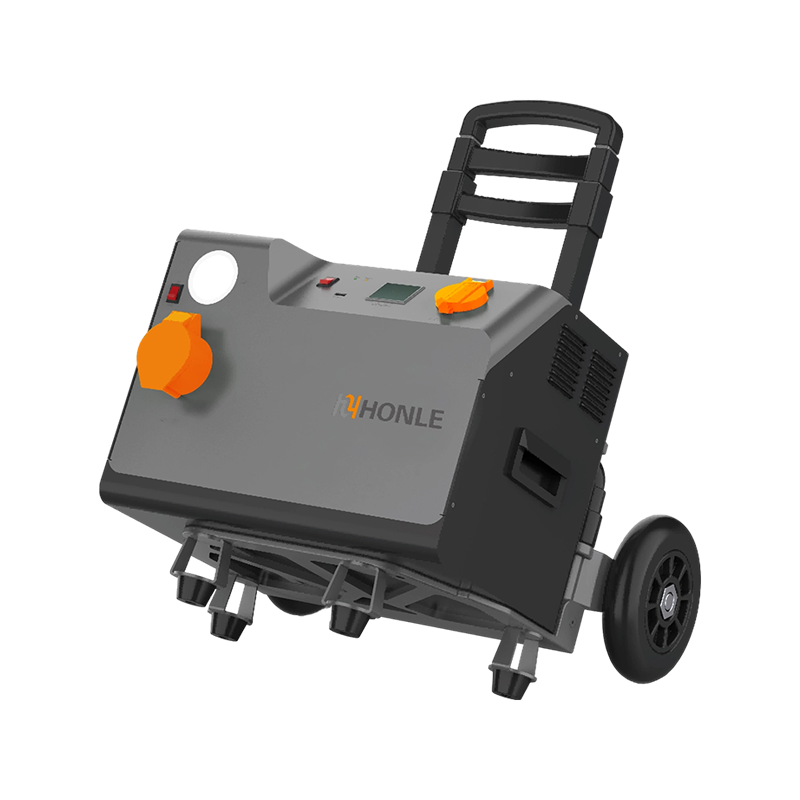
The tradeoff is capacity per dollar. A fixed installation with a separate inverter and battery rack can be expanded module by module as needs grow, while a self-contained unit is capped by its enclosure. For many households, the practical answer is a hybrid approach: a portable unit for mobility and emergency redundancy, paired with a fixed system for daily baseline loads.
What Defines the Best Solar Generator for Off-Grid Living
The phrase "best" depends entirely on the load profile and climate of the site, but a few selection criteria hold true across almost every scenario when evaluating the best solar generator for off-grid living.
| Criterion | What to Check | Why It Matters |
|---|---|---|
| Continuous vs surge wattage | Rated output at 100 percent load and for 1 to 3 second surges | Prevents shutdown when motors or compressors start |
| Battery expandability | Whether additional battery modules can be added later | Avoids replacing the whole system as needs grow |
| Charging input flexibility | Solar, wall outlet, and vehicle charging options | Keeps the system usable during extended cloudy periods |
| Operating temperature range | Rated performance in both cold and hot climates | Protects capacity and lifespan in harsh environments |
| Noise and maintenance | Fan-cooled versus passively cooled designs | Affects comfort in residential and camping settings |
A Practical Sizing Scenario
A family relocating to a rural property with no utility access needed reliable power for a refrigerator, water pump, lighting, and occasional power tool use. A site assessment measured average daily consumption at 11 kilowatt-hours and identified 4.2 peak sun hours for the region.
Working through the calculation, the design called for a 3.2 kilowatt array, a 12 kilowatt continuous rated inverter to handle the water pump's startup surge, and a 30 kilowatt-hour usable lithium storage bank sized for two days of autonomy. A small backup generator was included as a manual fallback for unusually long overcast stretches, reducing the required storage margin and keeping the overall system cost balanced rather than over-engineered for a rare edge case.
This kind of scenario illustrates a broader principle: sizing for the 95th percentile of need, with a modest manual backup for the rare extreme case, is almost always more cost effective than sizing storage for the worst possible week of the year.
Common Mistakes in Standalone Solar System Installation
Even experienced do-it-yourself installers repeat a handful of errors during standalone solar system installation that reduce performance or shorten equipment life. Recognizing these ahead of time is far cheaper than correcting them after the fact.
| Mistake | Consequence | Prevention |
|---|---|---|
| Undersizing wire gauge for the run distance | Voltage drop and wasted energy, especially on long DC runs | Calculate voltage drop for the actual cable length, not just current rating |
| Ignoring seasonal sun angle changes | Reduced winter output when demand is often highest | Set panel tilt angle for the lowest-production season, or use adjustable racking |
| Skipping a dedicated disconnect and overcurrent protection | Safety hazard and potential equipment damage during a fault | Install fused disconnects between array, controller, battery, and inverter |
| Placing batteries in an unventilated or extreme-temperature space | Accelerated capacity loss and reduced cycle life | Choose a moderate, ventilated location away from direct sun and freezing air |
| Mixing old and new batteries in the same bank | Uneven charging and premature failure of the weaker units | Replace battery banks as complete sets rather than individual units |
Energy Storage for Remote Locations and Harsh Climates
Sites far from service infrastructure carry additional considerations beyond a standard suburban installation. Energy storage for remote locations needs to account for longer response times if a component fails, greater temperature swings without the moderating effect of surrounding structures, and, in many cases, transport limitations that make oversized equipment difficult to deliver or replace.
- Choose enclosures rated for the site's actual temperature extremes rather than the closest available option, since a battery rated for a moderate climate can lose a significant share of its usable capacity in sustained cold.
- Build in a spare parts allowance for fuses, connectors, and small components that are inexpensive to stock but expensive in downtime if a remote trip is required to replace them.
- Favor modular systems that allow a single failed component to be swapped without shutting down the entire installation.
- Document the system thoroughly, including wiring diagrams and settings, so that a technician unfamiliar with the specific site can service it efficiently if the original installer is not available.
Remote installations that follow these practices tend to see far fewer emergency service calls over their operating life, since most failures in the field trace back to inadequate temperature protection or a missing spare part rather than a fundamental design flaw.
Maintaining Off-Grid Power Autonomy Over Time
Long-term reliability depends on habits as much as hardware. A short seasonal checklist keeps a standalone system performing near its design specification.
- Clean panel surfaces at least twice a year, more often in dusty or pollen-heavy regions, since soiling losses of 5 to 15 percent are common on neglected arrays.
- Check all DC connections and terminals annually for corrosion or loosening, which are common causes of unexplained voltage drop.
- Review battery state of charge logs monthly to catch a slow capacity decline before it becomes a nighttime outage.
- Confirm inverter cooling vents and fans remain unobstructed, particularly in enclosed utility rooms.
- Test backup generator start and transfer sequences twice a year even if it is rarely used, so it performs correctly when actually needed.
Systems that receive this level of attention routinely reach or exceed their rated component lifespans, while neglected systems often show a decline in usable capacity within the first three to five years.
Maintaining strong off-grid power autonomy is ultimately a matter of matching realistic expectations to realistic equipment. A household that understands its own consumption patterns, keeps a simple maintenance log, and plans for gradual expansion rather than a single oversized purchase will generally get more reliable years of service than one that buys the largest available system upfront and never revisits the design.
Frequently Asked Questions
Q1: How many days of battery autonomy should an off-grid home plan for?
Most residential designs target one to three days of autonomy depending on regional weather patterns. Areas with frequent multi-day overcast stretches benefit from the higher end of that range, while sunny climates can often operate reliably with a single day of reserve paired with a backup generator.
Q2: Can an off-grid system be expanded after the initial installation?
Yes, provided the inverter and charge controller were sized with headroom. Adding panels or battery modules to an undersized inverter will not increase usable output, so it is worth discussing future expansion plans before finalizing the initial equipment selection.
Q3: What is the difference between an off-grid inverter and a hybrid inverter?
An off-grid inverter is designed to operate entirely independent of a utility connection. A hybrid inverter can do the same but also includes the ability to interact with grid power when it is available, offering flexibility for properties that may eventually connect to utility service.
Q4: Is a portable power station a substitute for a full off-grid solar kit?
For small or occasional loads, yes. For a full-time residence with continuous refrigeration, water pumping, and multiple appliances, a portable unit is better suited as a supplement or emergency backup rather than the sole power source.
Q5: How much does shading affect an off-grid solar array's output?
Partial shading on even one panel in a series string can reduce the output of the entire string significantly, since current is limited by the most shaded cell. Site assessments should map shadow patterns across the full day and across seasons before finalizing panel placement.
Related products
News
-
You have just received a higher electricity bill, and the sun is still shining outside. Can you actually use that free energy? Yes, but no...
READ MORE -
Allan just installed a 6 kW solar array on his workshop roof. The quote offered two choices: save $120 by accepting a modified sine wave i...
READ MORE -
The Wattage Number That Decides Everything Before you choose a portable power station, an inverter, or a solar array, the only number you r...
READ MORE -
Roof Load Limits and Ground Clearance Change the Mounting Math Entirely Every solar installation eventually forces the same decision: does ...
READ MORE -
Why Accurate Load Calculation Comes Before Any Solar Purchase Most oversized or undersized solar setups trace back to one mistake: skipping...
READ MORE

PRODUCTS
LINKS
CONTACT
- Landline: +86-021-56981116
- TEL: +86-13795289200
- Email: [email protected]
- Address: 301-09, Building 6, Zhangjiang Microelectronics Port, No.690 Bibo Road, Pudong District, Shanghai
Copyright © Honle New Energy Technology Co., Ltd.
All Rights Reserved.
Wholesale Solar Energy Equipment Suppliers

This site uses cookies. By continuing to browse the site you are agreeing to our use of cookies. For more details about cookies and how to manage them see our 《Privacy Policy》
Accept